
I come from Uganda, a country whose current debt burden is 52.4% of its GDP. Uganda, like many countries in the Global South, is highly indebted. These countries excessively exploit their natural resources to clear off debt. Just as I attended the United Nations Conference of Youth (COY16), the parliament of Uganda debated downgrading three forest reserves so that houses could be built on this land instead. Climate change affects everyone and doesn’t discriminate whether you are young or old. Currently, many countries are simply paying lip service to climate justice.
Right now, 48 countries are spending five times more on debt repayment than on mitigating the devastating effects of climate change. Some have no choice but to exploit their natural resources to pay off debts. Developed economies should ponder offsetting the debt from highly indebted countries in exchange for climate change mitigation activities like reforestation. Otherwise, we are doomed. There cannot be climate justice without debt justice!
I think we should make environmental protection an important duty for everyone. Global political leadership should influence the incorporation of climate change into school syllabi, from primary school to university. Religious leaders also have a big role to play in the climate justice agenda – they should always remind their congregations of their obligation to protect the environment. Governments should also subsidise alternative energy resources like electricity and gas to offset the use of firewood and charcoal burning in Africa.
Lastly, President Barack Obama said during his speech at COP26, ‘Our planet has been wounded by our actions, those actions won’t be healed today, tomorrow or the day after! But they can be healed by degrees. If we start with that spirit and if each of us can fight through occasional frustration, I believe we can secure a better future.’
Let us take his words to heart and begin our struggle for a better future, starting with the issue of debt justice.
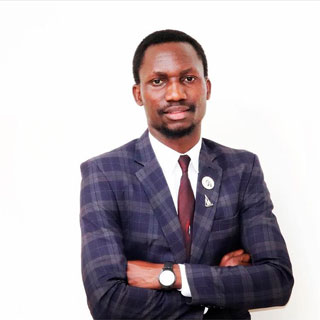
By Erasto Magamba
Youth Coordinator in the Diocese of Kampala
“Power must be challenged by power” wrote Reinhold Niebuhr in “Moral Man and Immoral Society,” and so it felt during the COP26 gathering in Glasgow. There were the representatives of the world’s most powerful governments and the lobbyists who do so much to maintain business as usual. On the other hand, there were agents of transformative change lifting up science and ethics. One question at COP26 was whether the growing cohesion and resolve in the second group is becoming an adequate source of power to change the equation. It seems that the answer is not yet, but almost.
The world’s religions are often cited for the “moral and social pedagogy” that Niebuhr warned was inadequate to effect real political change. They also have land, schools, finances, and are deeply intertwined in cultures around the world in ways that influence collective behavior. One of the most interesting aspects of this moment is to witness the work being done within faith traditions, and the connections being made across them.
A highlight for me was the Talanoa Dialogue in the historic Garnethill Synagogue, which, with a Jewish Heritage Center housed within, was itself a source of grounding gravitas for the moment. The chief rabbi of the UK and Commonwealth, Rabbi Ephraim Mirvis, gave opening remarks, and speakers across a wide range of traditions followed.
One of them, Rev. James Bhagwan of the Pacific Council of Churches, spoke from the perspective of small island nations and invoked the meaning of the seashell cross he wore. “People with a deep spiritual relationship with land and sea were told that was backwards and ignorant,” he said. “That is what colonization did to us.” Clearly these faith communities are focused eradicating that effect of colonization and reclaiming that relationship. Rev. Bhagwon also expressed the fight for climate justice (including loss and damage) in terms of the Biblical story of Cain and Abel, not only asking “Am I my brother’s keeper?,” but connecting it to the question on the minds of many with a stake in this COP: “Who will pay?”
The most interesting encounters I had were with people who were most vocal on the outside of the COP, even if they also appeared within the “Blue Zone” as official observers. I was fortunate to have a chance to speak with Telma Taurepang of the Union of Indigenous Women of the Amazon, who expressed the importance of women claiming power in this time because they are especially called to speak for “Mother Earth”. Taurepang also made public comments about one of COP26’s most heralded announcements: the pledge to halt and reverse deforestation by the end of the decade, which was backed by public and private financing of $19 billion. She was sceptical based on experience: “The resource, when it arrives, doesn’t reach Indigenous peoples” she said. Instead, it “goes to those who deforest,” and the deforestation continues.
This brings us back to moral philosophy. Theologian Cynthia Moe-Lobeda has written about the concept of “structural evil,” explaining that one of its key characteristics is that it easily masquerades as good. This is one way to explain the tidal wave of greenwashing that accompanies the business-as-usual group at the COP. But a worthy counterforce is building, drawing not only from the science, but also from the transformative work being done within communities who are ready to claim their power.
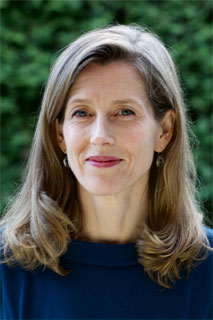
By Karenna Gore
Director of the Centre for Earth Ethics
Every year, Holocaust Memorial Day falls on the 27 January; the day on which Auschwitz-Birkenau, the largest Nazi death camp, was liberated. Holocaust Memorial Day (HMD) is a time to remember the 6 million Jews murdered in the Holocaust, the millions of other victims of Nazi persecution, and victims of other genocides across the world. It is a day to acknowledge these victims, to share their stories, to condemn discrimination and intolerance and, fundamentally, to stand in solidarity with the victims of genocide. But what might solidarity with victims of genocide and persecution look like for Christians?
Since its formation in the depths of World War II, the Council of Christians and Jews has been committed to teaching Christian communities about the horrors of the Holocaust. We continue to help Christians learn about the Holocaust and antisemitism, so that we can stand together in solidarity with the victims of Nazi persecution as we commit to dismantling the ideologies of hatred which may lead to such destruction.
Such solidarity can be found in listening and learning. We must open ourselves up to the stories of others, giving space to their trauma and experiences, and acknowledging the memories of genocide. As the number of Holocaust survivors diminishes, it is vital that we listen to their witness so that we may never forget the horrors of the past.
As Christians, we may also seek to show our solidarity through prayer. We may approach God in prayer to remember the victims of genocides around the world, and to petition for an end to such human atrocities.
Solidarity can also be found in contrition. To stand in solidarity with the 6 million Jews who were killed in the Holocaust means repenting of antisemitism and intolerance; seeking forgiveness for our failures to combat it within our communities, the times when we sow seeds of division rather than unity, or fail to recognise the sanctity of each human life.
As well as listening to witnesses, praying for an end to human atrocities, and seeking forgiveness for our own faults, we can show our solidarity through action. In ‘Holocaust Memorial Day 2022: A Resource for Churches’ from the Council of Christians and Jews, the Rev’d Helen Cameron writes that remembrance ‘should not be an interior, passive process.’ Rather, she writes:
‘To remember the past effectively involves working to create and embed lasting change in us in the present. Holocaust memorial should be a public witness that leads to a commitment to vigilance in order that hatred and the development of ideologies which reduce the sacredness of human beings to less than that, are challenged and opposed.’
For Christians to stand in solidarity with victims of genocide means striving towards lasting change; speaking up for those who are persecuted or oppressed, fighting antisemitism and hatred in all its forms, and working towards a shared society based on justice and equality. This Holocaust Memorial Day, I hope that the Church and all those who seek to remember victims of genocide may rise to this challenge.

By James Roberts
Christian Programme Manager at the Council of Christians and Jews
In the days when Christmas parties were still a thing, I recall once being asked about my job as a researcher by a social worker. Once I had rather poorly explained what I did, he said, ‘So you’ve got one of those pointless jobs that don’t mean anything?’ Fortunately, I am committed to the idea that accepting one’s irrelevance keeps the ego in check and takes the existential pressure off. I was happy to laugh and agree and return to the dancefloor. But the ‘point’ of my role is a challenge I have had to work around throughout my career, and nowhere more so than in USPG.
In the charity sector, using financial resources to support research is legitimately questionable, even as an increasing number of charities recognise the value of deepening their understanding of their praxis. Frequent querying of the value of research also reflects the failure of many professional researchers to adequately communicate what they do and how their work might foster organisational and even structural change… in ways that go beyond writing impenetrable books and reports that no one can or will ever read.
In a conversation with a good friend over the weekend, we compared notes on working as academically trained researchers in the charity sector. We wondered at the mismatch between the questions that organisations often ask about the impacts that their projects and programmes are having, and the wide variety of nuanced stories that research collaborations gather which paint much more interesting pictures. A focus on metrics, on SMART targets, on things that can be easily counted (malaria nets distributed, HIV infection rates, families fed for example) reflects the power of a very particular worldview – a quantitative one that too often serves organisational and funder accountability rather than the mission of the organisation to those it seeks to serve.
In our own work over the years, USPG has learned that in terms of rates of infection, it doesn’t matter how many malaria nets are distributed if they are used by communities for generating income through fishing, rather than covering beds. Delving deeper into the connections between formal programme reports and the realities of community life, complexities inevitably emerge. One USPG-funded partner reported that, because of a health programme, more babies were being delivered in hospitals. Yet anecdotal conversations in local communities indicated that the increase in facility deliveries was more likely to be the result of the government offering financial incentives to encourage women to have their babies in hospitals, rather than anything that the community health project was doing. All too often, organisations look for simple, measurable ‘outcomes’ that can be easily reported to supporters and funders, rather than trying more deeply to understand both the contexts and communities that they are working with and the impact that their work might be having.
Perhaps then, there is some value to this ‘pointless job’. As researchers, we must become better communicators. We must continue to think ethically about what we are doing and why. To challenge the organisations for which we work to think more critically, to understand the communities that they seek to serve, to reflect on their praxis in ways that might render them better able to fulfil their mission is, I hope, a task worth pursuing in 2022.

By Dr Jo Sadgrove
Research and Learning Advisor at USPG
Bringing light in an age of Covid
As we set sail into 2022, it is difficult not to be gripped by a sense of déjà vu. Having reached ‘Omicron’, are we simply heading around the calendar encountering new waves of Covid?
Since March 2020, there has been a constant urge to look to what comes after; to when-we-are-post-pandemic. That desire to return to ‘normal’ is palpable.
Perhaps the clearest example of this ‘old normal’ is the holiday ‘in the sun’, the escape from ourselves, our daily routines, these cold climes. Yet, we know that air travel is especially damaging to the climate. We also know that. as we travel in one direction above the clouds, there are others, far below, who have embarked on dangerous journeys coming the other way, motivated by a desire to find a new and permanent home.
The world is a deeply unequal place – and that extends to the distribution of vaccines. We have not ‘escaped’ the pandemic through science and technology, through the vaccine roll-out, because in truth, there is no escape until vaccines are available to all. The succession of Covid variants tells us something very important – the pandemic won’t be ‘over’ until everyone has protection from the virus. The failure to think and act globally is exactly what prevents us from moving beyond the current crisis.
‘Post-pandemic’ is not very useful language, for we are now literally in an Age of Covid. This ‘Age’ is not simply about a virus, but about the interconnected nature of the challenges facing our world: rapid environmental changes that are destroying livelihoods, scarcity of food and water, the movements of people and the rise of conflicts.
The new year brings us the season of Epiphany, when Christians reflect on Christ coming as a light to the nations, a light that reaches beyond the dark divisions of humanity. It is a season with a radical vision for the ‘norms and notions’ that permeate society, as Epiphany speaks to the universal, of and to all nations and all peoples. In this season, we use the imagery of water and light, which in their different ways bring waves of refreshment and wisdom to our experience as human beings; that speak of a renewed relationship, of the breaking into history of a vision of hope and renewal, in which we see ourselves afresh, alongside our sisters and brothers, as made in the image of God.
Epiphany challenges inherited ideas, the old norms, and a return to what has been. It speaks instead of that which might be. We may all yearn to be ‘post-pandemic’, but it is possible that we will only arrive there if we are renewed as a people, as global neighbours caring for all.

By The Revd Dr Duncan Dormor
General Secretary, USPG
Justice covers a spectrum of issues regarding ownership, resources, benefits, outcomes, authority, institutional codes and customs, moral responsibilities, human freedoms, and above all, legal traditions sustained by cultural norms and values. Quite often, we are able to identify justice through the experience of injustice. Cries of lament and human suffering generate movements of protest and practice, memories of discord and distortions, as well as measures of structural violations. No wonder then that the global community understands, and often laments, the denial of justice. The global community also seeks to raise a universal call for action against structural and systemically unjust denials of human rights, human needs, human progress, and human wholeness.
The global community collectively understands the basic need for human survival, sustainable existence, and social access. The global community collectively understands the inevitable results and subsequent ripple effects when access to basic human needs is denied because of the unjust dominance of four social, political, economic, historical, and systemic forces.
Justice is often spoken of as love-in-action. Theologically, the active and practical realisation of distributive justice is nothing less than the actualisation of one’s faithful response to the radically inclusive love of God.
Hebrew prophets from the seventh and eight centuries proclaimed that their God was a God of justice, righteousness, and mercy. God is clearly and unconditionally on the side of the poor, oppressed and marginalized. The Sacred Scriptures shine an inescapable light on the character of that God whose covenantal demands of obedience and faithfulness are brought to life through distributive justice.
One cannot read Luke’s Gospel or the Acts of the Apostles without acknowledging the description of God’s unconditional focus on the intersection between divine love and human justice. Mary proclaims the divine way of distributive justice in the Song of the Magnificat. Even more importantly, Mary gives birth to the Messiah, whose ministry, message, mandate, and movement turns the world upside down. Jesus is invited to read from the prophecy of Isaiah in his own hometown of Nazareth, and immediately gets into theological trouble by interpreting the text in terms of his own ministry – the implementation of divine/distributive justice. The rich young applicant for membership in his messianic band fails the basic qualification of selling all that he has and giving the proceeds to the poor. The mythical story in Acts Chapter 5, dealing with Ananias and his wife’s greed and dishonesty, carries far-reaching implications for the ethical imperatives of selflessness and Spirit-filled justice.
God’s justice is disclosed, delivered, dispersed, and is to be distributed. Distributive justice, then, demands an irrevocable commitment to radical fairness, and a relentless concern for the poor, the imprisoned, the naked, the homeless, the hopeless, the oppressed, the marginalised, and the dehumanised.
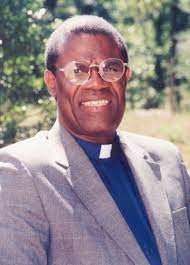
By Dr Kortright Davis
Professor of Theology at Howard University
Most of us are used to the idea – but in reality – the idea of a vaccine is pretty strange. Offering your arm to a needle filled with biological material generated from a hostile virus, manipulated in laboratories you haven’t seen, by people you haven’t met, from a different culture – to fight an unseen enemy, which may not have affected anyone you know.
If one throws into the mix the difficulties all humans have in evaluating personal risk and a whole host of rumours – that the vaccines were produced hastily or can affect women’s fertility, or worse, could even kill you – then hesitancy is entirely natural and reasonable. Especially on the part of those with limited experience of vaccines.
There is a clear need for reassurance. In short, people need to have faith in the science and medicine. Across much of Africa, it is the churches that are best placed to provide that vital reassurance. Best placed because the churches, especially the Anglican Church, has a long history of engagement not just with providing pastoral care and practical support for individuals and communities, but also with the provision of both healthcare and education.
In short, the churches and their leaders are trusted because of their long-standing commitment to the care of mind and body, as well as spirit.
That is why Anglican leaders in Tanzania, Malawi, and Zimbabwe, among others, are taking decisive action within their communities to address the issue of vaccine hesitancy. (For more details, see our vaccine hesitancy appeal.)
Naturally, they are utilising their networks of churches which reach into every corner of their respective nations to implement urgent health programmes and disseminate accurate information to enhance the rates of vaccine uptake. In this they are partnering with government agencies to maximise effectiveness.
But Anglican bishops are also putting themselves across all the relevant media channels. And they are taking a highly strategic and professional approach – delivering tailored messages targeted to segments of the population that have higher level of vaccine hesitancy. They are bringing a message of encouragement to their members and others, who trust and respect the church, to have faith, and to place their trust in the vaccines.
The churches are responding to the challenge of the moment and playing a critical role in health education and tackling vaccine hesitancy. In this they will have a significant impact on the spread of the virus, but also on its wider social and economic implications. We, in turn, should not be hesitant in our support and solidarity.
The Revd Dr Duncan Dormor
USPG General Secretary
Amidst the escalating violence in Ukraine, it has been hard to miss how certain countries and churches have politically employed their speech, or alternatively, their silence. Whether one speaks in contexts such as these are often tragic revelations of how political expediencies can shape one’s ethics.
In her book, Listening to Grassshoppers, the Indian author Arundhati Roy calls attention to the ‘theft of language’. What she implies is a technique where the powerful usurp words like progress, freedom and justice and deploy them like weapons ‘to mean exactly the opposite of what they have traditionally meant’. According to Roy, ‘This language heist may be the key to our undoing’. Such language heists seem rife both amidst the empire and the ecclesia.
Words can often act as a window to one’s identity. There is a certain theological dimension to this. In the very first chapter of Genesis, the identity of God as the ‘God of life’ is revealed through God’s words. If we trace the subsequent development of this link, political implications emerge. The life-giving word mentioned in Genesis assumes an identity in John’s gospel as the incarnate Word (logos) and chooses to pitch its tent among human beings in an act of radical solidarity. The political nature of this solidarity becomes more specific in Hebrews when Jesus chooses to suffer outside the city gates – itself a space invested with political meaning, signifying exclusion and execution by the empire. To take sides is integral to the economy of the divine Word. In the context of the current world (dis)order it may be worth questioning where our words have pitched their tents today.
The politics of speech is also related to the politics of silence. Often we seek to make a virtue out of silence in an indiscriminate manner. Once someone told me that the church’s political vocation was not so much to raise its voice as it was to be silent. A connection was made between Christian silence and the Sabbath which eluded my comprehension.
Genesis chapter two, which introduces the concept of the Sabbath, can offer counter-intuitive insights to such arguments in the light of God’s silence. Given that all that God did so far was to ‘speak’, when the text states that God refrained from work on the seventh day, what seems implied is that God was silent. An important aspect of this ‘silence of God’ is that God could afford to be silent because God saw that ‘everything was very good’. In a context where everything is ‘very good’, silence can be a hallowing act. However, the strategic silence of the powerful in the face of violence and violation of the powerless is morally dubious.
Not every silence has moral credibility. Often, the test of this credibility lies in why and when one refuses to speak, and what it does to one’s self-interests. In the context of the present politics of silence and speech, one wonders whether moral leadership today means mastering the art of refusing to engage with our conscience!

By The Revd Canon Dr Peniel Rajkumar
Global Theologian & Director of Global Mission, USP
April is a fascinating month regarding race, identity and culture in Britain, with the 22 and 23 April having a particular resonance. Since 2018, 22 April in Britain has been celebrated as Stephen Lawrence Day, which ‘exists to inspire a more equal, inclusive society, and to foster opportunities for marginalised young people in the UK’. This day was created by the Stephen Lawrence Foundation as a celebration of a life cut short by racist violence on 22 April 1993, when thugs stabbed an 18-year-old Black student to death in London.
23 April is St George’s Day; St George as we all know, is the patron saint of England and on this day many English towns and cities are decorated with St George’s flags. Pubs, restaurants and cafes do a roaring trade in proffering ‘English’ fare such as fish and chips and a cup of tea.
At the time of Stephen Lawrence’s murder in 1993, the flag of St George proved very problematic to many Black and Brown Britons. Sadly, it was associated with the far right. Groups with a real hatred for immigrants and anyone not considered ‘English’ had hijacked the flag and used it for their exclusive purposes. For instance, certain English football ‘fans’ could be seen wearing the flag while racially abusing Black and Brown football players, who were often playing for their team.
However, there has recently been a welcome change to the public image of St George’s cross and the day itself. As a result of a more inclusive understanding of ‘British’ history, we now know that St George was a soldier of Cappadocian Greek origin who had little or no connection to England. He is the patron saint of half a dozen European and African countries! Much like St George, those other cultural traits we identify as ‘English’, invariably come from elsewhere, such as ‘fried fish’ (as in fish and chips), which was brought to Britain by Sephardic Jews from Spain, and ‘tea’ which has its origins in Asia. In London, the St George’s Day events on Trafalgar Square seek to be a more inclusive offering and have a less hackneyed approach to celebrating the feast day.
Equally, attempts have been made to ‘detoxify’ the St George’s cross, and it is now possible to see Black and Brown supporters kitted out in England shirts and waving St George’s flags when the football is on.
For me, Stephen Lawrence Day is a reminder of the fact that we have come a long way since 1993, but that we still have a long way to go before Britain truly becomes an equitable, justice-driven country. The Lawrence family’s protracted fight for justice resulted in the implementation of the McPherson Report, and the introduction of the term ‘institutional racism’ in 1999, to define organisations that wittingly (and unintentionally) promote or perpetuate racism. The family also helped to introduce the Race Relations (Amendment) Act in 2000 to address racism and bias.
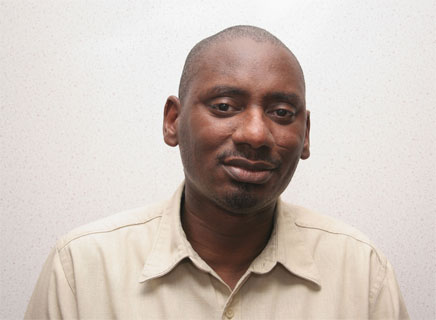
By Richard Reddie
Director of Justice and Inclusion at Churches Together in Britain and Ireland
Throughout my ministry, I have been committed to the idea of the Week of Prayer for Christian Unity. It’s not always been easy to fulfil that intention in the bitterly cold days and nights in the middle of January. A few diehards from the Churches Together group might show up for daily prayers. It was almost the devil’s own job to convince the faithful to turn out for the joint service on the Sunday evening. But often they did, then warm feelings and friendships benefitted from praying together and seeking to make real our hopes for a deeper unity.
My experience of this regular week of the Church’s year has been transformed by living in Jerusalem, which is home to almost every Christian denomination known to God. It takes place one week later than in the UK because Armenian Christmas is on January 19 so, the Week has to follow the festival but when it does get started it turns into one of the highlights of the year. I know that’s hard to credit, but it really is. The colour, diversity and liturgical intensity is so engaging that it’s a rich experience for anyone privileged to be able to share in it. Each evening, a service is hosted by one of the major denominations and then the smaller ones rotate year by year. The first evening of praying together is always hosted by the Greek Orthodox in the Church of the Holy Sepulchre. We experience the service of vespers, spoken and sung in Greek. The beauty of the chapel lifts the soul and draws worshippers into the mysterious unity of the Trinity.
This year, services followed in my own Anglican Church – the Cathedral of St George the Martyr – the Armenian Cathedral of St James the Great, The Lutheran Church of the Redeemer, the Latin (RC) Church of St Saviour’s, the Cenacle (or Upper Room) with the Dominicans, St Mark’s Syriac Orthodox Church and finally, the Melkite Cathedral of the Annunciation. Even just the list of hosts conveys the richness of the experience. The reality of worshipping together in extraordinarily beautiful and ancient churches and sharing in their unfamiliar yet profoundly moving worship.
Almost every evening the church was pretty much full, with up to 200 people attending. The entire experience is deepened by the hospitality offered following the services. It gave me the opportunity to talk with Coptic clergy, Catholic nuns from the Congo and Sudan and young volunteers from Germany. The feeling was universally warm and friendly. Jesus prayed for the unity of believers, ‘that they may be one’, in Jerusalem, in the Upper Room, so we, the Christians of Jerusalem, should be seeking to embody that unity. But we have failed in the past and we continue to fall short of this prayer of Christ. The Week of Prayer though offers a vision of what we could be. Of course, praying together for one week is not sufficient, but it’s a good place to start.
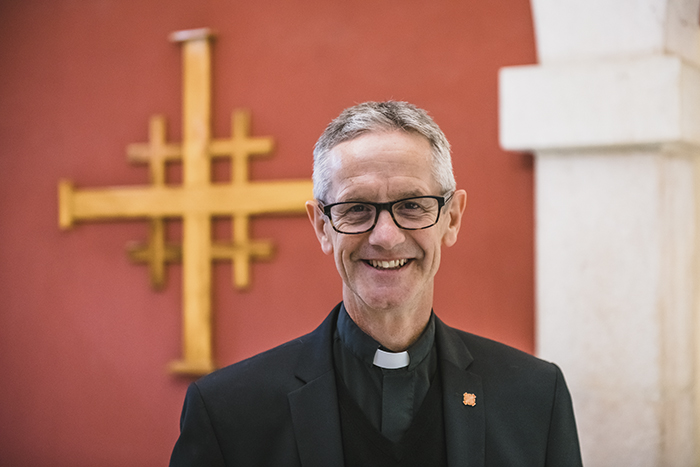
The Very Revd Canon Richard Sewell
Dean of St George’s College, Jerusalem