
In my last reflection, I talked about the relevance of research work to organisations like USPG in enabling them to understand the impact of the work they are supporting globally. By impact, I mean perhaps more importantly, the nature of that impact and its relationship to programme objectives – particularly where the outcomes from community-level initiatives differ wildly from what was expected. The community life that USPG is supporting through partner churches across the vast gulfs in worldview, society, culture, storytelling and Christianity itself across the Anglican Communion, is so much more complicated and interesting than the stories and reports that are returned to London.
This is not a new problem for USPG. In our ongoing work on USPG’s archives, we are uncovering the tensions in the early life of the society (1700 – 1710) between the kinds of information that the organisation wanted to receive from missionaries and the complexities of everyday life that missionaries were trying to negotiate in the American Colonies. The worldviews, community dynamics and challenges that missionaries encountered within the Colonies were not easily communicable back into the mindset of SPG in London.
However ambitious and perhaps foolhardy it might seem now, SPG sought to recreate the structure of the English Parish in the contexts into which its missionaries were sent. Every 6 months, missionaries were required to fill out a form to be sent back to SPG in London detailing their progress in relation to this aim. The form ‘concerning the spiritual state’ of missionaries’ respective parishes records the number of inhabitants, of those baptized, of ‘communicants of the Church of England’, of dissenters and of ‘heathens and infidels’.


The reality of ‘life on the ground’ for missionaries in frontier societies that they themselves were learning how to navigate did not render the task of recording such information as straightforward as those in SPG London might have envisaged. Letters from the early archive indicate these challenges – for example that of Samuel Thomas, based in South Carolina, who struggles to account for the inhabitants of his parish using the categories that the SPG form requires. Or take the experience of Francis Le Jau, who, as a care giver in a context which is far more complex than a poor rural parish made up of white European settlers, is beset by anxieties as to the limits of his responsibilities. What might he do about those Europeans trading with indigenous groups, deliberately provoking war to create a market for their goods and to obtain slaves in return? What is his responsibility and the responsibility of SPG in this situation? What do the realities ‘on the ground’ mean for the project of establishing the parish system? Whose souls is he actually responsible for?
The structures of SPGs reporting requirements shape the letters and storytelling of missionaries in American colonies in the early 1700s. In a context in which decolonisation requires that all are able to tell their own stories on their own terms, accountability structures are yet another site with which USPG must engage. Perhaps more importantly, structuring the ways in which others can express their experiences undermines the ability of USPG to understand and share the distinctiveness of the storytelling traditions around the Communion, from which all could learn so much.

By Dr Jo Sadgrove
Research and Learning Advisor, USPG
In the month of June, we annually mark Refugee Week. The Sunday at the end of Refugee Week is the annual Sanctuary Sunday when we are especially encouraged to hold refugees and all our work with them in our prayers.
No one chooses to be a refugee. Wars make refugees. This is the clear lesson from the current Russia-Ukraine conflict.
Looking to the future, sadly, the prediction is that there may be around 1.5 billion people who are climate change refugees as weather becomes more extreme.
According to the United Nations High Commissioner on Refugees (UNHCR) around 90% of the world’s refugees come from a country in or close to war and conflict, and almost 90% of all refugees are either trapped in their own country, or live in countries neighbouring their country of origin. Most of the refugees of the world are taking protection in some of the poorest counties in the world.
And people fleeing danger need sanctuary and will be glad of welcome and hospitality. All refugees should be treated well and equally whatever their ethnicity, nationality, colour, creed and culture.
It is urgent and essential to build sanctuary, cultures of welcome, protective hospitality and safety.
In International law there is no “illegal” or “bogus” asylum seeker. Anyone has the right to apply for asylum in any country that has signed the 1951 UN Refugee Convention, and to remain there until authorities have assessed their claim.
Plans to relocate asylum seekers to another country embed a hostile environment, they penalise already humiliated people, and also contravene international law.
Biblical witness carries a call for protection and safety of people whose lives are in danger while their case is processed, even if they are deemed to have committed a crime.
In Numbers 35, for example, we read that God called on Moses to set up Cities of Refuge to ensure this. In this wisdom is the root of the contemporary movement and network of City of Sanctuary which has also led to the development of the Church of Sanctuary idea.
City of Sanctuary is a contemporary expression of a City of Refuge.
Churches Together in Britain and Ireland are now working to grow the idea of Church of Sanctuary. Can your Church be a Church of Sanctuary?
A Church of Sanctuary will respond to refugees with hospitality as a clear way of challenging hostility, and do this as integral to Christian discipleship, seeking to embed welcome, hospitality and safety right across the ethos of the whole church, the whole congregation.
A good image of sanctuary is reflected in the story of Abraham and Sarah offering shelter and hospitality to passing strangers in the heat of the day by “the oaks of Mamre”, in their tent (Genesis 18:1-8).
This story has to be kept in mind when we reflect on the meaning and message of Jesus sharing hospitality with those he met on the Road to Emmaus (Luke 224: 13-35).
Here Jesus shares hospitality in which he is stranger, and guest and host.
We’re talking about sanctuary, the hospitality in which we are all host, guest and stranger all at once.
To help you reflect and pray about this more I commend to you a Bible Study resource I have
Resolve to encourage you Church to become, a Church of Sanctuary. There are resources available to assist you with this on the Churches Together in Britain Church of Sanctuary website at: https://churchofsanctuary.org
Let us pray
Holy God, you are our refuge and shelter, you take sanctuary in us. You know the journeys we all take. To you are known all our hopes and concerns. Your presence surrounds us like a sanctuary. Strengthen our resolve to be people of sanctuary, to build cultures of welcome and hospitality, and to act with protective care for all who are in need of sanctuary. We pray for a world without war in which all can live safely and without fear in their own homes. Bless us and make our efforts fruitful. In the Name of Christ.
Amen.

By The Revd Dr Inderjit Bhogal
Former President of Methodist Conference, who is now works with Churches Together in Britain and Ireland to develop Churches of Sanctuary
In early 2021, the Noketshe family moved from the Diocese of Port Elizabeth in South Africa to serve in St Kitts & Nevis as part of the USPG Exchanging Places Programme. The programme is a joint venture between USPG, the Diocese of the North East Caribbean and Aruba (NECA) and the Diocese of Port Elizabeth, South Africa.
In this video, Rev’d Thanduxolo Noketshe explains how this has been a time of change and growth for his family and the local church:
Before Rev’d Thandu arrived, the two churches, Saint Mary’s and Christ Church, did not have a residential priest for over ten years. Like “a flock without a shepherd” reflects Dr Paulo Ueti, USPG’s Regional Manager for Latin American and the Caribbean, on a recent visit to St Kitts & Nevis. At a meeting with the congregations, there was repeated thanks for the way in which Rev’d Thandu’s ministry has built up stability. His patience and a keen listening ear are praised by church members who also describe him as deeply caring, imaginative and committed to unity – especially between the two parishes who now work together under one administration. No wonder he is described as “a blessing for the churches after so many years without your shepherd in house”.

What’s more, youth engagement has grown since the Noketshe’s arrival and seems to be here to stay thanks to the fact that their ministry extends beyond the church and into the community. Bulelwa Noketshe Rev’d Thandu’s wife has assumed the presidency of the local Mother’s Union whilst her husband visits hospitals, schools and even participated in the opening of the St Kitts & Nevis National Parliamentary Assembly.
Whilst adapting to a new environment is never completely straightforward, it is always enriching. In the video Rev’d Thandu describes ‘unlearning’ the ways of worship he is used to in South Africa and admits switching (and remembering to switch!) was a struggle at first. As South Africans serving in the West Indies, such struggles experienced by the Noketshe family are better described as growing pains. Both the church members and Rev’d Thandu and family are mutually transformed in their thinking and experience. More than this, the South African church leader shares excitedly that serving in the Diocese of NECA is growing him in his knowledge and love of God. At USPG, we call this openness ‘Rethinking Mission’, our first strategic aim.
Back in South Africa, Bishop Eddie Daniels is happy with Thandu’s commitment and presence in the Caribbean. His selection was a good match for the diocese and has raised awareness among clergy and people about the vast possibilities across the Anglican Communion and the sense that we can all learn from and be enriched by this global house and family.
The overwhelming reflection of the Noketshe’s placement so far is that the ministry is both successful and fruitful. Dr Paulo reflects that the warm welcome and exceeding gratitude from the local churches is a testament of this. An extension has been requested and USPG will review how best to support the family and churches moving forward.
In the meantime, join us in prayer for the Noketshe family and the community they serve:
- Thank and praise God for His blessings over the Noketshe’s placement in St Kitts & Nevis
- Thank and praise God that He has provided “a shepherd for His flock” in St Kitts & Nevis.
- Pray for discussions between the Noketshe’s, USPG, the Diocese of the North East Caribbean and Aruba (NECA) and the Diocese of Port Elizabeth about moving forward.
With thanks to Dr Paulo Ueti, USPG’s Regional Manager for Latin American and the Caribbean, for the account of his recent visit to St Kitts & Nevis.
CW: Sexual violence, rape
Sexual violence in conflict is not new. However, the topic was ignored and neglected for a long time. It became more prominent during and after the war in former Yugoslavia in Bosnia Herzegovina and again during the Rwandan genocide in 1994, where rape was used as a weapon of war. It is understandable why we don’t want to think of this horror and the lifelong impacts of rape and sexual violence.
As a result of these conflicts, the UN passed a resolution that declared 19th June as the International Day for the Elimination of Sexual Violence in Conflict each year. Well, that’s good and I’m sure we all agree with it, but what difference does it make?
There are many reasons for the focus. Here are three:
Firstly, it recognises that survivors and victims of sexual violence are not forgotten. That their pain and experience will not be ignored or silenced. In different cultures around the world sexual violence and rape is not spoken about. The taboo is strong, and a culture of silence pervades. Having a day focussed on the issue provides a space for speaking up and out on this sensitive issue.
Secondly, it enables space to educate people about what sexual violence and rape are. Rape is not about a person being in the wrong place at the wrong time wearing the wrong clothes. These are myths. Rape is about power over another person and using sex as a tool of that power. Rape is a choice made by another person to overpower another person for their own use and gratification.
It’s barbaric. It’s deliberate. It leaves lifelong consequences. It invades bodily autonomy. It is designed to shame and stigmatise the victim/survivor (some do not survive due to the internal injuries caused), which can ostracise them from their family and communities. And sadly, sometimes, from our churches.
Thirdly, it can focus the need for continuing resources to be made available for survivors of sexual violence in conflict long after the conflict is over. Mothers can sometimes find it difficult to bond with a baby born after rape. The provision of support and counselling can help the mother during these hard times.
Discussing sexual violence and rape is difficult and appropriate trigger warmings need to be stated if discussing this in public. This enables survivors or others to make a choice whether to stay and listen or to give themselves space away. It is always important to offer choices as a choice was removed from a survivor of sexual violence. It is important to follow safeguarding procedures if someone discloses sexual violence and rape with safety being the first priority.
I urge you to not only pray for survivors of sexual violence and rape for healing, but also, if safe to do so in your country, write to your MP or government representative to ask for long term sustainable funding to be provided to survivors of sexual violence and rape.

By Mandy Marshall
Director for Gender Justice at the Anglican Communion Office
‘When is International Men’s Day?’ This has been the most common response over the last few years when I have posted about International Women’s Day. The answer is November 19th. (Although some women would say the rest of the year!). This causes me to wonder why there is such a visceral reaction by some to focusing on one sex for one day. Is there a fear of bias? Favouritism? Jealousy? I believe it ultimately is about fear of loss, the loss of power, the loss of control, and the fear of the unknown.
I recall being in Liberia for one year and training national staff on gender equality and justice. I enjoyed the training because the men were very honest about their thoughts, feelings, and concerns (read that as loud discussion, debate and occasional shouting). After a while, I asked one of the men what they feared the most about equality. Why were they so concerned? One man stood up and said ‘because we fear if they have more power than us then they might do to us what we have done to them.’
Needless to say, that opened up the discussion about changing behaviour and what true discipleship of Christ looked like today.
It does raise the concern of fear. Fear is often deep-rooted and not so obvious. We fear change because we don’t have a vision of what that positive change may bring. We may fear that in a new and different future, we may lose out. These fears are natural to us all yet our responses to the fears vary widely. Who do we ultimately trust for our future? Do we truly rely on God? Are we obedient to God’s calling and discipleship in our lives that invites us into a deeper, intimate relationship with God?
This year the theme for International Women’s Day is ‘Break the Bias’, #BreakTheBias with a symbolic crossing of arms in front of the body and face. The aim is to raise awareness of the systemic, structural, cultural and personal bias that exists in achieving gender equality so we achieve a sustainable tomorrow. Practically this can be calling out sexism when and wherever you see and hear it. It means challenging sexist jokes and ‘banter’ that denigrates women. It is about being prepared to lobby for change in your workplace for equal pay and for publishing gender pay gaps (which is different from equal pay).
Each one of us can make a change. This International Women’s Day how will you Break The Bias?
More info here IWD: IWD 2022 campaign theme: #BreakTheBias (internationalwomensday.com)
By Mandy Marshall
Director for Gender Justice, Anglican Communion Office
‘When I needed a neighbour were you there? Were you there?
I was cold, I was lonely, were you there, were you there?’
For generations of children, those simple, direct words with that memorable tune have always cut through – straight to the heart of the matter. And, across Europe, families are opening their homes and hearts to Ukrainian refugees, to women and their children as they flee violence and seek refuge. Churches have been at the forefront of this response, doing what they can – serving food, providing accommodation and transport, coordinating, accompanying, and providing practical, emotional and spiritual care.
USPG has been deeply privileged to be a small part of this through its relationship with the Diocese in Europe, whose clergy and congregations have reached out in generosity and compassion over these last few weeks. Many congregations in the Diocese are used to this ministry of hospitality, for they have cared for the physical and spiritual needs of people on the move, especially over the last decade. Like all Christians, that ministry is rooted in the simplest of ideas – a love of neighbour – and the creation of a welcoming, hospitable environment, where people are accepted.
Many of those who are UK-based and want to help are discovering more directly the opposite – the hostile environment. Fruit of the bitter, xenophobic seeds that have been sown for years now; seeds of misinformation, distrust and fear-mongering pushed through the media and the quite deliberate creation of a ‘hostile’ rather than hospitable ‘environment’ towards refugees and asylum-seekers. An environment in which those arriving on boats are labelled as economic migrants – contrary to all the evidence: The overwhelming majority are asylum seekers. An environment in which fears of the numbers ‘flooding in’ and ‘swamping’ an already over-populated island are fed and nurtured; this even though the UK receives around a third of the number of asylum applications of countries like Germany, France and Spain. It is no surprise that the Home Office is incapable of dealing with the Ukrainian visa situation and indeed is at the wrong end of a legal challenge. The system is not designed to help, that has been precisely the point. It is as difficult to change the system and processes as it is to change the underlying habits and values.
And so to Rwanda…
I have to confess when I first glimpsed the story I assumed it was a piece of satire in the style of the BBC/HBO drama, Years and Years. Offshoring asylum seekers to Rwanda (the most densely populated country in mainland Africa) simply didn’t feature even in my imaginings of what post-Brexit’s ‘Global Britain’ might look like. Reality dawned cutting through my unbelief.
Happily, it is not simply over coffee after church on Sunday that outrage and disbelief have been expressed, as the Archbishop of Canterbury, the Bishop of Durham and many others have condemned the government’s proposals. This callous disregard of traditional British virtues – fair play, hospitality and decency – and the shredding of our reputation as a nation concerned with upholding international law cannot simply be rolled in a banner proclaiming a defence of these isles against the ‘threat’ posed by asylum seekers. It is a fundamental betrayal of the Christian values upon which our country was built. Unsurprising then that The Rt Revd Paul Butler described the proposal as ‘ state-sponsored trafficking’. He is right.
And then the timing. All this against the backdrop of the largest refugee crisis in Europe for decades. Unsurprising that the government has been highly elusive about whether Ukrainian nationals might end up outsourced to Rwanda. How do you articulate a response that seeks to treat those fleeing the war in Ukraine or escaping the political changes in Hong Kong differently from those fleeing conflict in Afghanistan or Syria? On what grounds are distinctions being made here?
‘Being there’ for our neighbour is a simple, but compelling idea and reality – whether that neighbour is local or global. That doesn’t mean that there are or should be no rules, but rather that agreements should be followed, fair and proper process observed; truth told. There are over 84 million displaced people in this world, people forced to flee their homes, and the overwhelming majority are in countries adjacent to conflict zones, like Lebanon. A tiny proportion attempt to seek refuge on these islands of ours. It is time for us to fundamentally rethink our attitudes as a country to refugees and promote a hospitable rather than a hostile environment, to demonstrate to those who seek to represent us that we will no longer tolerate the sheer lack of humanity ingrained in our approach to those who would seek refugee with us – those who are strangers, neighbours – and also sisters and brothers under the gaze of a generous God.

By The Revd Dr Duncan Dormor
General Secretary, USPG
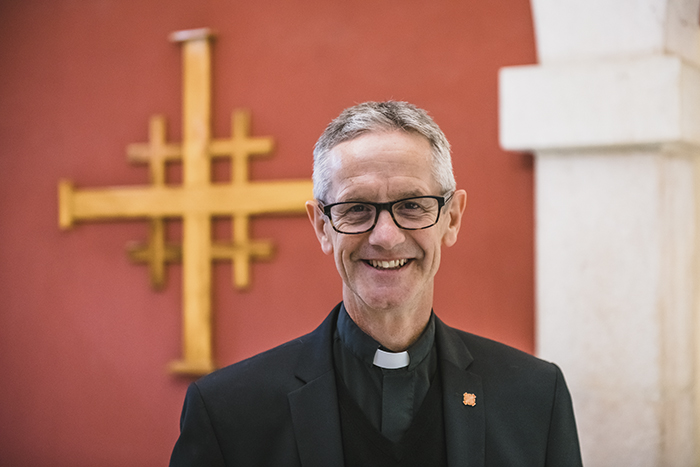
In my twenty year ministry, I have been on numerous retreats and clergy conferences in greatly varying centres. However, I can safely say that the clergy and spouses retreat for the Province of Jerusalem and the Middle East is nothing like any I have ever been on before.
The first and most noticeable difference was that this ‘retreat’ was in a four-star hotel situated on the shore of the Dead Sea in Jordan. Compared to the simple cell room of the retreat centre in Northampton or the old and cold stones of Burford Priory, this was something altogether grander. The Dead Sea also offered the most dramatic backdrops imaginable. However, this was a retreat and not a holiday, so we did spend quite a lot of time in a conference room for lectures and many acts of worship which felt like they could have taken place anywhere in the world, even Northampton.
The participants were also striking and inspiring. Our Province of Jerusalem and the Middle East covers a huge area and includes the countries of Palestine, Israel, Lebanon, Jordan and Syria covers north and south Cyprus, the Gulf countries of UAE, Bahrain, Kuwait, Qatar and others. In addition, the province covers Iran and Iraq. Anglican clergy and their spouses attended from all these countries except for Iran. It’s hard to convey the diverse ministries of all these countries. It felt like a privilege to be in the same room and to share the stories of the challenges of ministry in each place and the joys expressed over and again in the way the love of Christ was being expressed in word and deed. The light of Christ is being kindled in so many unusual and encouraging ways despite often unpromising circumstances.
Thankfully we did escape the dark conference room on several occasions and we had some amazing experiences. Covid had prevented me from visiting Jordan over the past years so it was my first chance to visit some of the holy and historical sites. We drove a steep and winding road up Mount Nebo to get that extraordinary overview described in the book of Deuteronomy. Moses sees the Promised Land but God tells him that he may not enter because of his failure of leadership in the desert. A beautiful 4th century church recently restored was breathtaking, almost as much as the panoramas which surround it. Following this, we drove the short distance to the town of Madaba where numerous Byzantine churches have been discovered. Primary among them is St George’s Church which contains the world famous Madaba Map, a floor mosaic of the Holy Lands. It is the earliest known map of the region and has been an important resource for discovering lost sites.
But more than the sites, it is the people I will remember and the shared stories. We prayed together and we listened to one other. It provided me an extraordinary sense of the ways in which God is equipping the Church with the means to respond to the challenges of this moment. We simply must be open and ready to serve.
By The Very Revd Richard Sewell
Dean of St George’s College, Jerusalem
Bishops from across the Anglican Communion gathered in Canterbury for the 15th Lambeth Conference this summer. I remember in one of the daily press conferences, a question was asked regarding the changes this conference might make to the life of the Anglican Communion. Perhaps some of the answers to this question lie in what changes this experience has made for me personally.
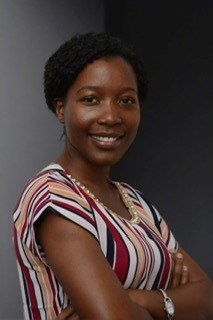
Picture a beautiful English summer’s day at the University of Kent where the Lambeth Conference took place. Follow my friend and I as we saunter into the registration area, where we are welcomed by a few eyes seemingly struck with amazement as they gaze at us. For a moment it feels rather uncomfortable. All sorts of questions momentarily start forming in my mind and the look on my friend’s face confirms the same in her mind too. Do we appear appropriate or there is something wrong with how we were dressed? Have we been chatting too loudly? Have we come to the wrong place?
A little while later, we get our answer. There is nothing wrong with us, instead some of the African bishops’ wives stood in the foyer were looking at us with respect and admiration rather than abhorrence. In their words, they were both surprised and encouraged to see ‘young’ females in clerical wear. We took a few photos together which they promised to use back home to encourage their young girls and women to actively engage in mission.
As I reflect on that day, I pause on the thought – who needs who more in the relationship between young people and the church? Indeed, it is mutualism: young people taught in the church grow their relationship with God and are more prepared to serve Christ in all they do whilst congregations are also nurtured, allowing the church to blossom. In other words, young people are the true wealth of the church. Therefore, how rich or poor are member churches of the Anglican Communion when it comes to young people in church?
While the narrative for most of the Western church emphasises the absence of younger generations, African churches have a substantial number of young people in the church. However, how many young African women have church leaders whom they can identify with? How old is the African church? How rich or poor is the African or western Anglican Church? Of course, I need a great deal of research to draw these conclusions.
Yet if I was to read deeper into the bewilderment in the eyes of some of the bishops’ wives we met that day, I would say that both the western and global south churches are poor. The huge difference being the type of poverty in each of these churches. For some, the poverty is in the absence of young people in the church. For others, it is the absence of a leadership that reflects the population of the church and society.
If it is true that our churches are poor, what steps must be taken in the 42 provinces of the Anglican Communion that can make the church rich, vibrant and alive? How can the church reflect the population in its society?
I do not have the answers, but I wonder what comes after a Lambeth Conference that has made efforts to include, and listen to the voices of young people in some of its discussions? How can these efforts be passed down to churches at the local level?
The involvement of young people and women in church is not just an issue for bishops to deal with. It is something for every member of the congregation to consider. As the African saying goes, ‘it takes a village to raise a child’. Thus, it also takes every person to participate to make the church of Christ richer in its membership.
By The Revd Cathrine Ngangira
Curate at Holy Cross, Bearsted
I was not expecting a lecture to end in tears. After all, it was just a lecture on the Anglican Communion. From the PowerPoint slides, a picture caused my eyes to well up. Unknown to the lecturer, the faces of the Mothers’ Union members in the picture, were not just a random group of women from Zimbabwe. Instead, they were women whom I knew by name.
They are women whose lives and faith in action shape the story of my life and vivid memories of my experiences with them flooded my mind.
On International Women’s Day, it seemed befitting that I celebrate this day and the whole month of Women (March) by commemorating the unsung heroines in my life and perhaps inviting everyone to join in by celebrating their unsung heroes too.
What makes the women that surrounded me growing up to be heroes is the fact that they defied the odds that were heavily stacked against them in a system that oppressed women. This group of women including young widows stood up for themselves and their children. They worked day and night using their God-given gifts in sewing, knitting and gardening to provide for their children. Widows provided legal advice to one another from their experiences of fighting a system that took away inheritance rights from women and girl children. Some sacrificed their desire to marry again, so they would not neglect and leave behind their children when they moved in with new husbands after marriage.
In a society where dignity was defined by marital status, the widows and divorced women stood in solidarity with one another, giving one another mutual support physically, emotionally and in prayer. In the case of the death of a fellow widow, they became mothers to the orphaned children.
They taught young girls to love and be proud of who they were. Not as second-class citizens, but as God’s beloved children, fearfully and wonderfully made.
Of course, it goes without saying that there were times when some of the teachings and grooming resulted in negative extrinsic factors such as gossip. Wherever hope and progress exists, detractors are not far away. That had the potential to break those at the wrong end of that stick and sway them off the positive path they were on. However, the fortunate ones turned the gossip into motivation to be better people. Some prevailed whilst some did fail.
I speak of the role and contribution of women back then in an unjust society as if it were a thing of the past. Some progress has been made in creating equal opportunities for men and women at work and in ministry. Steps have been taken to correct the injustice around inheritance and gender-based discrimination. Despite that, there is still a lot of work to do.
In March, we celebrate the women whose work is recognised internationally. Let’s not forget the many unsung heroines across the globe, whose stories we may never hear, yet are fighting against injustices at different levels of society, especially at the grassroots.
By The Revd Cathrine Ngangira
Curate at Holy Cross, Bearsted
I am the Director for Justice and Inclusion for Churches Together in Britain and Ireland. And as befits my role, I am very interested in the subject of justice. While the Bible does not directly address the topic of racial justice, it has a lot to say about justice per se. Did you know that from a purely statistical perspective, there are 130 references to justice in both the Old Testament and the New Testament? Figures reveal that 115 of these are in the Old Testament – 30 of which are in the Book of Isaiah, while Psalms mentions the word, in one form or another, on 17 occasions. Equally, of the 15 mentions in the New Testament, five of these occur in the Gospel of Luke. However, some academics have pointed out that the Greek word dikaiosunê, which appears hundreds of times in the New Testament, and is translated in Latin or the Romance languages (Spanish, Portuguese, Italian, etc) as “justice”, is translated as “righteousness” in English. So, if we follow that contention, then the New Testament is replete with this term.
As Christians, we are familiar with the phrase, ‘Our God is a God of justice’. In response to this, the question we need to ask ourselves is whether we love justice as much as God does? We know how Jesus responded to unjust practices that were sinful – he opposed them in a demonstrable way. I would argue that anything that denies the very source of humanity, the image of God in humankind, is a sin. Equally, anything that ‘destroys God’s likeness in every person and thus repudiates God the Creator, is also sinful’. All human beings are ‘living icons of God and worthy of respect and dignity, so when we fail to treat others with this respect, we insult God, who is the Creator’. As such, something such as racism is sinful because, among other issues, it assumes all are not equal before God and are not part of God’s family; it is contrary to biblical teaching and denies basic justice and human dignity. All who perpetrate it are guilty of sinful behaviour, and all who fail to challenge it in church and/or society are guilty of condoning or colluding with sinful behaviour.
I believe we should display more righteous anger when it comes to matters of justice. It is said that ‘Justice is love in action’, while the American academic Professor Cornel West argues that ‘Justice is what love looks like in public’. Iif you love people, like God does, you should love justice, because what we describe as ‘justice issues’ invariably involve people.
We must recognise that justice is everyone’s business, and when it comes to racial justice, it is unfinished business. We need to be committed to being changemakers, people who stand up for racial justice, and stand against racism, bigotry and prejudice, Racial Justice Sunday is an excellent occasion to either remember this, or start this work!
By Richard Reddie
Director for Justice and Inclusion at Churches Together in Britain and Ireland