
The South African Church in the Anti-Apartheid Liberation Struggle: Webinar
The 1985 State of Emergency marked a pivotal moment in South Africa’s apartheid era. Many participated in the struggle from different places—some directly and others through advocacy, prayer, and protest abroad. As a young person, I joined marches, church services and vigils in London, so I was eager to attend this webinar and learn more about the Kairos document and its legacy 40 years on from its publication.
In the latest FeAST webinar, hosted by USPG, South African poet, theologian, and Senior Researcher at the Desmond Tutu Centre for Religion and Social Justice, Dr Thandi Gamedze, took participants on a powerful and thought-provoking journey towards liberation in South Africa and the birth of the Kairos document – written by black South African theologians amid the turmoil of the 1985 State of Emergency. It is a manifesto that boldly confronted the church’s complicity with the apartheid regime. She explained that the theology of the Dutch Reform Church provided justification for the apartheid system and that the Kairos document offered a liberation theology coming from oppressed people.

Thandi invited participants to reflect on how, four decades later, the global Church still faces urgent questions about its role in supporting or resisting today’s structures of oppression. She said,
In these times, recalling the often-marginalised histories of church resistance to oppression can help us to remember our prophetic role as the church, and can provide imagination for faithful church responses to the broad-ranging crises that we are currently living through.
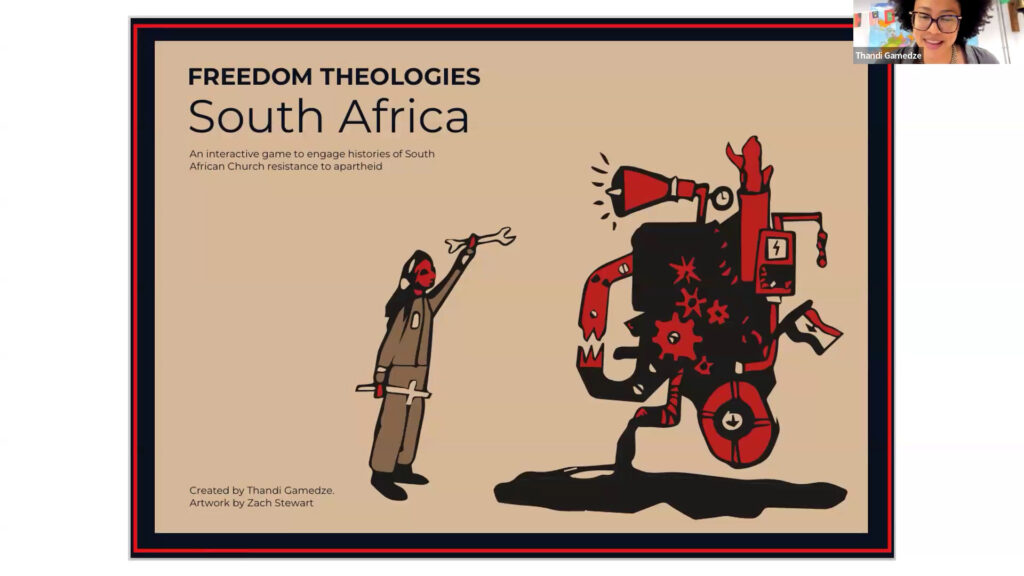
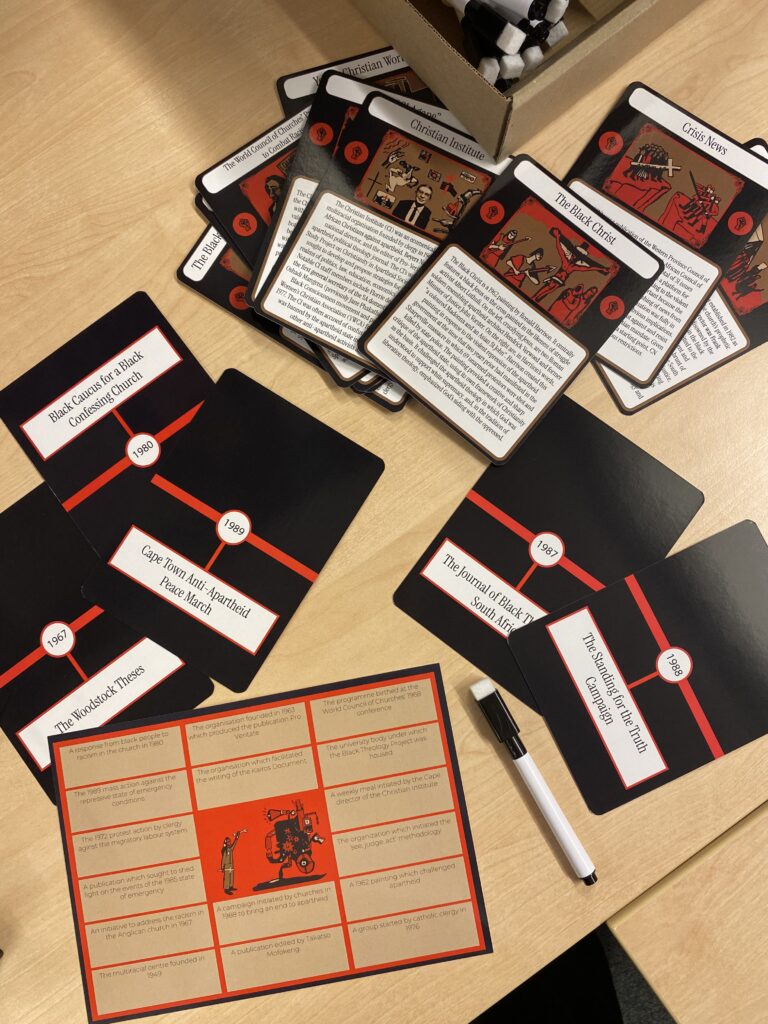
Participants discovered important people, organisations, and moments that shaped the fight for liberation in South Africa by playing an interactive game Thandi developed, called Freedom Theologies: South Africa. It allows people to explore the stories of how South African Christians and their allies resisted apartheid.
Thandi spoke about the inflated role in the liberation struggle that today’s church claims to have played. “Yet, often the actual stories are unknown. There is a need for faithful remembering of our work as the church today in our contemporary struggles,” she said.

By Sophia Jones
Sophia Jones is a Communications professional with over 30 years’ experience working with global charities. She served as Horn and East Africa Communications Manager for the International Rescue Committee in Kenya and, later, Senior Communications Manager at Mothers’ Union then as Director of Communications for the Diocese of Southwark. Since going freelance, she has supported various organisations including the Anglican Communion. Passionate about gardening, Sophia also contributes to her local church and enjoys time with her three grown up children.