
What stands out for me is the exciting, creative, and organic theological work happening across the Anglican community.
The Rt Revd Dr Anderson Jeremiah, Bishop of Edmonton, Church of England
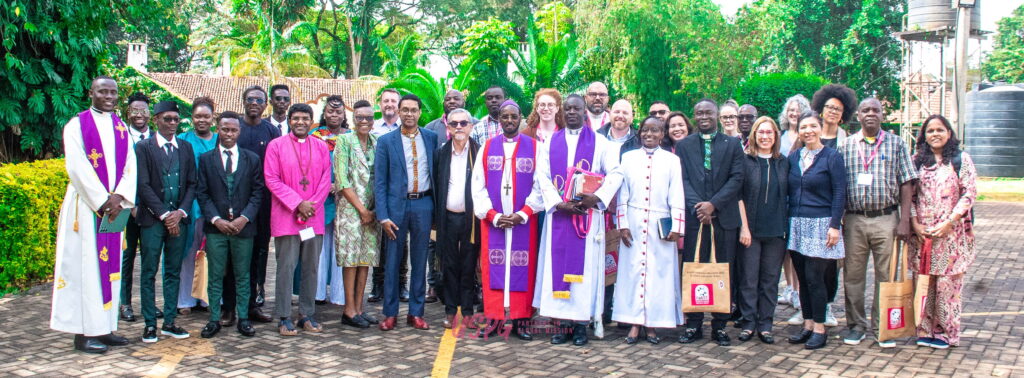
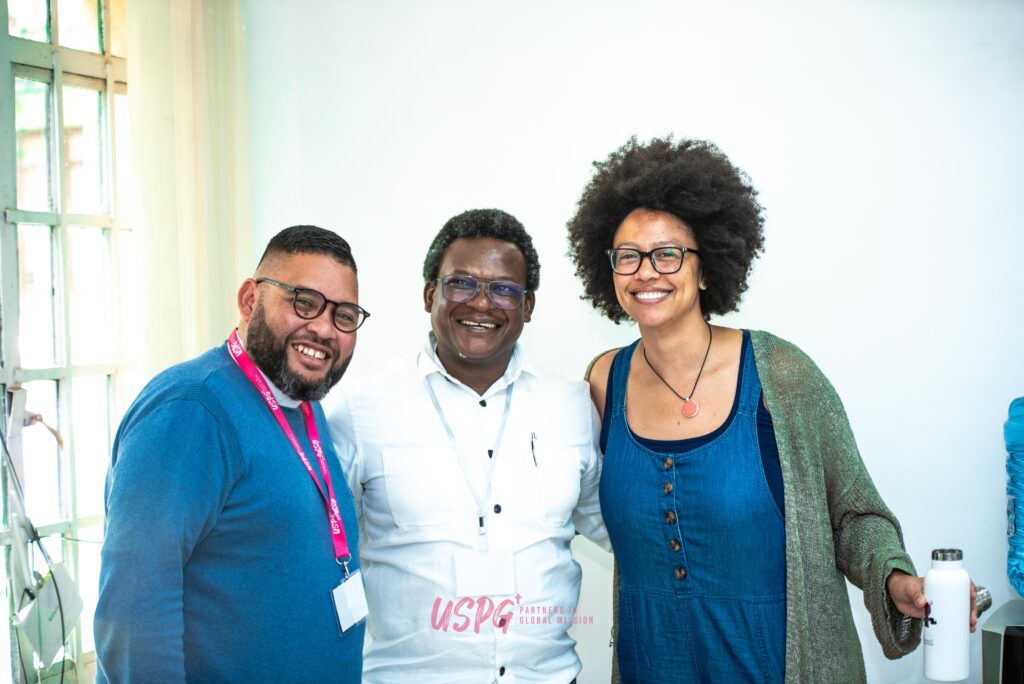
From 15 to 19 December 2025, theologians, church leaders, and students from around the world convened in Limuru for the annual FeAST (Fellowship of Anglican Scholars of Theology) conference, hosted by USPG. Marking the 1700th anniversary of the first ecumenical council of Nicaea, the gathering explored the theme “Re-Receiving the Nicene Creed: Implications for Christian Theology and Witness”.
For those unfamiliar, the Nicene Creed is one of Christianity’s oldest and most widely used statements of faith. Originally formulated at the Council of Nicaea in AD 325 and finalised in Constantinople in AD 381, it outlines core Christian beliefs about God, Jesus Christ, and the Holy Spirit. Recited in churches around the world, it begins:
We believe in one God, the Father Almighty, Maker of heaven and earth, and of all things visible and invisible. And in one Lord Jesus Christ, the only-begotten Son of God, begotten of the Father before all worlds… And in the Holy Spirit, the Lord, the Giver of life…
The Creed affirms the divine and human nature of Christ as one, the Trinity, and the church’s universal mission, serving as a unifying declaration across Christian traditions. Yet, as the Limuru conference highlighted, it is also a text shaped by imbalanced power dynamics involving churches and imperial power, and its interpretation has far-reaching implications for how faith is lived today.
The conference brought together voices from Africa, Aotearoa New Zealand, North America, Asia, Latin America, and Europe, creating a rare space where historical faith engaged contemporary challenges. Discussions explored faith and doctrine, as well as the resulting creed from the Council of Nicaea in AD 325. The group considered its relevance today, considering how a fourth-century statement of belief can inform questions of justice, inclusion, and ecological and political crises. Beyond scholarship, participants emphasised practical outcomes for the church and theological education, calling for teaching that connects doctrine with ethical action: Are students promoting justice, challenging oppression, and caring for the environment?
The Revd Tobias Okoth, a Masters student at African International University in Nairobi, reflects:
The sessions challenged us to bring Christ to people without bias, to minister in ways that respect our context and experiences,
One of the highlights for me was realising that without the crucified Christ, theology can become a system of oppression. Our gospel must serve all people, regardless of background or upbringing.
Merlin, a Masters student at Senate of Serampore College in the Church of South India, shares her highlight:
The best part of this week was hearing voices shaped by their own contexts, passionately bringing their faith into conversation with others. It reminds us that theology is not only academic – it is lived, vibrant, and relational.
Participants were encouraged to interrogate the Creed critically, reflecting on its historical entanglement with imperial power. Scholars explored how its affirmation of unity might inadvertently support exclusion, and how the Creed’s language – shaped in a heavily patriarchal and colonial world – could be reinterpreted for liberation and inclusion.
Meeting women and men from different regions around the world, hearing their stories, and sharing mine – it gave me a new perspective and deepened my fellowship with the global Church,
said Revd Neli Miranda, an ordained minister from Guatemala.
One other highlight of the week was the academic publishing workshops led by our sister organisation SPCK, which gave participants practical guidance on how to share their theological work with a global audience especially in contexts where access to publishing is difficult.
Given that supporting scholars in their publishing journey is a key pillar of the FeAST initiative, participants greatly benefitted from the presence of SPCK’s CEO, Sam Richardson. He led workshops on producing high-impact scholarly articles, transforming dissertations into books, and developing effective publication strategies, all of which proved timely and highly relevant.
The willingness of SPCK to consider publishing the papers presented in the FeAST conference in Kenya, also marks the beginning of a fresh partnership between SPCK and USPG that we hope to build strongly upon.
added The Revd Canon Dr Peniel Rajkumar, Global Theologian and Head of Global Mission, USPG.
If you’re interested in fresh expressions of theology, join the FeAST network here: https://uspg.org.uk/feast/
Coming soon: ReStorying Nicaea – In the Empire but Not of the Empire? – a new free-to-download journal offering fresh, global perspectives on the Nicene Creed.
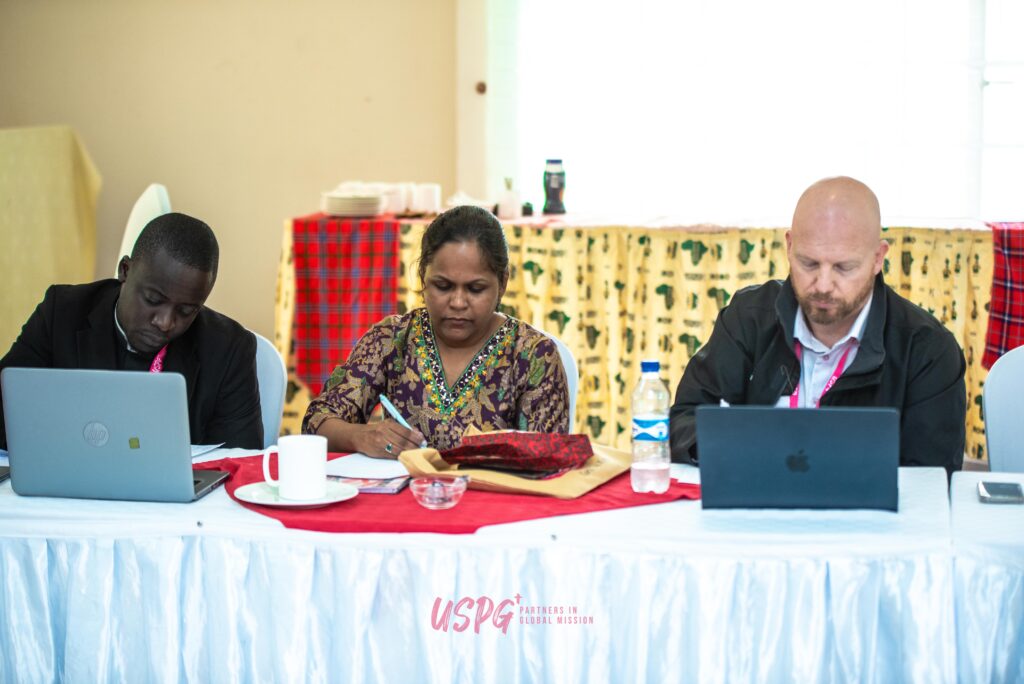

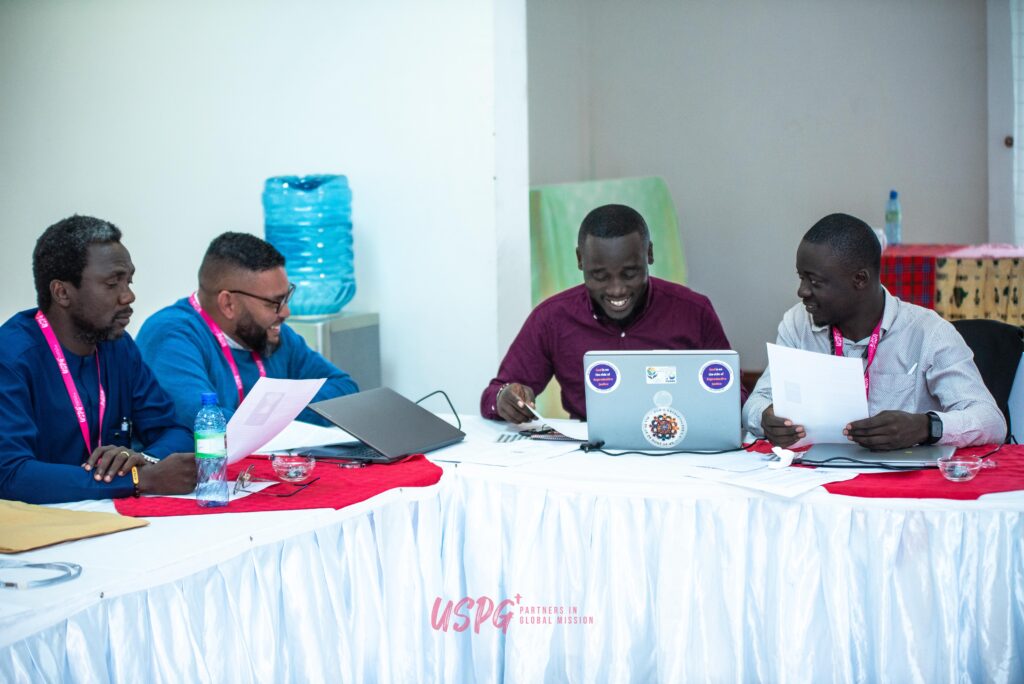
The inaugural in-person conference of the Fellowship of Anglican Scholars of Theology (FeAST), themed ‘Transformative Theologies: Rethinking Pedagogy, Praxis and Perspectives,’ was held in Colombo, Sri Lanka earlier this month. It brought together 30 scholars from nearly 20 countries across the Anglican Communion in fellowship, discussion and critical reflection.

With such a broad range of voices in the room, USPG Director of Global Mission, The Revd Canon Dr Peniel Rajkumar hoped to “reweave the mat” of Anglican theologies. To this end, scholars presented fresh perspectives on a variety of topics, addressing global challenges such as racial reconciliation, gender justice, anti-trafficking, and climate action. Through this, they highlighted the role of theology – both in theory and in practice – in addressing systemic injustices.
The event began on Sunday with a Eucharist service at St Mary’s Chapel, adorned with paintings of Biblical scenes reimagined in Sri Lankan design. We are deeply grateful to the Diocese of Colombo, Church of Ceylon for their warm hospitality and their bold witness of the Christian faith against a culturally and religiously diverse backdrop.


The artwork in the chapel depicts Biblical scenes such as the Woman at the Well (John 4)
“This is our everyday in my hometown. When I walk out the door, I’m doing interfaith dialogue and friendship. That’s why it’s been such an immersive and embodied conference, much more so than the average academic conference!” shared The Revd Luke Larner, a parish priest in Luton, one of the most ethnically and religious diverse parishes in the UK.
After a full day of presentations, delegates visited St Thomas’ College, a historic school founded with support from SPG, now USPG. Today, the school serves around 3,000 students from nursery to A-Level, offering instruction in Sinhala, Tamil, and English. This was the perfect location to discuss theological education, as presenters raised new de- and post-colonial perspectives that matched the innovation and cultural sensitivity of the school in which we were meeting.

Morning Service at St Thomas’ College

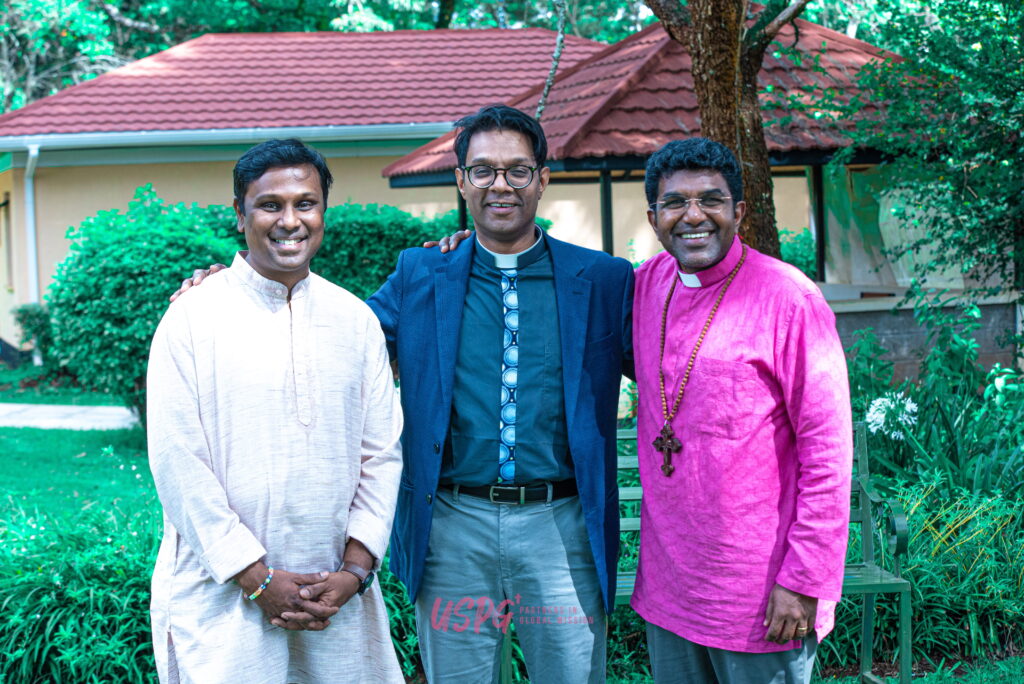
New friends The Revd Masango Warakula (Zimbabwe), Stephen Maerongo (Solomon Islands) and The Revd Stephen Obeng (Ghana)
Wednesday took the delegation to the Tulana Research Centre, led by Father Aloy Pieris, a pioneer in Asian Liberation Theology. Father Aloy Pieris, an inspiration to many in the room, shared about how his theology has been challenged and transformed by encounters and dialogues with Buddhist monks. It was interesting to explore and imagine how people of other faiths (or none) view Scripture, and what this can reveal or teach us.

On Thursday, the final presentations included contributions from online delegates in Ghana, the Philippines, and Fiji. The week then concluded with a Eucharist service held under a Banyan tree in the grounds of the Cathedral. This brought the week to a reflective and symbolic close – a “FeAST” in every sense of the word.


Delegates of the inaugural FeAST conference with The Right Reverend Dushantha Lakshman Rodrigo, Bishop of Colombo (centre). Pictured outside the Cathedral of Christ the Living Saviour, Colombo, Sri Lanka.
The inaugural in-person conference of USPG’s Fellowship of Anglican Scholars of Theology (FeAST), themed ‘Transformative Theologies: Rethinking Pedagogy, Praxis and Perspectives,’ has officially begun in Colombo, Sri Lanka. It brings together around 30 scholars from nearly 20 countries across the Anglican Communion including Argentina, Zimbabwe, India and the Solomon Islands.
Running from 10–14 November 2024, this pioneering gathering offers rising theologians and researchers from across the Anglican Communion a unique platform to discuss and present innovative research focused on the transformative potential of theology.
“We are here to reweave the mat of Anglican theologies” began The Revd Canon Dr Peniel Rajkumar, opting for a metaphor common across the Pacific. “By bringing together the different strands of the richness of theology available in the Communion, we hope to be able to move beyond a Eurocentric past and co-create a space where the theological gifts each of us bring will be cherished and used for mutual upbuilding” he added.
The FeAST Conference seeks to reimagine theological methods, education, and practice through liberative and decolonial perspectives, bringing together diverse voices to address pressing social and global issues. For example, the presentations on topics such as racial reconciliation, gender justice and creation care come from international speakers who “diversify the menu” of inherited forms of theology.
The Right Reverend Dushantha Lakshman Rodrigo, Bishop of Colombo, added a warm greeting and officially opened the conference. USPG expresses deep gratitude to the Diocese of Colombo for hosting the conference, drawing continued inspiration from the Church of Ceylon’s longstanding commitment to seeing faith through new eyes.
FeAST represents a rare community of mutual support, friendship and accompaniment in an otherwise polarised world. We look forward to seeing what insights this network can share, and how that thinking might lead to meaningful change.
Further details on featured speakers and conference highlights will be shared as the week progresses.