

Dr Paulo Ueti, USPG and Anglican Alliance, at TAPIRI with The Most Revd Marinez Bassotto, Primate of Brazil and Bishop of Amazônia (third from left)
As COP30 opens in Belém, Brazil, from 10-21 November, the world’s attention turns to the Amazon at a moment when climate decisions have never mattered more.
Belém is a unique choice as the city stands at the gateway to the Amazon – a vast rainforest home to communities whose cultures and survival are tied to the forest. Hosting the United Nations Climate Change Conference here brings global negotiations into direct contact with the realities of deforestation, mining, fires and social injustice. For the Diocese of Amazônia and its ecumenical partners, it also provides a rare opportunity to give frontline voices a stronger platform in the conversations that shape their future.
“Amazonia is responsible for around 20% of planet’s oxygen … and it is producing less and less with each passing year due to mining, illegal logging, and fires.”
It is fundamental to work together. Unity and ecumenism are among the most impactful responses the Church and faith communities can offer.
said The Most Revd Marinez Bassotto, Primate of Brazil and Bishop of Amazônia.
What does this look like?

Tapiri, an Indigenous Tupi word meaning “a hut for walkers,” is the name of an ecumenical gathering hosted in the grounds of Santa Maria Anglican Cathedral. The gathering includes panel talks, exhibitions and protests, and unites faith communities, Indigenous leaders and grassroots movements in shared reflection and action. Read the full Tapiri programme and watch the TAPIRI livestream here (with English translation).
At USPG, we stand for a fairer, more inclusive response to the climate emergency. We are proud to support Tapiri, represented by Dr Paulo Ueti, Theological Advisor and Regional Manager for Latin America and the Caribbean.
Among those diverse voices is Fei Tevi, representing the Anglican Church of Aotearoa, New Zealand and Polynesia. In his address at Tapiri, he called the Amazon and Pacific Ocean the “two lungs of our Earth”, highlighting their role in producing oxygen and capturing carbon. He stressed the need to work with Indigenous peoples, who “know best” how to protect these ecosystems. Watch and hear more in Fei Tevi’s full address: https://youtu.be/824K3ym_jos?si=FR9XaUy7mWYk8wAi
Alongside panels and discussions, Indigenous communities are bringing spectacle and wonder to COP30 with a flotilla of over 200 boats on Guajará Bay, music and dancing. The river protest celebrated unity, highlighted threats to forests and waterways, and amplified frontline voices in a powerful, visual statement for climate justice.
But why does all this matter?
For Anglicans, caring for the environment is one of the Five Marks of Mission. For all Christians, it’s a call from God to us. We are part of creation, we are connected to all aspects of it, and we need to play our part in looking after it.
concluded Archbishop Marinez.
Follow @USPGglobal for more updates.
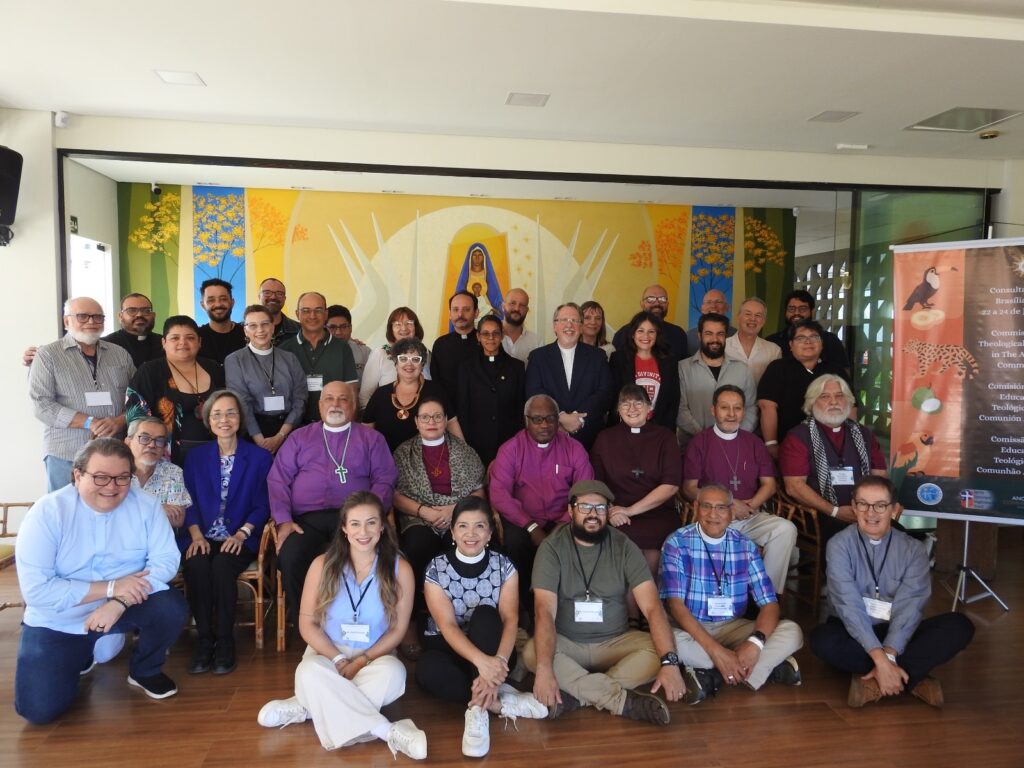
From 22–24 July, the Consultation for Theological Education in the Anglican Communion took place in Brasília, hosted by Centro de Estudos Anglicanos in partnership with the Anglican Communion and USPG. The event brought together around 35 leaders from across South, Central, and North America, as well as the Caribbean, to engage with the theme Decolonising Theological Education – a timely and powerful call to centre local voices, cultural context, and community-based approaches to leadership formation.
At the heart of the gathering were the voices and experiences of those present: clergy and lay leaders, educators and theologians, from eight Anglican provinces. Each brought insight from their own context, contributing to discussions on dismantling inherited colonial frameworks and creating new theological resources that speak to local realities and diverse learning styles.
Click here to meet some of the participants!
Participants engaged in the “See, Judge, Act” method – grounded in community and praxis – to examine how theological education can become more liberative, inclusive, and mission-focused. Dr Kwok Pui Lan offered a powerful keynote drawing from decolonial theory in Latin America, while Dr Paulo Ueti, USPG’s Regional Manager for the Americas and the Caribbean, led Bible studies.
Sessions were conducted in Portuguese, Spanish, and English, to ensure full participation.
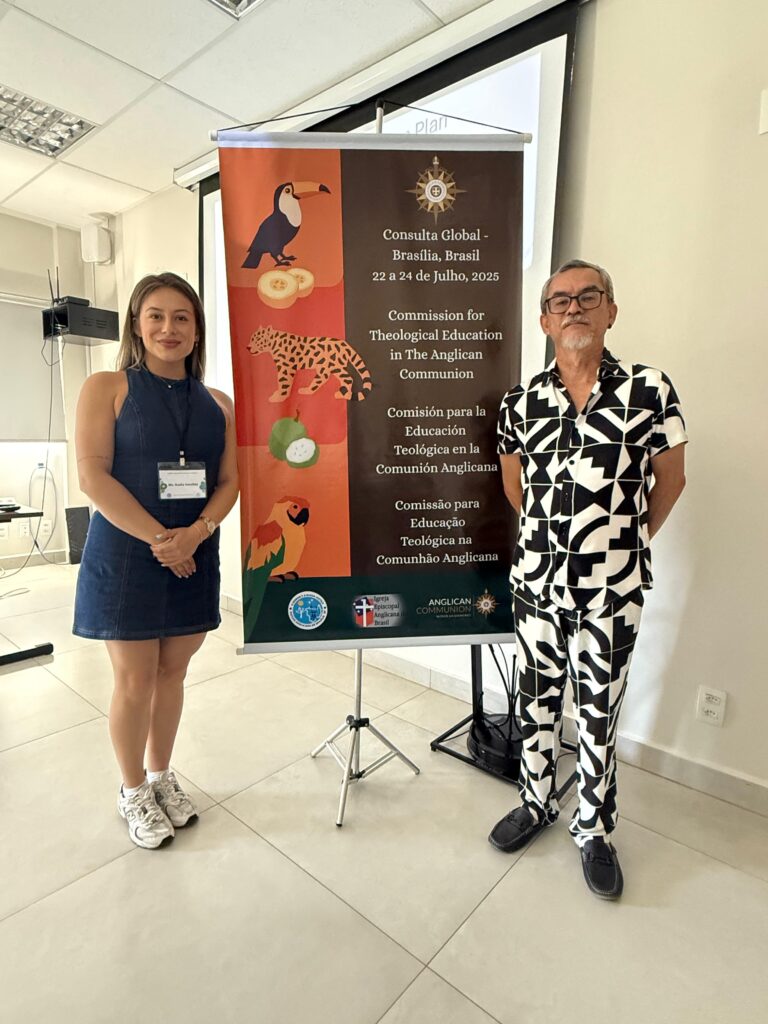
From Caribbean engagement with the legacy of slavery, to Canadian commitments to Indigenous theological voices, each province shared aspirations and actions to bring back to their seminaries and churches. The consultation affirmed the importance of equipping the whole people of God – not just clergy – for intentional discipleship and mission.
USPG is committed to walking alongside these leaders as they reimagine theological education that is contextual, collaborative, and rooted in justice.
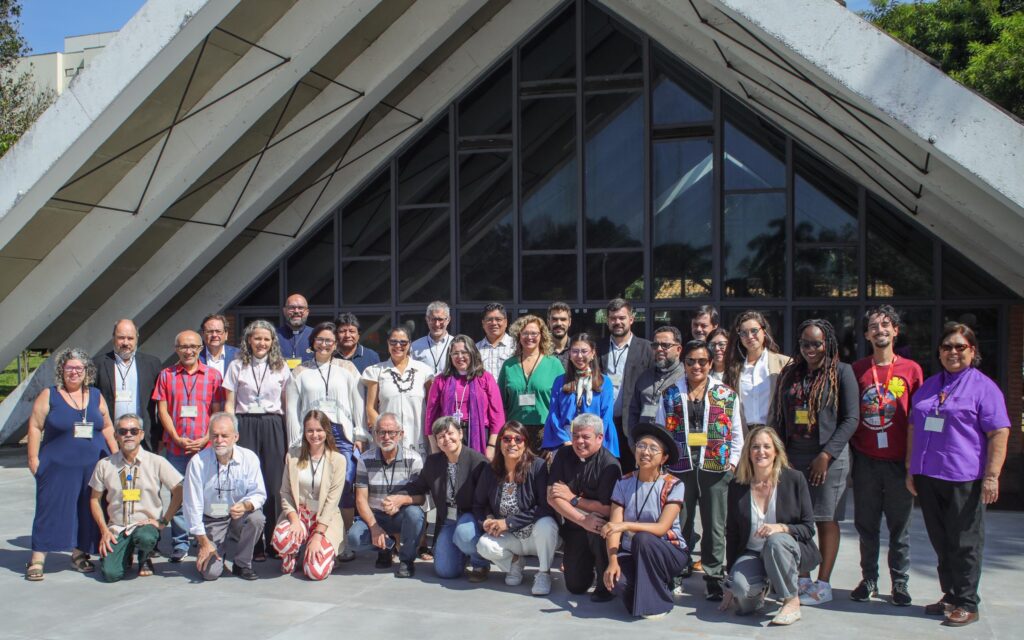
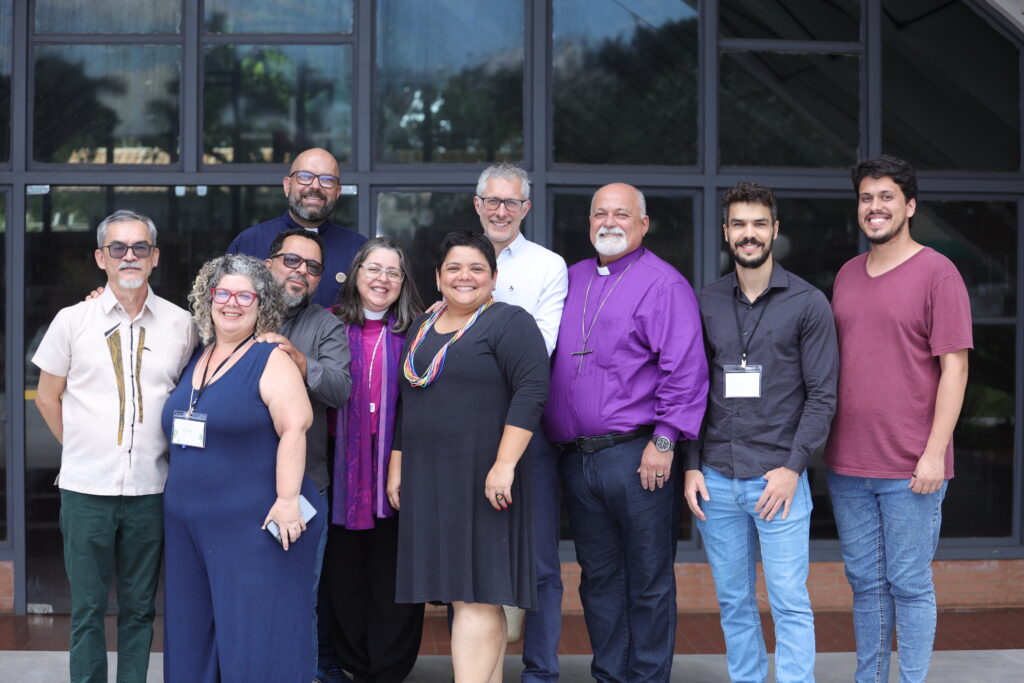
Together for the climate: Delegates outside the Anglican Cathedral in Brasilia. Photo: Bruno Dias Guedes
Between 18-20 March 2025, around 50 church leaders, faith representatives, ecumenical organisations, Indigenous groups, and climate specialists gathered in Brasília to prepare for COP30, the 2025 United Nations Climate Conference. Over three days, delegates engaged in thoughtful discussions and planning, focusing on the churches’ public advocacy actions and a collective response to the current climate crisis.
COP30 in Belém is a crucial opportunity, not least because it will take place within the Diocese of Amazônia. The local diocese has long promoted Indigenous rights and care for creation, bearing witness first-hand to the effects of climate change and destructive environmental practices that will be the order of discussion at COP.
During the opening prayer service at the Anglican Cathedral of Brasília, faith leaders emphasised the urgency of confronting the climate crisis and the role of faith in inspiring action. The Most Revd Marinez Bassotto, Archbishop of the Igreja Episcopal Anglicana do Brasil, urged:
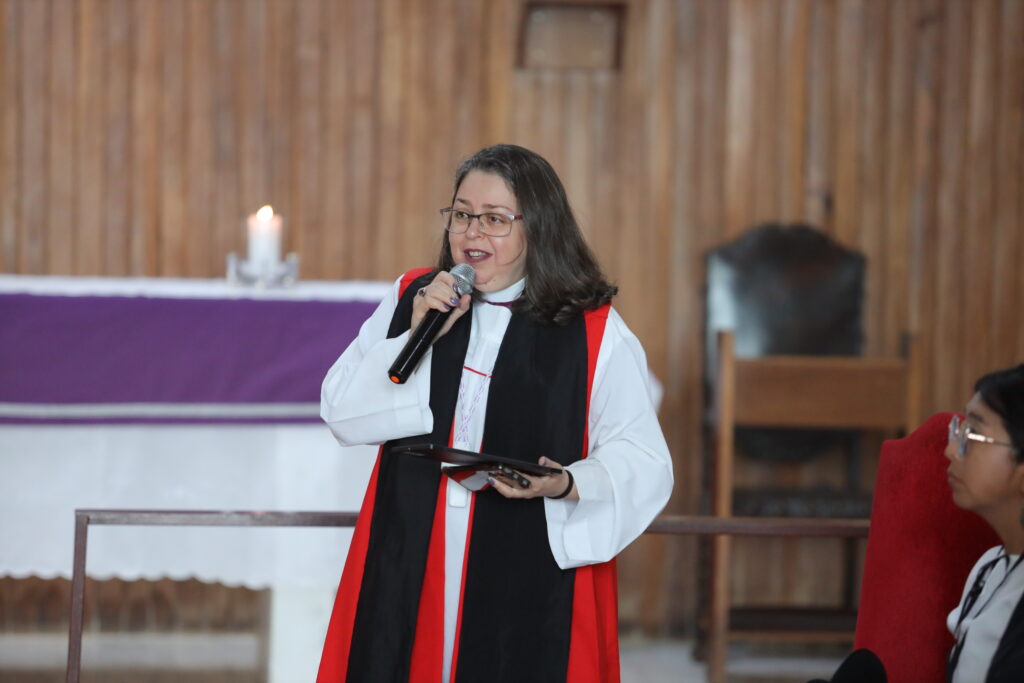
This hope is alive, propelling us forward and compelling us to act today. The urgency of tomorrow pushes us to fight now. For believers, hope is more than a feeling—it is action.
Hope is already being turned into action as voices come together. The diverse group included delegates from across Latin America and the Caribbean—including Brazil, Honduras, El Salvador, Argentina, and the Dominican Republic— who represented a diverse range of churches and organisations, such as the Igreja Episcopal Anglicana do Brasil, Sínodo Luterano Salvadoreño (Lutheran Synod in El Salvador), and the World Council of Churches. Anglican partners like the Anglican Communion Office joined ecumenical groups including Cáritas Brasileira, Tearfund Latam, and the National Council of Christian Churches of Brazil.
The Revd Dr Rodrigo Espiúca, a vicar in the Diocese of Brasília and the Diocesan Officer for Human, Environmental and Territorial Rights, came away from the meeting in good spirits:
I feel much more optimistic about the collaboration between churches and other faith-based organisations. It is compelling to stand united not least because it sends a powerful message to the government and [world] leaders.
On the last day of the meeting, the delegation welcomed Marina Silva, Brazil’s Minister for the Environment and Climate Change, who was presented with the ‘Call to Action’. The document, endorsed by all present, details the current crisis and highlights the voices of impacted communities. Also central to the communiqué is the Christian imperative to act with urgency to protect God’s creation. It reads:
We stand in solidarity with the people and communities most affected as we “mourn with those who mourn” (Romans 12:15). At the same time, we maintain a steadfast hope in a God who is renewing our minds and our world (Romans 8:19-21) as He urgently calls us all to action.
Dr Paulo Ueti, USPG, (pictured left) with friends and church partners from the Diocese of Brasília, including The Rt Revd Maurício de Andrade, The Revd Dr Rodrigo Espiúca and The Most Revd Marinez Bassotto, Archbishop of the Igreja Episcopal Anglicana do Brasil.
The Revd Canon Dr Peniel Rajkumar Theologian and Director of Global Mission concludes:
USPG, with its strong commitment to climate justice, sees this meeting as one small but important step towards ensuring a just future for the earth, our common home.
In partnership with the Igreja Episcopal Anglicana do Brasil, we are committed to advancing climate justice through prayer and action, championing equitable and effective climate solutions. Stay tuned and follow @USPGglobal for updates as we approach COP30.

By Dr Paulo Ueti
Theological Advisor and Regional Manager for the Americas and the Caribbean