
Update: January 2026
In September 2025, severe monsoon rains caused catastrophic flooding across Punjab, Pakistan, affecting districts including Kasur, Lahore, Multan, and Faisalabad. Many homes were destroyed, rooftops washed away, crops and livestock lost, and families displaced with limited access to clean water, food, or shelter.
In response, the Church of Pakistan, in partnership with the United Society Partners in the Gospel (USPG), launched an emergency relief project to support the most vulnerable communities. The Diocese of Raiwind conducted an initial survey in and around the Ganda Singh Border area. These surveys identified urgent needs including food, water, medical care, and temporary shelter.
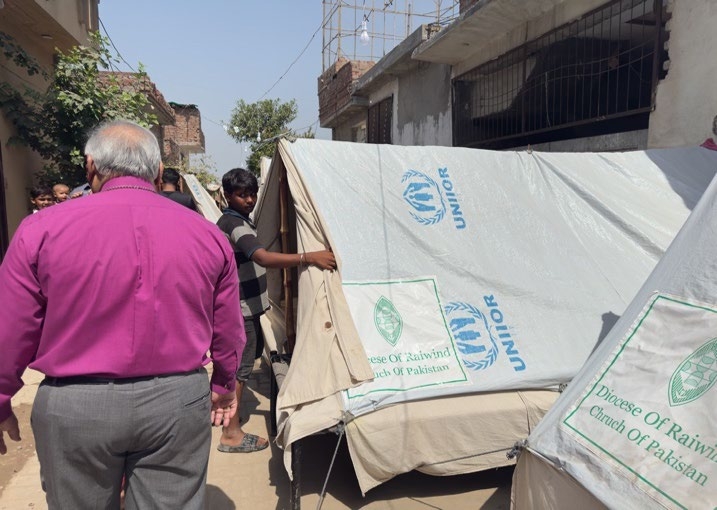
The first relief activity, carried out in early September, provided cooked meals, ration packs, clean drinking water, and tents for displaced families. A medical camp in District Kasur, offered free check-ups and essential medicines, addressing waterborne illnesses and other health issues caused by contaminated floodwater.
The Most Revd Dr Azad Marshall, Moderator of the Church of Pakistan and other members, visited affected areas to pray with families, offering comfort, solidarity, and hope during a time of great hardship.
In late 2025, the Church of Pakistan extended its relief work to additional flood-affected communities. Families received essential supplies such as ration packs, blankets, flour, and clean water, helping them meet their immediate needs and recover from the devastation. These distributions, carried out in partnership with USPG, provided not only material support but also encouragement and hope during the festive season, reinforcing the Church’s ongoing commitment to compassionate service.
Through timely interventions, holistic care, and collaboration the Church of Pakistan has provided life-saving support and hope to communities devastated by the floods, demonstrating faith in action during one of Punjab’s most challenging natural disasters.
Let us pray:
Loving God, as communities continue to recover from the floods, we pray for strength, healing, and renewed hope. Bless those still in need, guide those who support them, and inspire us all to act with compassion and love in the year ahead.
Amen.
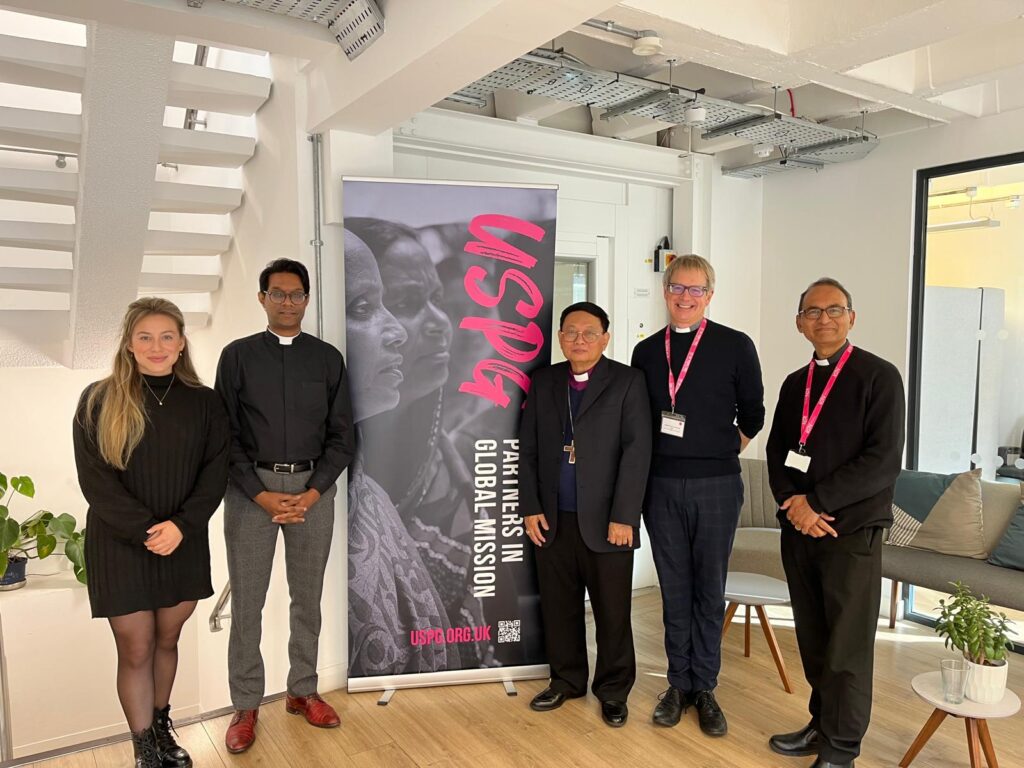
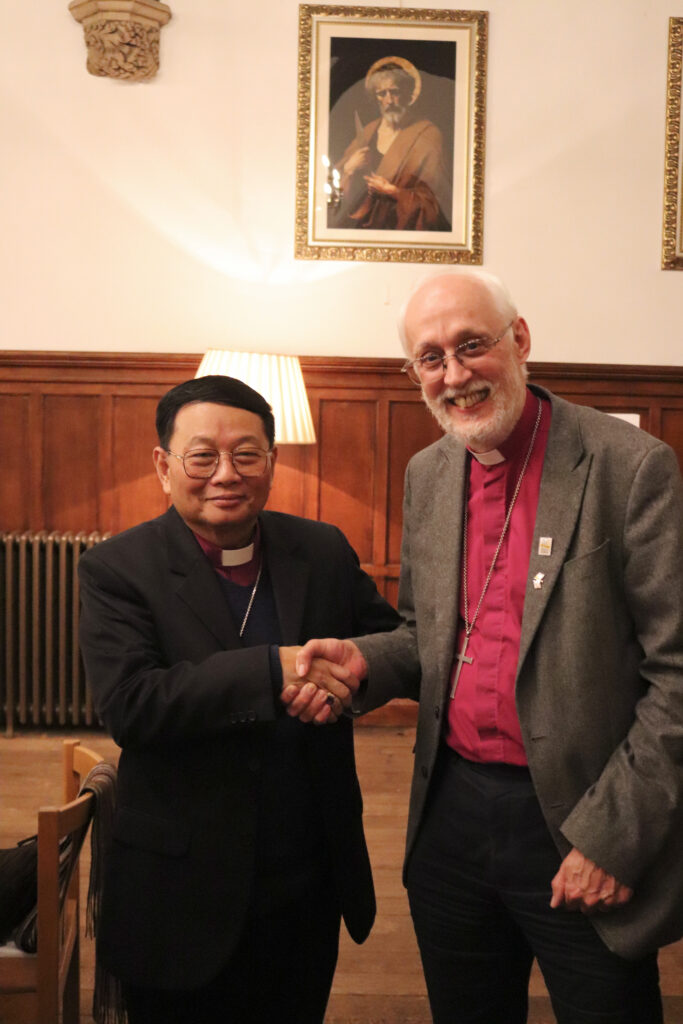
On the evening of 12 November, The Most Revd Stephen Than Myint Oo, Archbishop of Myanmar and Bishop of Yangon, joined The Rt Revd Philip Mounstephen, Bishop of Winchester, for an ‘In Conversation’ dinner organised by USPG.
Guests were invited to reflect on the theme of ‘Resilient Faith in Myanmar’, hearing first-hand about the life and witness of the Church in Myanmar amid many challenges, including ongoing political instability, conflict, and natural disasters.
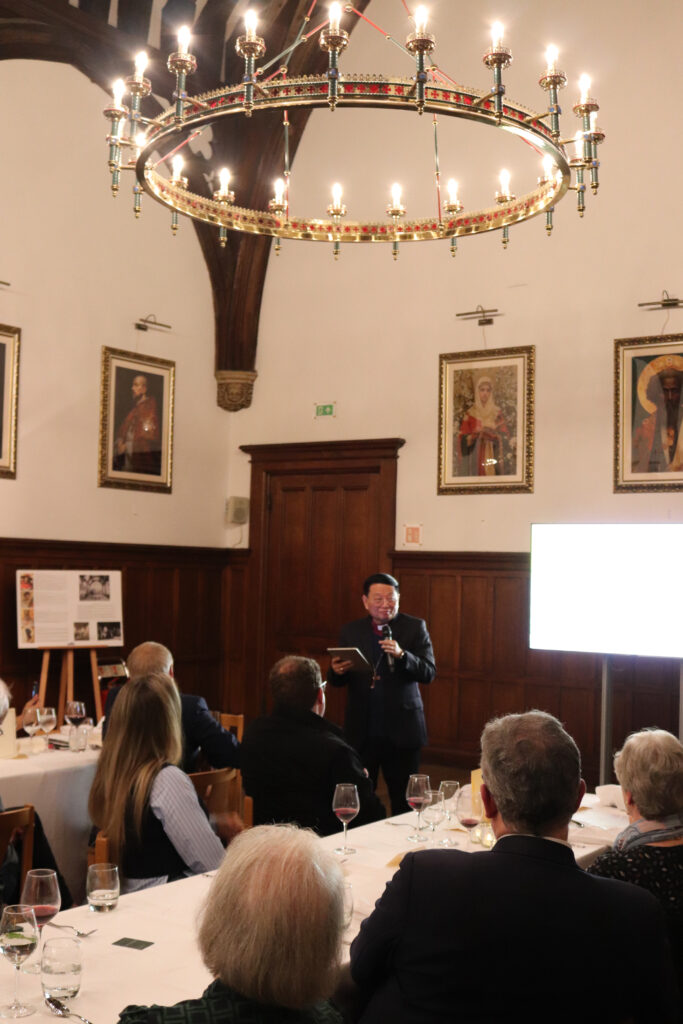
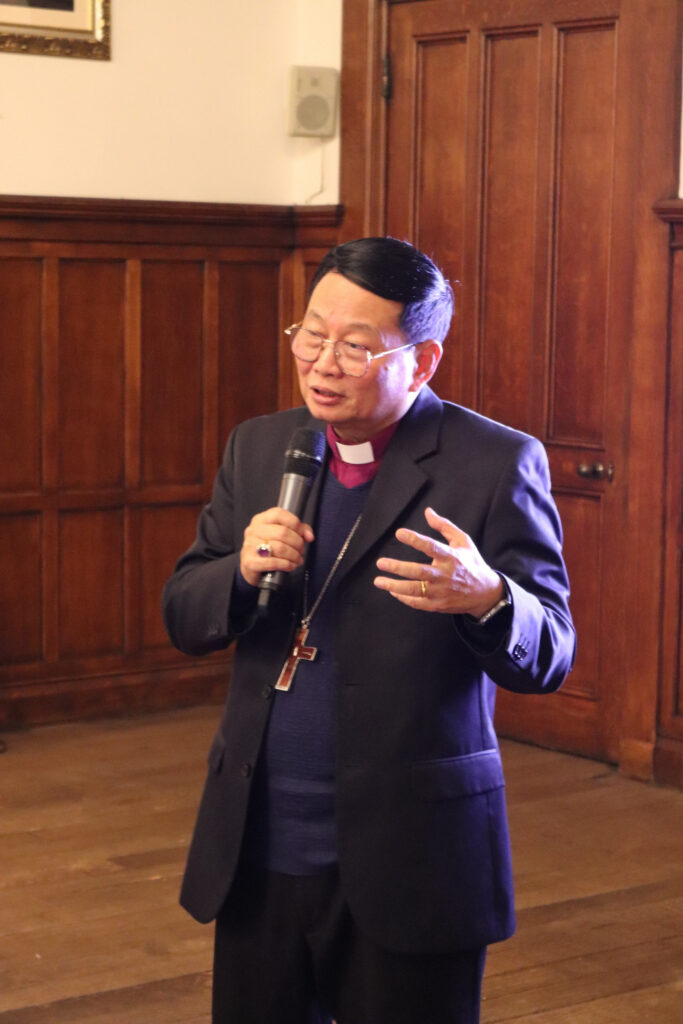
During the evening, Archbishop Stephen shared moving insights into the history and ministry of the Church of the Province of Myanmar, founded in 1877 through the partnership of USPG, the Diocese of Winchester, and the Mission to Seafarers. Today, the Church continues to serve the people of Myanmar with courage and faith across nine dioceses.
Archbishop Stephen spoke of the Church’s rich and enduring relationship with USPG, which has supported mission schools, clergy pensions, theological education, community health and humanitarian work for nearly 150 years.
“Even though we are a very small church, we are very vibrant,” said Archbishop Stephen. “In the darkness, in the thick cloud, USPG is our silver lining.”
Myanmar has been under military control since the 2021 coup. Adding to this, in March 2025, a 7.7 magnitude earthquake struck the country, devastating community structures and communities in the Dioceses of Mandalay and Taungoo. More than 3,000 people were killed, thousands injured and many displaced. Supported by USPG’s Rapid Response Fund, the Church of the Province of Myanmar led relief and recovery efforts rebuilding churches, restoring homes, and caring for affected families.
Despite it all, Archbishop Stephen is resolute that help comes from the Lord:
“God is with us amidst our suffering. He is ready to help us.”
The evening offered an inspiring reminder of faith, partnership in action and a call to prayer for peace and reconciliation in Myanmar.
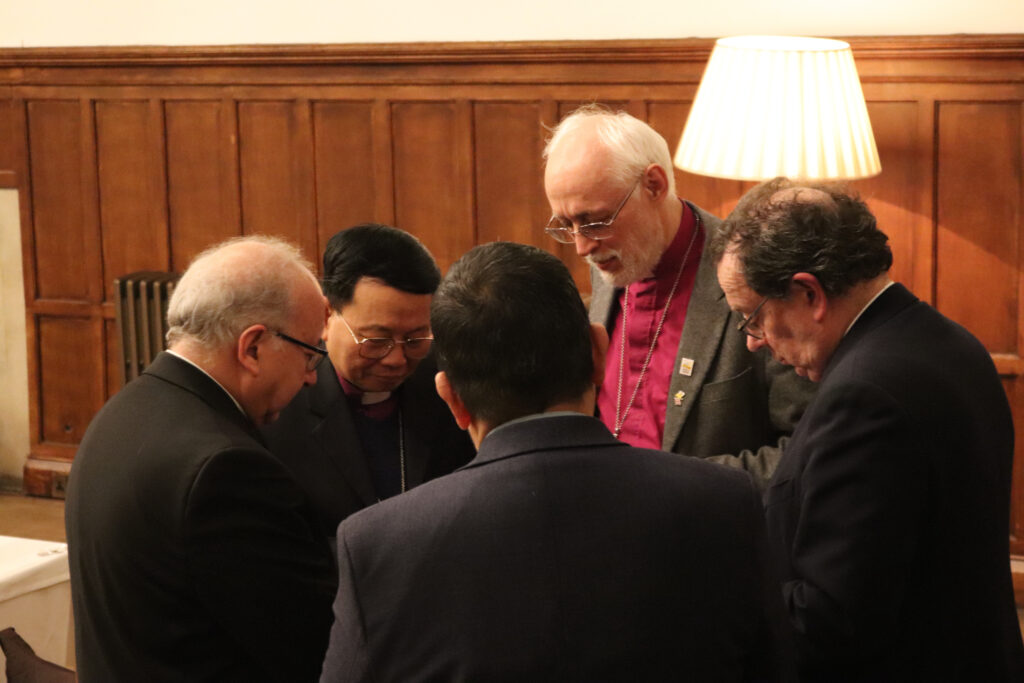
A moment of prayer with The Rt Revd David Hamid (former Suffragan Bishop in Europe), The Rt Revd Philip Mounstephen (Winchester), and The Rt Revd David Walker (Manchester).
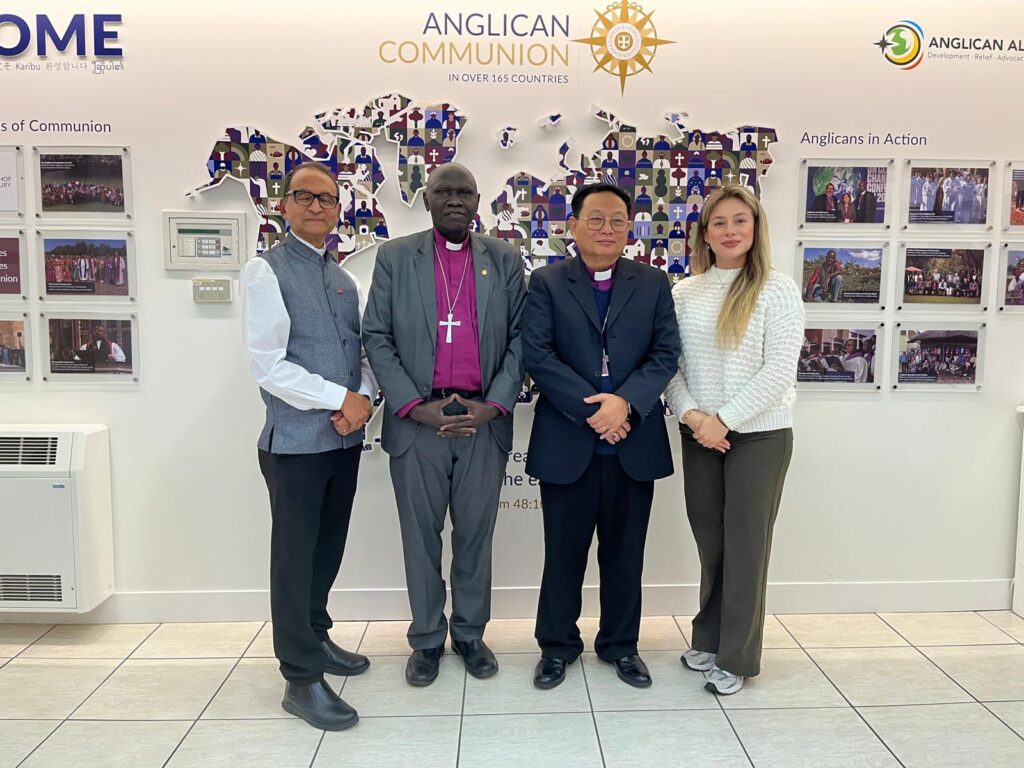
As part of the visit, Archbishop Stephen also attended a round table meeting at the Anglican Communion Office on Friday 14 November where he met with the Secretary General, Bishop Anthony Poggo and staff. It was a rich time of fellowship and solidarity. USPG were represented by Nadia Sanchez, Regional Programme Coordinator, and Davidson Solanki, Senior Regional Manager for Asia and the Middle East.
Let us pray:
Gracious God,
We give thanks for the resilience and vibrant faith of the people of Myanmar who continue to rebuild after the earthquake and amid ongoing conflict. May they know your comfort and strength as communities are restored.
We pray for church leaders and communities supporting the reconstruction of homes, schools, and places of worship. Grant them wisdom and perseverance as they rebuild lives and renew hope.
We thank you for all who have offered help – church workers, volunteers, and faithful supporters – signs of your love in times of darkness.
We pray for peace, your shalom to prevail in the nation of Myanmar.
Through Jesus Christ our Lord,
Amen
Pray With The World Church is now available online and in print – click here for a free copy.
Marking the first time a global Anglican gathering has been held in the Church of North India, the Human Trafficking and Modern Slavery conference is this week gathering over 50 global participants to share expertise, strengthen relationships, and equip churches to respond more effectively to the evils of the flesh trade.
Led by the Diocese of Durgapur (Church of North India), in collaboration with USPG, the conference aims to develop the strong partnerships necessary to effectively respond to human trafficking and modern slavery across the global Anglican Communion. The Diocese of Durgapur has been chosen as host because of its long-established and highly effective anti-trafficking programme, run in partnership with USPG.
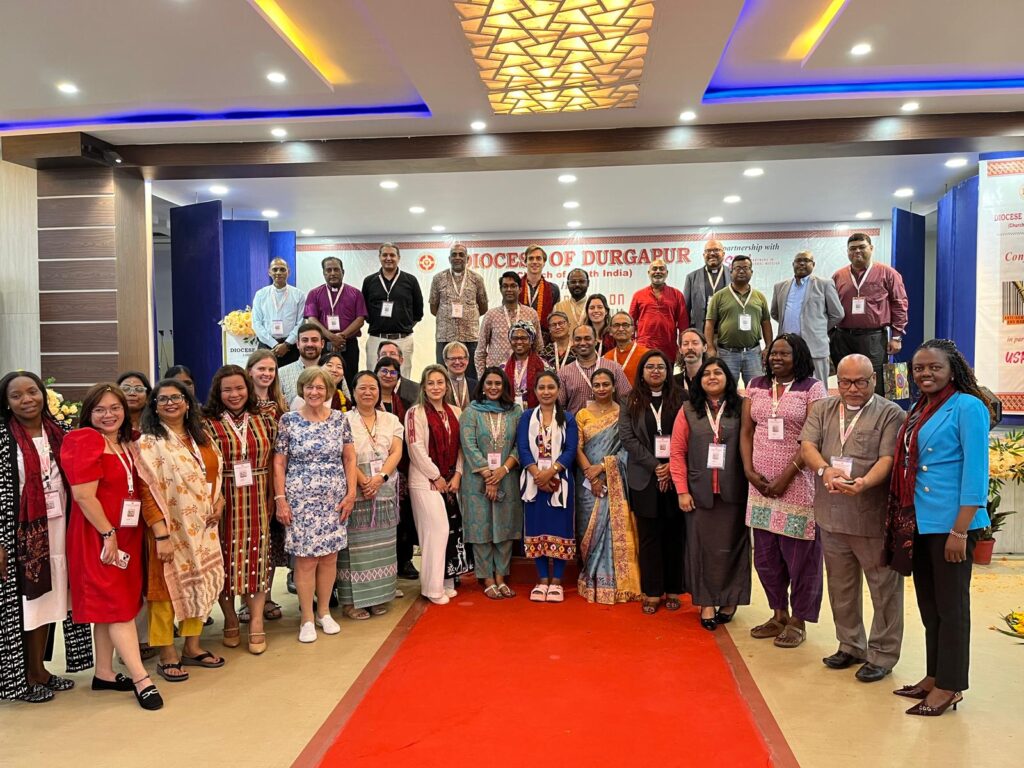
From Hong Kong to Kenya, delegates from around the world stood together, united against human trafficking.
It is estimated that 49.6 million people are currently living in modern slavery globally, including forced labour and forced marriage, with criminal profits from forced labour now estimated at over £185 billion annually. In India alone, it is thought that roughly 11 million people are living in modern slavery as recently as 2021 – the highest estimated total number of people living in modern slavery of any country.
During the conference, delegates will take part in a field visit to see the Diocese of Durgapur’s anti-trafficking programme in action and learn directly from the communities and practitioners involved. The group comprises a wide range of experience, including safe-home volunteers from Hong Kong and Calais, a human rights lawyer from Brazil, a gender-based violence advocate from Zambia, and church leaders representing multiple continents.
Speaking at the conference, The Rt Revd Sameer Isaac Khimla, Bishop of Durgapur, said:
“Human trafficking continues to be one of the darkest realities of our time, affecting millions, stripping individuals of their identity, freedom, and hope. As a Church and as a community rooted in faith and compassion, we cannot stand by in silence”.
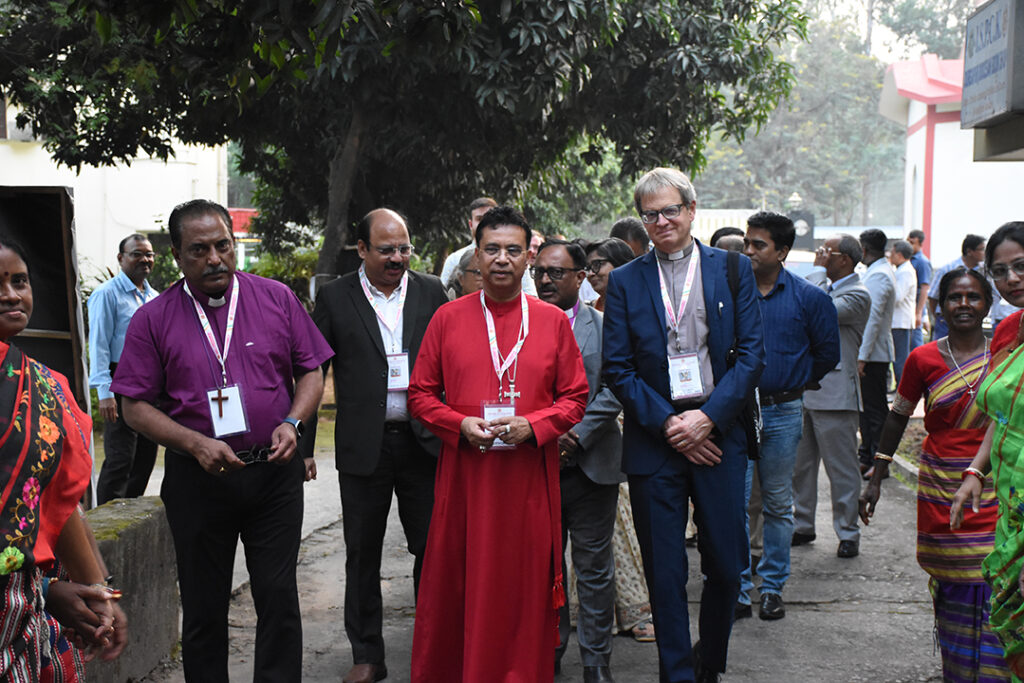
The Revd Canon Dr Duncan Dormor, General Secretary of USPG, added:
“This conference is more than a meeting. It is space for shared learning, honest dialogue, and collaborative action. I sincerely hope that our time together will inspire fresh insights and strengthen our collective efforts to protect and empower at-risk communities – not only in India, but around the world.”
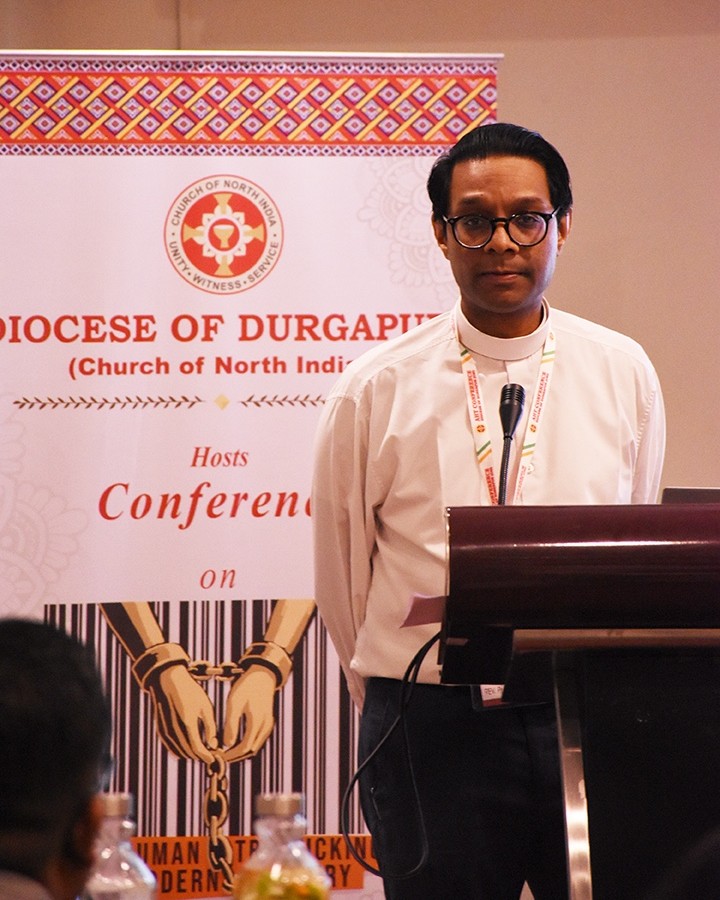
The Revd Canon Dr Peniel Rajkumar, Global Theologian and Director of Global Mission at USPG, said:
“These are not distant statistics: they are real people created in God’s image, with inherent worth, dignity, and value, regardless of status or circumstance. Because of this, the Church cannot remain passive. As Christians, we are called to respond: to “let the oppressed go free” (Isaiah 58:6), to “seek justice, rescue the oppressed” (Isaiah 1:17), and to proclaim “freedom for the captives” (Luke 4:18).”
The conference is also being made possible through the generous support of Westminster Abbey and the Anglican Communion Fund.
USPG is joining with partner churches and Christian agencies in calling congregations to pray for peace in the Middle East.
The Church of England has called for a day of prayer for peace on Sunday 21 September 2025, to coincide with the United Nations’ International Day of Peace. You can read the Church of England’s announcement here: https://www.churchofengland.org/media/press-releases/churches-invited-pray-together-peace-middle-east
As the Anglican mission agency committed to walking alongside our global partners and currently engaged in supporting the Diocese of Jerusalem’s humanitarian response to the crisis in Gaza, USPG invites churches to take part in this act of prayerful solidarity. Prayer is a witness of hope in the face of suffering and a sign of our shared commitment to peace, justice, and reconciliation.
For this occasion, The Most Reverend Dr Hosam E. Naoum, Archbishop of the Episcopal Province of Jerusalem & the Middle East, has written a powerful prayer that churches are encouraged to use:
A Prayer for the Holy Land
Gracious Father, whose blessed Son Jesus Christ came down from heaven to be the true bread which gives life to the world: In your mercy, provide for all those in Gaza and beyond who suffer from hunger and starvation, that they may be given both physical bread to nourish their bodies and heavenly bread to sustain their souls. By the power of your Spirit, bring a speedy end to this cruel war, the release of all captives, care for the sick and wounded, comfort for those who have lost loved-ones, and the opening of a pathway for a just and lasting peace here in the very homeland where your Son, our Lord Jesus Christ, ministered during his earthly life; who lives and reigns with you and the Holy Spirit, one God, now and forever.
Amen.
Free download: A Call to Prayer and Public Witness for Peace in the Holy Land (PDF)
Further resources and opportunities for prayer and action will be shared in the weeks ahead.
The Revd Davidson Solanki, USPG’s Senior Regional Manager for Asia and the Middle East, has recently returned from visiting our church partner, the Anglican Church in Japan – The Nippon Sei Ko Kai (NSKK). The purpose of his visit was to strengthen and deepen ties and partnerships, learn about the mission and ministry of the NSKK and to visit Theological Education Institutions (TEIs) in Japan, one of which is involved in USPG’s Asia Theological Accompaniment Programme (ATAP).
He said, ‘This visit helped renew USPG’s historic ties with NSKK as it affirmed our commitment and solidarity with the Anglican church in Japan’s ongoing mission work. The visit to St Michael’s Cathedral and St Michael’s International School in Kobe also strengthened our bond as Bishop Hugh James Foss, of Kobe Diocese, and Miss Leonora Lea, the founder of St Michael’s International School, were both SPG (Society for Propagation of Gospel) missionaries.’

At St. Michael’s International School tracking the legacy of SPG missionaries like Miss Lea.
The NSKK was among the first Protestant churches established after Japan was re-opened to the world in 1854, ending 200 years of sakoku, or self-isolation. The SPG (precursor to USPG) played a pivotal role in the establishment of the NSKK in 1887. It later became a self-supporting Province in 1972. Today there are 290 churches, about 200 clergy, 11 dioceses and around 25,000 members – though numbers are on the decline. The current Primate, Archbishop David Eisho Uehara, was installed in 2024. He is also the Bishop of Okinawa.
Davidson has been hugely inspired by the mission and ministry of the NSKK, ‘It has a unique mission among the communities affected by the nuclear disaster in Fukushima which followed the tsunami on 11 March 2011. They also advocate against the use of nuclear energy following the nuclear bombs dropped on Hiroshima and Nagasaki in the Second World War.
He continued, ‘At their General Synod in 1996 the NSKK formally took responsibility for its role during the Second World War and the preceding Japanese occupation of China and Korea and Asian countries. As part of their confession, they have entered partnership with the Anglican Church in Korea where clergy from Korea are invited to serve in Japan through an exchange programme.
USPG hopes to continue this partnership in mission with NSKK as it has much to offer to the Anglican Communion through its unique mission on nuclear disarmament, peace, and reconciliation.
Davidson visited the Central Theological College in Tokyo and Bishop William’s Theological Seminary in Kyoto which relates to USPG’s Asia Theological Academy. He said, ‘These initiatives encourage the TEIs in Japan to continue their ministry even when facing difficult challenges.
Despite the small number of seminarians, hope and determination to carry on the ministry remain strong.

Outside Central Theological College with Soshi (pictured second from left) – a seminarian who took part in our Emerging Leaders Academy, a cross-cultural youth programme. Click to find out more.
Here’s how you can pray for the NSKK:
- Give thanks and praise for the church leaders as they continue to serve God with joy and deep commitment
- Pray for wisdom and guidance to the Church in Japan as they continue their efforts in revitalising their mission and ministry
- Pray for God’s guidance in addressing issue of decline in the Church
- Pray for God’s strength as the Church in Japan continues its mission on nuclear disarmament, peace, and reconciliation
- Pray that more young people become interested in mission and join the ministry of the Church.
To find out more about the NSKK visit their website here: About Nippon Sei Ko Kai
Find out more about USPG’s partnership with the NSKK: Click here
The Church of the Province of Myanmar (CPM), a longstanding partner of USPG, has shared an update on the extraordinary response to the devastating 7.7 magnitude earthquake that struck central Myanmar on 28 March. In the face of unimaginable loss—with more than 3,000 people killed and 4,500 injured—CPM has demonstrated Christ’s love, courageous leadership and compassion. Together, we continue to support vital relief efforts in the most affected areas, particularly within the Diocese of Mandalay and the Diocese of Taungoo.
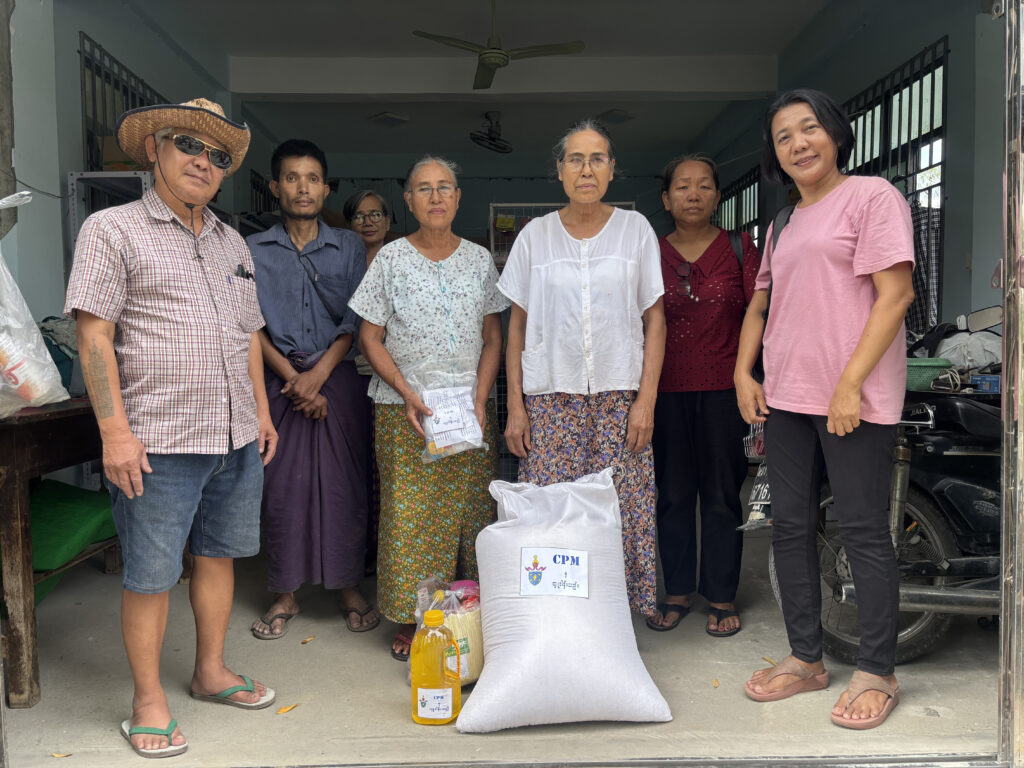
Please keep Archdeacon Joseph Yin Oo who is leading local efforts, as well as the communities affected, in your prayers.
CPM share that the earthquake response is entering its final short-term phase. To this end, some churches have already begun reconstruction using their own resources, while in other areas, preparations are ongoing as communities await official authorisation to proceed.
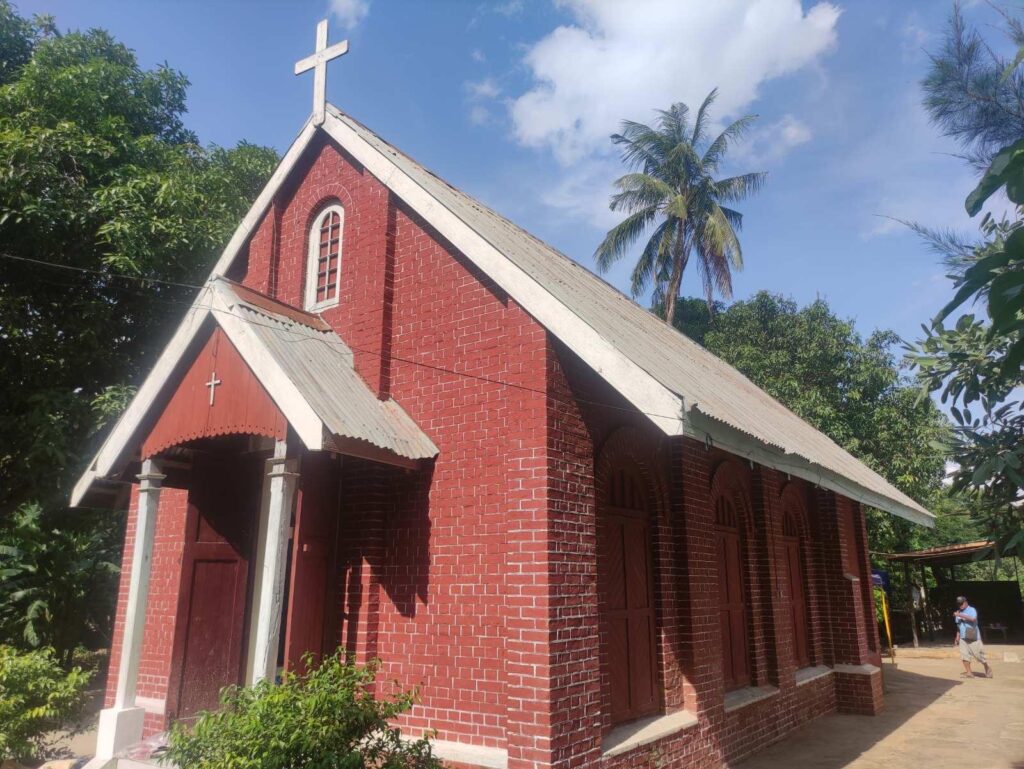
The photos above include St. Mary’s Church at various stages of restoration, the completed renovation of the Community Hall and Chapel, and the fully repaired All Saints’ Church in Myit Nge.
Despite the challenges, church leaders are actively organising materials in advance, as there are concerns about rising prices day by day. CPM are continuing to raise funds, particularly to support more churches that have been damaged — beyond the assistance already given to affected households.
A closing message from Stella, Director of Provincial Department:
Thank you once again for your continued prayers and support. We deeply appreciate your generous donations to CPM.
Let us pray for Myanmar:
Gracious God,
Thank you that you are a faithful God. Please continue to comfort those suffering from the aftermath of the earthquake – the mourning and the injured. Bless the rebuilding of churches and communities. Grant swift permission for reconstruction and strengthen all providing help. Please provide support for those in need and continue to bless all those in the Church of the Province of Myanmar.
Amen.

The group pictured in Trinity College Chapel in Kandy, Sri Lanka. The chapel stands out as a unique Anglican church, blending together traditional Buddhist and Indigenous architectural elements.
In late May 2025, the Asian Theological Academy (ATA)’s Refresher Course took place in Kandy, Sri Lanka, with support from USPG. This year’s theme, “Reconstructing Theological Formation for Transformation,” invited church leaders, theologians, and community leaders from across Asia to imagine faith not as a static tradition, but as a living, breathing hope and response to the troubles of this world.

Participants from Indonesia, Malaysia, the Philippines, Taiwan, Pakistan, Bangladesh, India and Sri Lanka gathered for a three-week course engaging with scripture, theology, and social realities in new and challenging ways.
In his keynote address, The Revd Canon Dr Peniel Rajkumar, Global Theologian and Director of Global Mission at USPG, urged participants to
engage with the margins as sacred spaces of divine self-disclosure
For it is in places of struggle, silence, and vulnerability, he argued, that the divine voice often speaks loudest.
In many parts of the world, especially in the Global South, pastors and lay leaders have little access to ongoing theological education. The ATA Refresher Course is designed to fill that gap — offering a space for leaders to reflect, learn, and return to their contexts renewed and better equipped to lead with hope and justice.
The Refresher Course is aimed at both clergy and lay leaders and focusses on a specific topic that combines theology, biblical studies, social analysis, and contextual learning. In keeping with its grassroots ethos, participants of the Refresher Course this year also visited the Tulana Research Centre to meet its founder, Fr Aloysius Pieris, a long-time supporter of ATA considered to be the founder of Asian Liberation Theology.
To learn more about USPG’s commitment to transformative theological formation, visit: https://uspg.org.uk/cross-regional-work.

From 6-9 May 2025, the Church of Bangladesh hosted a “Training for Trainers” programme with support from USPG. The event brought together key church leaders including The Rt Revd Samuel Sunil Mankhin, Moderator of the Church of Bangladesh, and Bishop Hemen Halder of Kushtia and Chairman of the Anti-Human Trafficking Commission. Deans, priests, catechists, and health workers also participated.
The four-fay training took place in Mymensingh, East Baromari, a remote hilly border village in the Haluaghat Deanery, an area predominantly inhabited by the Garo community. Due to its location and demographics, the area is considered especially vulnerable to trafficking, making the gathering particularly timely and relevant.
The primary aim of the programme was to form a trained, united front to combat human trafficking across the Church’s workplaces and communities.
Opening the event, The Rt Revd Samuel Sunil Mankhin, Moderator of the Church of Bangladesh, offered a reflection on the biblical story of Joseph being sold by his brothers as an early instance of human trafficking. Drawing parallels to current realities, he stressed the importance of the Church’s mission in this area, urging participants to see the training as a worthwhile step in their mission and ministry.
Bangladesh currently ranks third globally in human trafficking, up from fourth in 2020–21, highlighting the country’s increasing vulnerability. In response, the Church of Bangladesh is stepping up efforts to raise awareness and offer protection and prevention from this evil.

Revd Jonerson Dio leading a session on Micah 6:8 – the biblical call for justice
Mrs Hanna Usha Chambugong, Programme Coordinator, led a session on the forms and signs of trafficking, helping participants recognise who is most at risk and how traffickers operate. Speaking in both Garo and Bengali, she ensured everyone could engage fully—particularly local women, who shared real-life stories of survival. The accounts underscored just how urgent and close to home the issue is.
Further inspiration came via Zoom from Raja Moses, Programme Director in the Diocese of Durgapur, Church of North India (CNI). Sharing examples from CNI’s anti-trafficking work, Mr Moses recounted recent roadside campaigns using posters and rickshaw-mounted loudspeakers to build local and administrative awareness.
Christianity must be remembered wherever one works,” he said. “It’s not just about rescue—it’s about changing the environment where trafficking thrives.
The Revd Davidson Solanki, Senior Regional Manager: Asia & the Middle East USPG, also joined the trainees on Zoom, to represent USPG’s continued partnership. The group left feeling inspired and motivated, with plans for quarterly Zoom meetings to ensure the training’s impact endures. This programme marks a significant step forward in the Church of Bangladesh’s commitment to justice, protection, and restoration for the most vulnerable.

“For we are co-workers in God’s service; you are God’s field, God’s building.”
1 Corinthians 3:9
From 29 April to 2 May, church leaders, mission partners, and diocesan representatives gathered at Luther King House in Manchester for the South Asia Forum 2025. This year’s theme, “Nicene Creed: We Believe – One in Faith, One in Hope, One in Love,” marked the 1700th anniversary of the Council of Nicaea, a moment to celebrate the shared belief and theological foundation that continues to unite the global church. USPG, a key partner agency, was represented by The Revd Davidson Solanki and Nadia Sanchez from the Global Mission Team.
The forum brought together representatives from the Church of North India, Church of South India, Church of Pakistan, and Church of Bangladesh, alongside mission agencies such as CMS, USPG, EMS, Kirk-in-Actie. Also in attendance were church partners such as the Methodist Church, Church of Scotland and UK diocesan partners such as the Church in Wales, Diocese of Manchester, Ely link, Cambridgeshire Ecumenical link, and the Diocese of Oxford.

The gathering opened with a welcome and keynote address by The Rt Revd Dr Matthew Porter, Bishop of Bolton, who spoke on the enduring importance of the Nicene Creed and its role in shaping ecumenical identity. Participants engaged in deep listening and honest dialogue around the challenges and opportunities of living out ‘one faith’ in diverse and often complex contexts.
Sessions throughout the week focused on themes of faith, hope, and love, offering space for both theological reflection and practical discussion. Bishops and clergy shared how their churches maintain unity amid difference, and representatives from mission agencies reflected on partnership and support.
On Thursday, the focus shifted from listening to seeing. Participants visited key churches in the area – including Holy Trinity Platt, St Ann’s, Manchester Cathedral, and the newly established Fabric Church – each offering a glimpse of local mission.
Evening panels and prayers provided space to unpack and process each day. One such highlight was the closing Eucharist, led by The Rt Revd Dr David Walker, Bishop of Manchester, who reflected on the role of the Holy Spirit in his own life and ministry.

The forum was marked by warm fellowship, theological depth, and a strong sense of shared calling. A heartfelt thanks goes to Bishop Matthew, Revd George Reeves, The Revd Falak Sher, and the Diocese of Manchester team for exemplary hospitality.
As the church around the world reflects on 1700 years of the Nicene Creed, the South Asia Forum stands as a vibrant witness to the power of unity in faith and mission. The united churches in South Asia certainly offer a powerful model of Christian unity and collaboration that holds valuable lessons for the wider Anglican Communion.
Photo credits: @Diocese of Manchester

From 30 April to 7 May 2025, Recife, Brazil, hosted a gathering supported by USPG as part of its strategic commitment to Rethinking Mission. The event brought together voices from across the Anglican Church in Brazil, including participants from the Dioceses of Brasília, Recife, and Amazônia, as well as the Missionary District in the western region.
The focus of the gathering was on theological education and leadership, with an emphasis on decoloniality and studying the Bible through the lens of culture and context. A vital aspect of this work was confronting the Anglican Church’s colonial past and exploring how that history continues to shape its present, paving the way for a reimagined and locally rooted faith. For many, learning about Anglicanism means confronting this history. As Gabriel from the Diocese of Recife explains,
This event is important for the evolution of my experience with the Anglican Church. Learning about Anglicanism means learning about coloniality. Now we have the opportunity to look at the past and look towards the future.

This set the tone for a week of deep reflection and hopeful imagination for what leadership can look like when shaped by local issues. Participants, who represented a diverse group, both in terms of gender and age, even had a go at lecturing and brain-stormed some ideas for theological projects that would respond directly to issues affecting local communities, such as droughts, extreme poverty, homelessness, gender-based violence, racism and the impact of the climate crisis.

The group from dioceses across Brazil also highlighted pressing challenges in the current theological education system, particularly around outdated curricula and the limited representation of local scholars. There was a strong call for investment in high-quality theological resources produced within Brazil and in Portuguese.
The challenge is, therefore, to rewrite tradition from the margins, where the Bible is read in urban settings, and the pulpit becomes a public square.
emphasised keynote speaker Dr Paulo Ueti, Theological Advisor and Regional Manager for the Americas and the Caribbean USPG.
This vision resonated deeply. Throughout the event, curiosity about Anglican theology and identity grew, with participants expressing a renewed desire to engage deeply with the tradition in ways that reflect and respond to their own contexts. As Rafael, from the Diocese of Recife, explains:
One of the things that I think is most important about this event is that we can think about ourselves in our own context; who we are as a Church and as a people… It is important to our people to make our church really ours — in a way that speaks [to] us, to our daily lives and our specific needs.
Reflecting on the event, Dr Paulo Ueti reaffirmed in the spirit of Romans 12:2 that “doing theology is not just an intellectual act, but a radical commitment to be open to transforming ourselves, others and the world.”
The gathering set the stage for building strong leadership and growing the Church as a true disciple of Jesus. With the support of USPG, the Anglican Alliance, and local ecumenical partners, this journey is only beginning.
Photos with thanks to: Eliel Rodrigues @elielri