

The growing partnership between USPG and Episcopal Divinity School (EDS) was highlighted at this year’s Annual Kellogg Lecture from 29-30 May in Cambridge, Massachusetts, where church leaders and theologians gathered to explore themes of decolonisation, justice and theological education.
Following the keynote lecture, “Rejecting Eurocentric Christianity,” delivered by theologian Dr Miguel De La Torre, USPG’s Theological Advisor and Regional Manager for the Americas and the Caribbean, Dr Paulo Ueti, joined a panel discussion alongside Dr Kwok Pui Lan, distinguished feminist theologian.

Reflecting on the partnership, Dr Ueti said:
The Episcopal Divinity School is envisioned as a strategic North American partner that can host critical reflection, amplify Indigenous and Afro-descendant theological voices, and help shape Episcopal and Anglican advocacy at the intersection of theology, climate justice, and racial justice.

In her Dean’s address, the Very Revd Lydia Kelsey Bucklin described Episcopal Divinity School as “a seminary reimagined for a changing church and world,” committed to accessible and liberative theological education in both local and global contexts. She highlighted EDS’s growing focus on partnerships across the Anglican Communion and its commitment to theological education that centres voices and perspectives from the Global Majority.
Bucklin also highlighted three global initiatives that EDS is supporting in partnership with USPG: the Emerging Leaders Academy, FeAST (the Fellowship of Anglican Scholars of Theology), and work exploring Indigenous Theologies. She noted that these partnerships reflect EDS’s vision of bringing “the highest calibre of theological education” into diverse settings around the world and strengthening theological reflection across the Anglican Communion.
Bucklin echoed this global vision, saying that EDS is “excited to reclaim our place in a global space” and sees its future in cultivating learning communities that connect local contexts with global conversations, helping equip church leaders to respond to contemporary challenges with “moral courage, integrity, and humility.”
USPG looks forward to nurturing a shared commitment to strengthening theological education, amplifying voices from across the Anglican Communion, and supporting more just and inclusive expressions of Christian faith.
A recording of the lecture and panel discussion is available here: Kellogg Lecture livestream.

I seek to strip myself of what I learned… to scrape away the ink with which they painted my senses.
Alberto Caeiro
In March 2026, Anglican clergy, theologians and community leaders from Brazil, El Salvador, Costa Rica, Guatemala and Mexico met in Santiago Sacatepéquez, Guatemala for the ‘Decolonising Theologies and Biblical Interpretation for Social Transformation – Americas Gathering’. Convened with support from USPG and regional partners, the gathering asked a simple but urgent question: how does Scripture help us to respond to the real lives of people facing poverty, environmental damage and injustice?
A key theme running through the gathering was “decolonial theology”, which seeks to move beyond ways of understanding Christianity shaped by colonial history and Eurocentric thinking. It encourages the Church to recognise how power and culture shape whose voices are heard, and to recover ways of knowing God rooted in local contexts and lived experience.
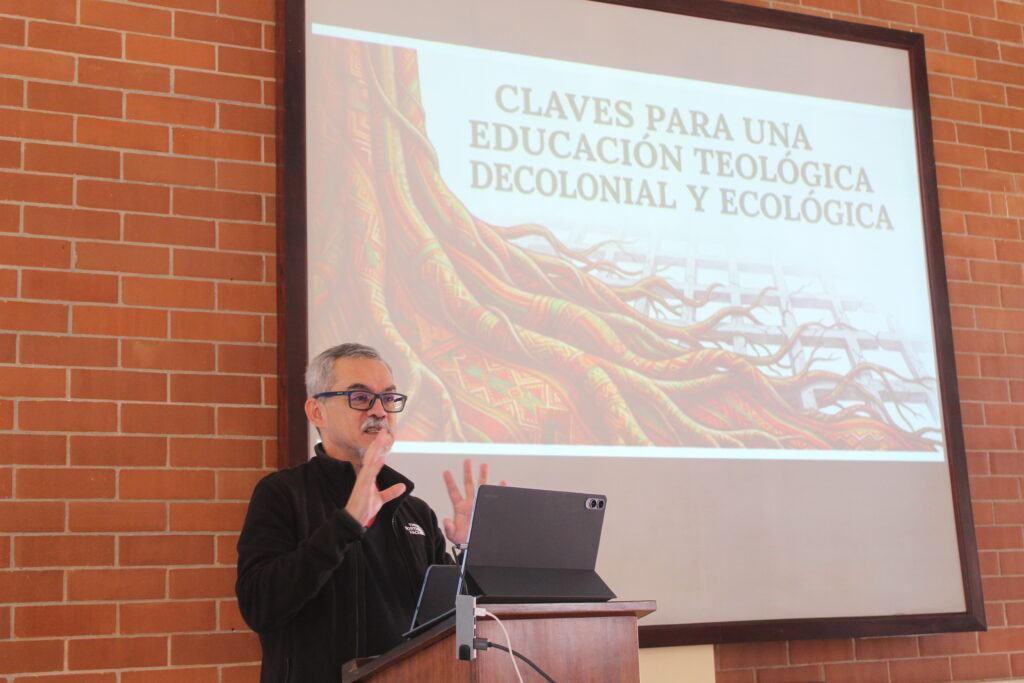
Dr Paulo Ueti, Regional Manager for Latin America & the Caribbean and Theological Advisor USPG, described this as “unlearning”. Drawing on Alberto Caeiro, a Portuguese poet, he spoke of “scraping away the colonial ink” to uncover a faith shaped by listening, experience and the wisdom of marginalised communities.
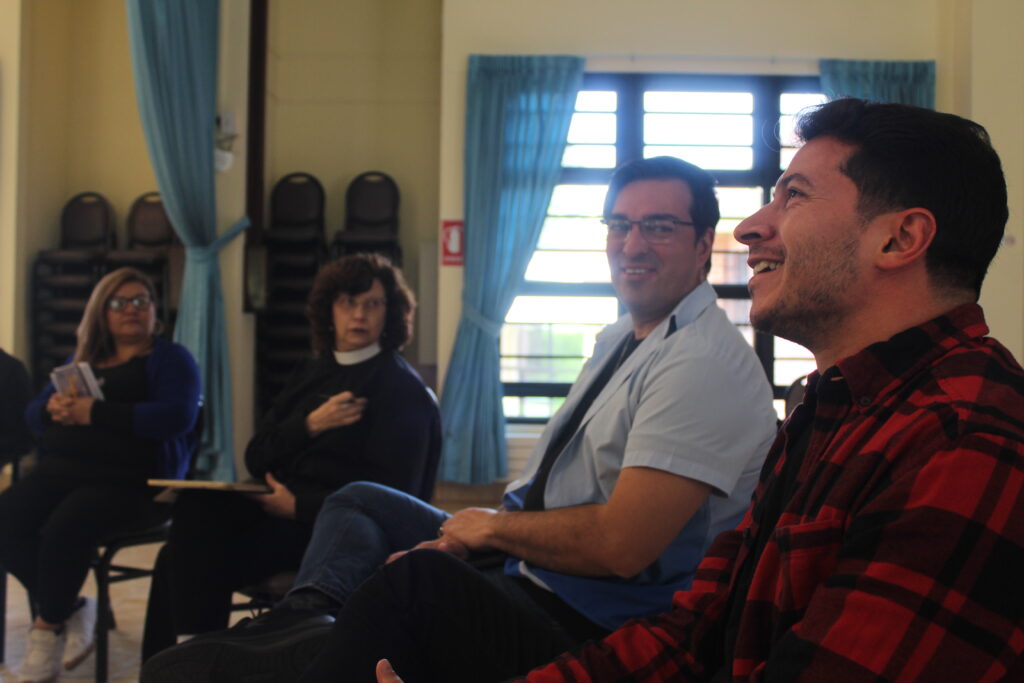
In Mexico City, The Revd Belina Carranza, serves as Dean of the San Andrés Seminary and leads a congregation in an urban context. She drew on her experience to speak about what she called a “social sin of invisibility”. Working closely with communities affected by poverty and violence, she described how people such as the homeless are often ignored.
To refuse to see is to annul the existence of the other,
she said. Her reflection helped explain another key idea. Sin is not only about individual actions. It can also be built into systems that harm people and keep injustice in place.
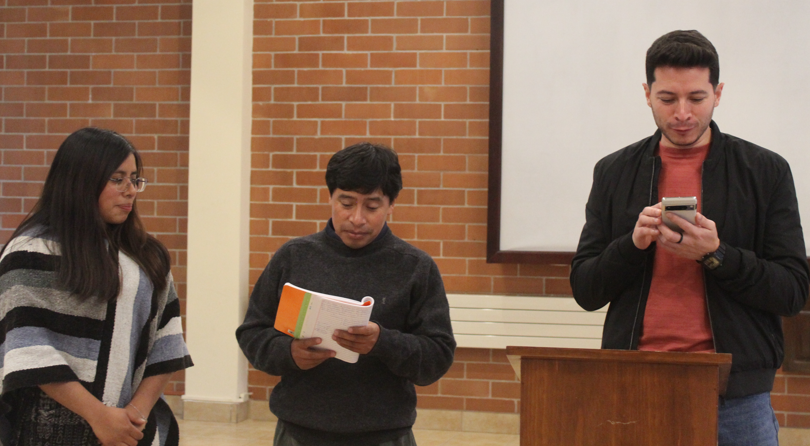
This led naturally into a discussion of environmental concerns. From Guatemala, Veralilia Cuc Rocché talked about Lake Atitlán. She spoke about the loss of the native Poc bird after non-native species were introduced without consulting local communities. This, she explained, shows what happens when outside ideas of “development” ignore locally-held knowledge. For communities, the loss is not only environmental. It also affects identity, culture and connection to the land.
At this gathering, I see a really great power for renewal… We’re creating theology – we’re creating a new way of seeing life, theology, and our own humanity through the divinity and Divine creation,
concluded Veralilia.
Cristian Castro Hidalgo from Costa Rica added:
Ecology is not just a rural issue – it affects life in our cities and food security for all. As Christians, our faith calls us to get involved, to live out the Gospel, and to seek the wellbeing of all people and all creation.
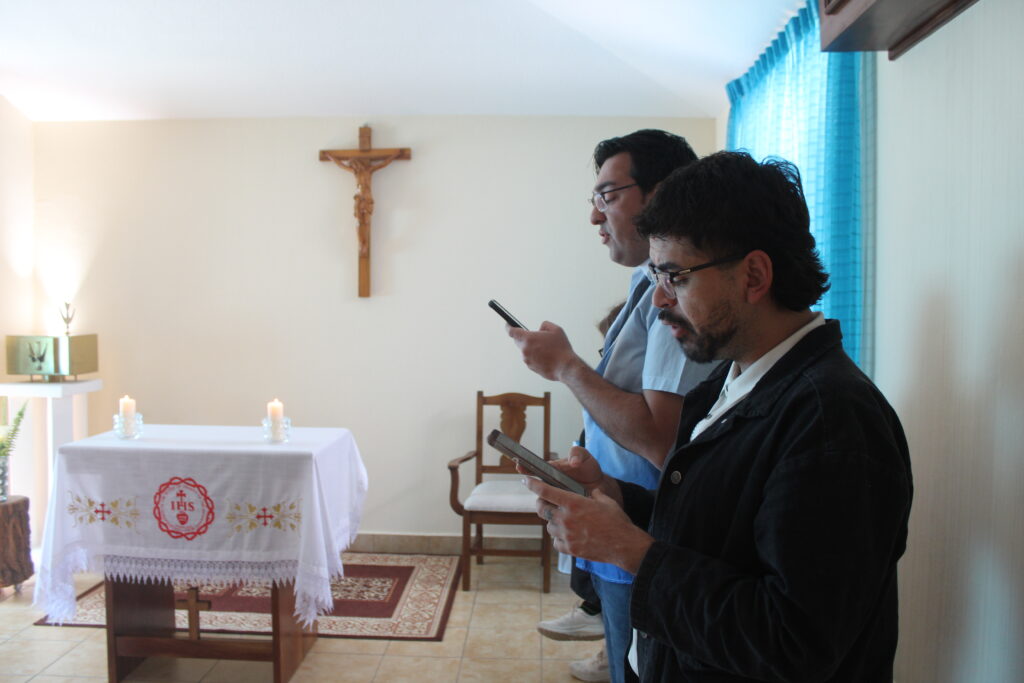
Worship during the gathering reflected these ideas. Participants helped shape prayers together, using local symbols such as seeds and elements of the natural world. For many, this showed that faith is not something imported from elsewhere. It is something that grows within each culture and place.And it also points to a God who sees those that society rejects and restores their dignity.
For the first time, I felt that our culture was not something to leave outside the church door, but something God speaks through,
another participant concluded.
Click here to read the Call to Action signed by the delegates.
The Archbishop of the Church in the Province of the West Indies (CPWI), The Most Revd Philip Wright, has praised the Church of England’s Project Spire initiative amid Parliamentary criticism and told an international gathering of bishops that the Anglican Church must move beyond symbolic apologies for its role in the transatlantic slave trade towards an active involvement in reparative justice if it is to maintain credibility in its witness to the gospel.

Archbishop Wright was among 40 Anglican church leaders from 31 countries taking part in an International Consultation, Breaking the Chains of Injustice, led by UK charity The United Society Partners in the Gospel (USPG) exploring the legacy of colonialism on indigenous cultures, language and land.
While slavery legally came to an end in the British Caribbean in 1834 with the Slavery Abolition Act, it is widely acknowledged to be one of the leading causes of intergenerational economic disparity and inequality, environmental degradation, and social challenges facing the region today.
Calls for reparations from countries and institutions which benefitted from the slave trade have been growing over the past decade. In 2013, the regional organisation of the Caribbean nations (CARICOM) launched a ‘Ten Point Plan for Reparatory Justice’ and in 2015 the CPWI passed a motion in their Synod in support of calls for reparatory justice and reparations for the Caribbean.  In 2023 the Church Commissioners of the Church of England responded to such calls by launching a £100m initiative, Project Spire, which aims to address its historical links to transatlantic slavery.
Speaking at the event, Archbishop Wright said, “The legacy of slavery places the Anglican Church at a significant moral crossroads. The recognition of the complicity of the Church in the transatlantic slave trade opens the door to the possibility of transformation. However, if we are not careful, words can become empty rhetoric which lead to false hope – the end state of which can be worse than the original.
“The aim of reparatory justice is not to seek retribution. It is about recognising the harm caused by centuries of enslavement and exploitation that now demands deliberate and intentional redress. Initiatives like Project Spire and USPG’s Renewal and Reconciliation: The Codrington Project are the first steps towards achieving this aim.”
Launched in 2024, The Codrington Project aims to atone for USPG’s involvement in the slave trade after Christopher Codrington bequeathed a slave plantation in Barbados to the society in 1710. Among other initiatives the project works to transfer the ownership to the descendants of enslaved people, as well as identify the burial sites of enslaved persons and ensure they are memorialised.
 USPG’s General Secretary Duncan Dormor said “It is critically important that members of the Church of England take the moral claims of Caribbean Anglicans for reparative justice seriously. The Church was deeply involved in the brutal, inhumane, and shameful activities of the slave trade and plantation chattel slavery. As Christians we are called to the work of repair and reconciliation in a spirit of openness, humility and constructive critical reflection on the past and we should grasp this opportunity to work together to build a more just future. For USPG, reparative justice lies at the heart of the practice of Christian mission today and initiatives like Project Spire and The Codrington Project receive strong support across the Anglican Communion.”
When asked about how the Anglican Church could support communities in the Caribbean today, Wright commented: “For us, I would say it needs to be a church that can help make a difference in the lives of our people. Despite all the baggage the Anglican church comes with, that is still our mission. And we hope that these collaborative efforts can help to facilitate this. There remains a lot of good that the Church has accomplished over the centuries of its work in the region.
“It is not just about money, it is about acknowledging that the issues we face today are part of the legacy of slavery. We are calling for support in building new schools and hospitals so our people can step out of the legacy of this horrendous period of history.”
The Archbishop of Canterbury, The Most Revd Sarah Mullally, sent a message of encouragement to the Consultation, saying: “I am deeply grateful for the work you are doing together this week, and for the spirit of fellowship, shared mission, and mutual encouragement that characterises your time together. USPG’s commitment to partnership, justice, and the flourishing of local churches continues to bless the Anglican Communion in profound and enduring ways.”
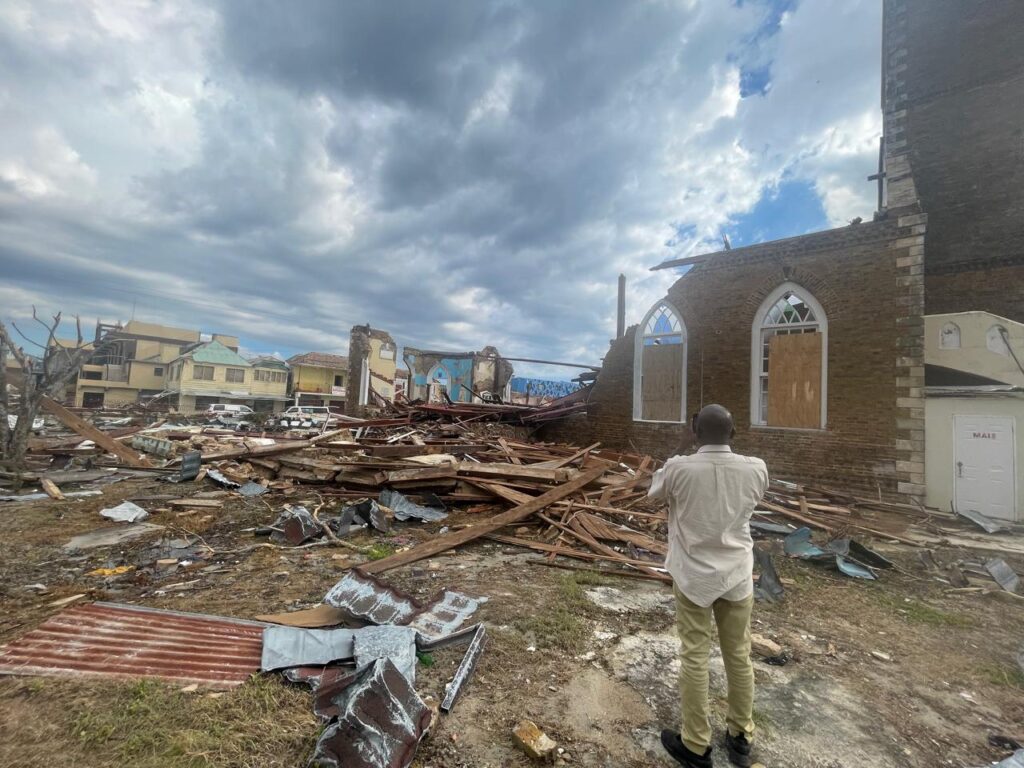 St John’s Black River
“God is our refuge and strength, a very present help in trouble.” Psalm 46:1
The Rt Revd Leon Golding, Bishop of Jamaica and the Cayman Islands, has shared an urgent update following the catastrophic impact of Hurricane Melissa – the most powerful storm ever recorded in Jamaica. USPG is working with the Anglican Alliance and the Diocese as part of a shared emergency response.
On 28 October 2025, Hurricane Melissa made landfall on Jamaica’s south coast as a Category 5 storm, bringing sustained winds of 185 mph, devastating storm surges, and torrential rainfall. The scale of destruction is unprecedented: more than 120,000 buildings have been damaged, 90,000 families displaced, and national economic losses estimated at up to US$7 billion. The death toll in Jamaica has risen to at least 32, within a wider Caribbean total of 75.
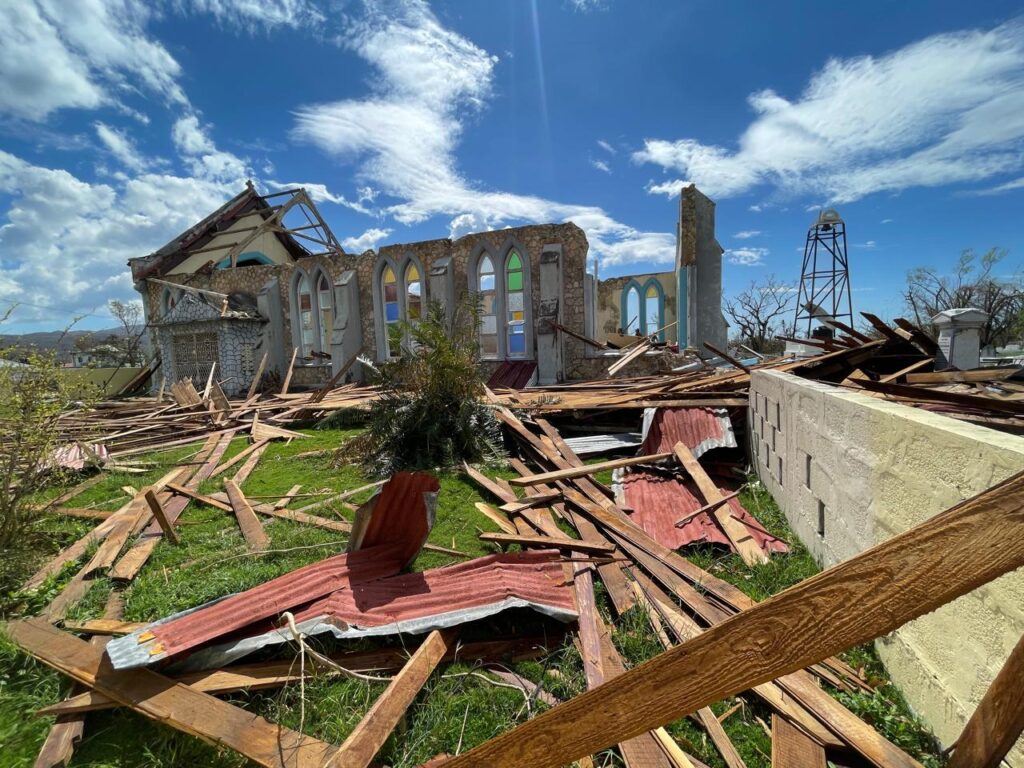
St Thomas Lacovia
The Anglican Diocese itself has suffered heavy losses. Around 50 church properties were destroyed or severely damaged, with nine church buildings lost entirely including St John’s (Black River), St Thomas’s (Lacovia), St Luke’s (Balaclava), and St Thomas’s (Bluefields). Several diocesan schools and community facilities across St Elizabeth, Trelawny, Westmoreland, Manchester, St James, St Ann and Portland have also sustained serious damage. Many congregations are mourning loved ones while also trying to cope with the loss of their homes and the work they depend on.
Watch:
In response, the Diocese has launched a coordinated relief plan. The objective is clear: “to serve communities affected by Hurricane Melissa with compassion, dignity, and coordinated relief rooted in Christian faith and service”.
Immediate priorities include:
- Providing emergency shelter, food, and pastoral care for displaced families
- Clearing debris and reopening access to isolated communities
- Supporting the restoration of electricity and communication lines
- Assessing and beginning repairs on damaged churches and schools
- Offering trauma support to clergy, teachers, and parishioners
A contribution from USPG will go directly into the pot administered through the Diocese’s appeal. By working in partnership with the Anglican Alliance and the Diocesan Disaster Response Task Force, we are helping to ensure that resources reach those most affected as quickly and effectively as possible.
To give, visit: https://www.anglicandioceseja.org/letter-to-the-church-after-hurricane-melissa/

Join us in prayer:
Gracious and Merciful God,
We lift up the people of Jamaica and the surrounding islands in the wake of the devastation caused by Hurricane Melissa.
Lord, you are our refuge and strength, a very present help in times of trouble. We ask you now to draw near to all who are suffering, to those who have lost homes, livelihoods, and loved ones. Surround them with your peace and comfort in the midst of fear and uncertainty.
We pray especially for the communities where the destruction has been greatest. Open pathways for relief to reach those who are still cut off and without means of communication. Strengthen hands and renew spirits to the Diocesan Disaster Response Task Force who are bringing hope and practical support.
Lord, we remember also the churches, schools, and diocesan buildings that have been damaged or destroyed. May they soon be restored as places of worship, learning, and community once again, symbols of your enduring presence among your people.
We trust in your promise that even in the storm, you are with us, and that from the ruins, you will bring renewal.
Through Jesus Christ our Lord,
Amen

Dr Paulo Ueti, USPG and Anglican Alliance, at TAPIRI with The Most Revd Marinez Bassotto, Primate of Brazil and Bishop of Amazônia (third from left)
As COP30 opens in Belém, Brazil, from 10-21 November, the world’s attention turns to the Amazon at a moment when climate decisions have never mattered more.
Belém is a unique choice as the city stands at the gateway to the Amazon – a vast rainforest home to communities whose cultures and survival are tied to the forest. Hosting the United Nations Climate Change Conference here brings global negotiations into direct contact with the realities of deforestation, mining, fires and social injustice. For the Diocese of Amazônia and its ecumenical partners, it also provides a rare opportunity to give frontline voices a stronger platform in the conversations that shape their future.
“Amazonia is responsible for around 20% of planet’s oxygen … and it is producing less and less with each passing year due to mining, illegal logging, and fires.”
It is fundamental to work together. Unity and ecumenism are among the most impactful responses the Church and faith communities can offer.
said The Most Revd Marinez Bassotto, Primate of Brazil and Bishop of Amazônia.
What does this look like?

Tapiri, an Indigenous Tupi word meaning “a hut for walkers,” is the name of an ecumenical gathering hosted in the grounds of Santa Maria Anglican Cathedral. The gathering includes panel talks, exhibitions and protests, and unites faith communities, Indigenous leaders and grassroots movements in shared reflection and action. Read the full Tapiri programme and watch the TAPIRI livestream here (with English translation).
At USPG, we stand for a fairer, more inclusive response to the climate emergency. We are proud to support Tapiri, represented by Dr Paulo Ueti, Theological Advisor and Regional Manager for Latin America and the Caribbean.
Among those diverse voices is Fei Tevi, representing the Anglican Church of Aotearoa, New Zealand and Polynesia. In his address at Tapiri, he called the Amazon and Pacific Ocean the “two lungs of our Earth”, highlighting their role in producing oxygen and capturing carbon. He stressed the need to work with Indigenous peoples, who “know best” how to protect these ecosystems. Watch and hear more in Fei Tevi’s full address: https://youtu.be/824K3ym_jos?si=FR9XaUy7mWYk8wAi
Alongside panels and discussions, Indigenous communities are bringing spectacle and wonder to COP30 with a flotilla of over 200 boats on Guajará Bay, music and dancing. The river protest celebrated unity, highlighted threats to forests and waterways, and amplified frontline voices in a powerful, visual statement for climate justice.
But why does all this matter?
For Anglicans, caring for the environment is one of the Five Marks of Mission. For all Christians, it’s a call from God to us. We are part of creation, we are connected to all aspects of it, and we need to play our part in looking after it.
concluded Archbishop Marinez.
Follow @USPGglobal for more updates.

USPG was deeply honoured to participate in Sacred Circle 2025 that took place from 4-10 August on Treaty 7 territory at the University of Calgary. This powerful gathering brings together Indigenous Anglicans from across Canada in a sacred space of prayer, worship, and discernment, rooted in cultural identity and spiritual renewal.
Representing USPG at this 12th Sacred Circle was Dr. Paulo Ueti, Theological Advisor and Regional Manager for the Americas and the Caribbean. His presence reflects USPG’s commitment to global partnership, dialogue, and solidarity in the journey toward justice, healing, and self-determination.
The Sacred Circle offers a unique and transformative opportunity for communities to reflect on critical issues facing Indigenous Peoples and to support the development of a self-determining Indigenous Anglican Church within Canada. Under the leadership of National Indigenous Anglican Archbishop Chris Harper, this year’s gathering is focused on humility, reconciliation, and building a renewed community of faith.
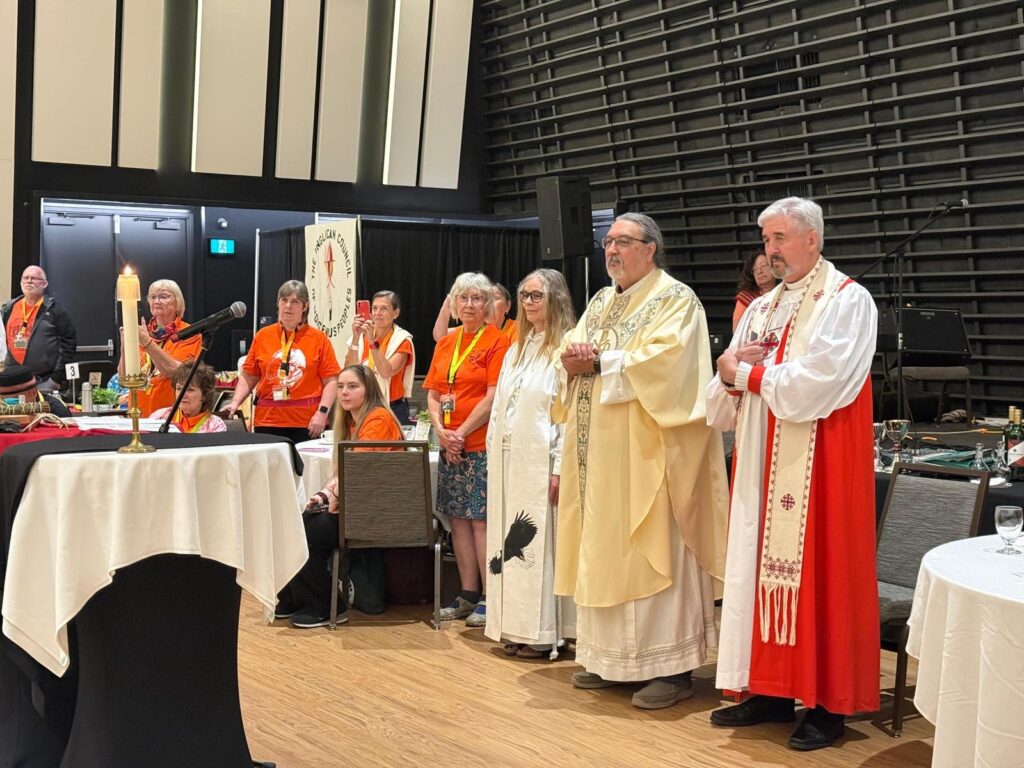
As a global mission agency, USPG believes in the power of mutual accompaniment. We take part not only to listen and learn, but also to stand alongside our Indigenous sisters and brothers in pursuit of a future grounded in truth, dignity, and shared hope.
We give thanks for the invitation to be part of this sacred journey.
For more detailed updates, you can explore the official event page here or read the coverage by the Anglican Journal here.
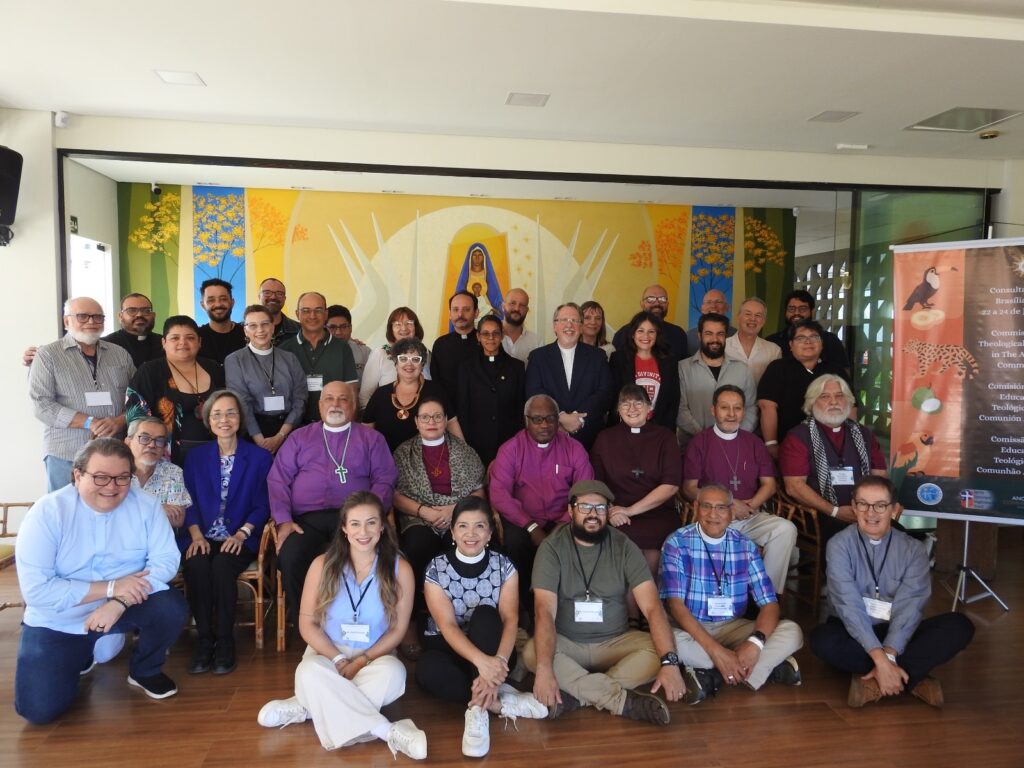
From 22–24 July, the Consultation for Theological Education in the Anglican Communion took place in Brasília, hosted by Centro de Estudos Anglicanos in partnership with the Anglican Communion and USPG. The event brought together around 35 leaders from across South, Central, and North America, as well as the Caribbean, to engage with the theme Decolonising Theological Education – a timely and powerful call to centre local voices, cultural context, and community-based approaches to leadership formation.
At the heart of the gathering were the voices and experiences of those present: clergy and lay leaders, educators and theologians, from eight Anglican provinces. Each brought insight from their own context, contributing to discussions on dismantling inherited colonial frameworks and creating new theological resources that speak to local realities and diverse learning styles.
Click here to meet some of the participants!
Participants engaged in the “See, Judge, Act” method – grounded in community and praxis – to examine how theological education can become more liberative, inclusive, and mission-focused. Dr Kwok Pui Lan offered a powerful keynote drawing from decolonial theory in Latin America, while Dr Paulo Ueti, USPG’s Regional Manager for the Americas and the Caribbean, led Bible studies.
Sessions were conducted in Portuguese, Spanish, and English, to ensure full participation.
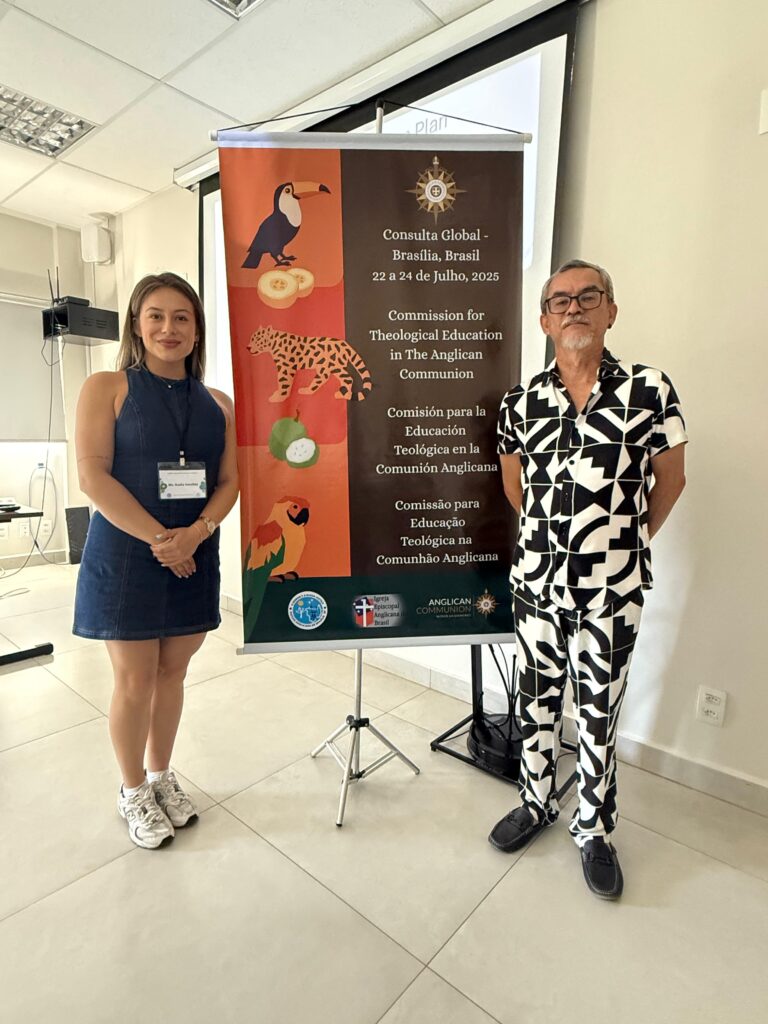
From Caribbean engagement with the legacy of slavery, to Canadian commitments to Indigenous theological voices, each province shared aspirations and actions to bring back to their seminaries and churches. The consultation affirmed the importance of equipping the whole people of God – not just clergy – for intentional discipleship and mission.
USPG is committed to walking alongside these leaders as they reimagine theological education that is contextual, collaborative, and rooted in justice.
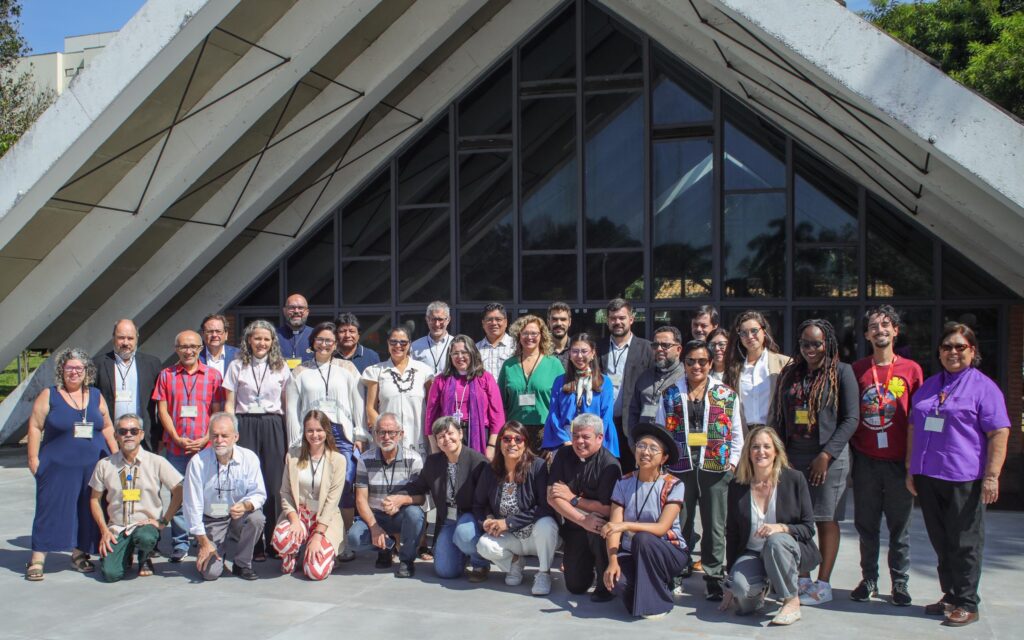
Together for the climate: Delegates outside the Anglican Cathedral in Brasilia. Photo: Bruno Dias Guedes
Between 18-20 March 2025, around 50 church leaders, faith representatives, ecumenical organisations, Indigenous groups, and climate specialists gathered in Brasília to prepare for COP30, the 2025 United Nations Climate Conference. Over three days, delegates engaged in thoughtful discussions and planning, focusing on the churches’ public advocacy actions and a collective response to the current climate crisis.
COP30 in Belém is a crucial opportunity, not least because it will take place within the Diocese of Amazônia. The local diocese has long promoted Indigenous rights and care for creation, bearing witness first-hand to the effects of climate change and destructive environmental practices that will be the order of discussion at COP.
During the opening prayer service at the Anglican Cathedral of Brasília, faith leaders emphasised the urgency of confronting the climate crisis and the role of faith in inspiring action. The Most Revd Marinez Bassotto, Archbishop of the Igreja Episcopal Anglicana do Brasil, urged:
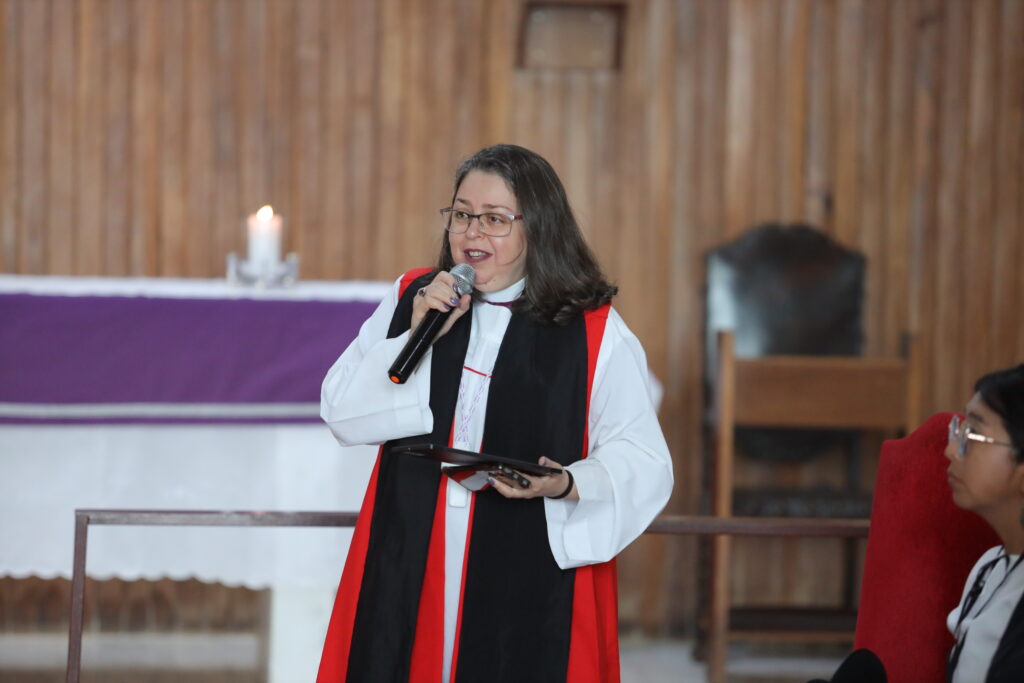
This hope is alive, propelling us forward and compelling us to act today. The urgency of tomorrow pushes us to fight now. For believers, hope is more than a feeling—it is action.
Hope is already being turned into action as voices come together. The diverse group included delegates from across Latin America and the Caribbean—including Brazil, Honduras, El Salvador, Argentina, and the Dominican Republic— who represented a diverse range of churches and organisations, such as the Igreja Episcopal Anglicana do Brasil, Sínodo Luterano Salvadoreño (Lutheran Synod in El Salvador), and the World Council of Churches. Anglican partners like the Anglican Communion Office joined ecumenical groups including Cáritas Brasileira, Tearfund Latam, and the National Council of Christian Churches of Brazil.
The Revd Dr Rodrigo Espiúca, a vicar in the Diocese of Brasília and the Diocesan Officer for Human, Environmental and Territorial Rights, came away from the meeting in good spirits:
I feel much more optimistic about the collaboration between churches and other faith-based organisations. It is compelling to stand united not least because it sends a powerful message to the government and [world] leaders.
On the last day of the meeting, the delegation welcomed Marina Silva, Brazil’s Minister for the Environment and Climate Change, who was presented with the ‘Call to Action’. The document, endorsed by all present, details the current crisis and highlights the voices of impacted communities. Also central to the communiqué is the Christian imperative to act with urgency to protect God’s creation. It reads:
We stand in solidarity with the people and communities most affected as we “mourn with those who mourn” (Romans 12:15). At the same time, we maintain a steadfast hope in a God who is renewing our minds and our world (Romans 8:19-21) as He urgently calls us all to action.
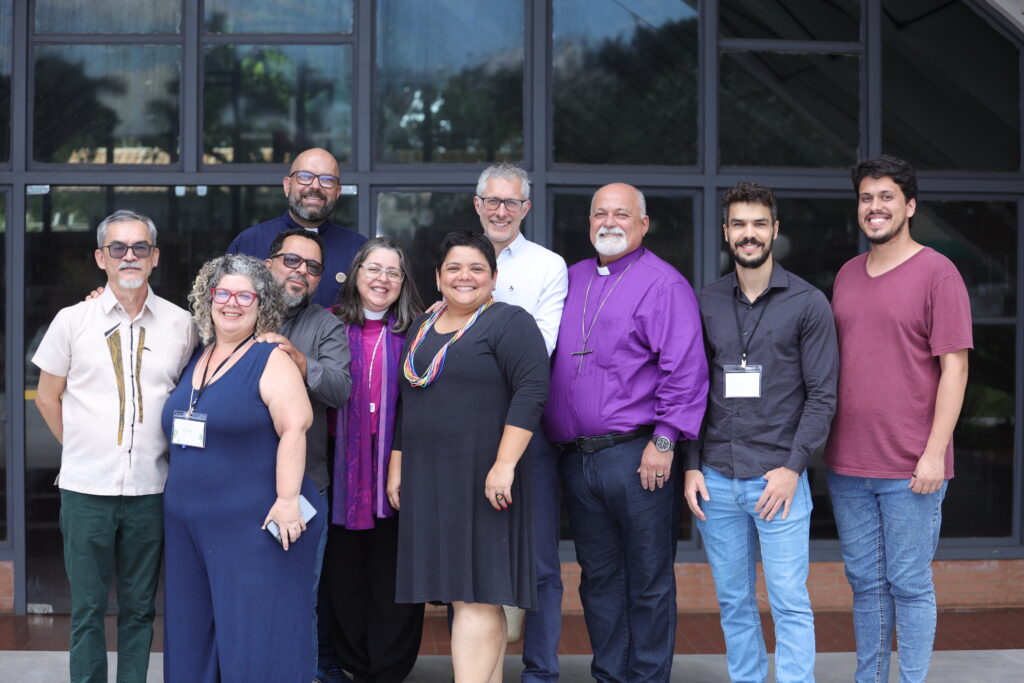
Dr Paulo Ueti, USPG, (pictured left) with friends and church partners from the Diocese of Brasília, including The Rt Revd Maurício de Andrade, The Revd Dr Rodrigo Espiúca and The Most Revd Marinez Bassotto, Archbishop of the Igreja Episcopal Anglicana do Brasil.
The Revd Canon Dr Peniel Rajkumar Theologian and Director of Global Mission concludes:
USPG, with its strong commitment to climate justice, sees this meeting as one small but important step towards ensuring a just future for the earth, our common home.
In partnership with the Igreja Episcopal Anglicana do Brasil, we are committed to advancing climate justice through prayer and action, championing equitable and effective climate solutions. Stay tuned and follow @USPGglobal for updates as we approach COP30.

By Dr Paulo Ueti
Theological Advisor and Regional Manager for the Americas and the Caribbean