

Images © Diocese of Botswana
In a historic first, the Anglican Diocese of Botswana has ordained 14 women to the priesthood at a joyful service on Sunday 17 May 2026 at Holy Cross Cathedral in Gaborone. This also marks the first such ordinations within the Anglican Church of the Province of Central Africa, comprised of Botswana, Zimbabwe, Zambia and Malawi. The ceremony was conducted by the Rt Revd Metlhayotlhe Beleme, Bishop of Botswana, who described the occasion as a “milestone” in the growth of the church.
Also in attendance was the First Lady of South Africa, Dr Tshepo Motsepe, along with several distinguished bishops and representatives from across the Anglican Communion including link dioceses in North Carolina, USA and Newcastle, UK.
The Rt Revd Dr Vicentia Kgabe, Bishop of Pretoria in South Africa and among the first women consecrated as bishops in the neighbouring Province of Southern Africa, delivered the sermon. Bishop Kgabe described ordination not as a simple formal appointment, but as something far deeper:
Ordination is not simply a conferring of a title, nor merely the assumption of religious duties. It is a solemn calling into deeper service, deeper sacrifice, deeper humility, and deeper love.
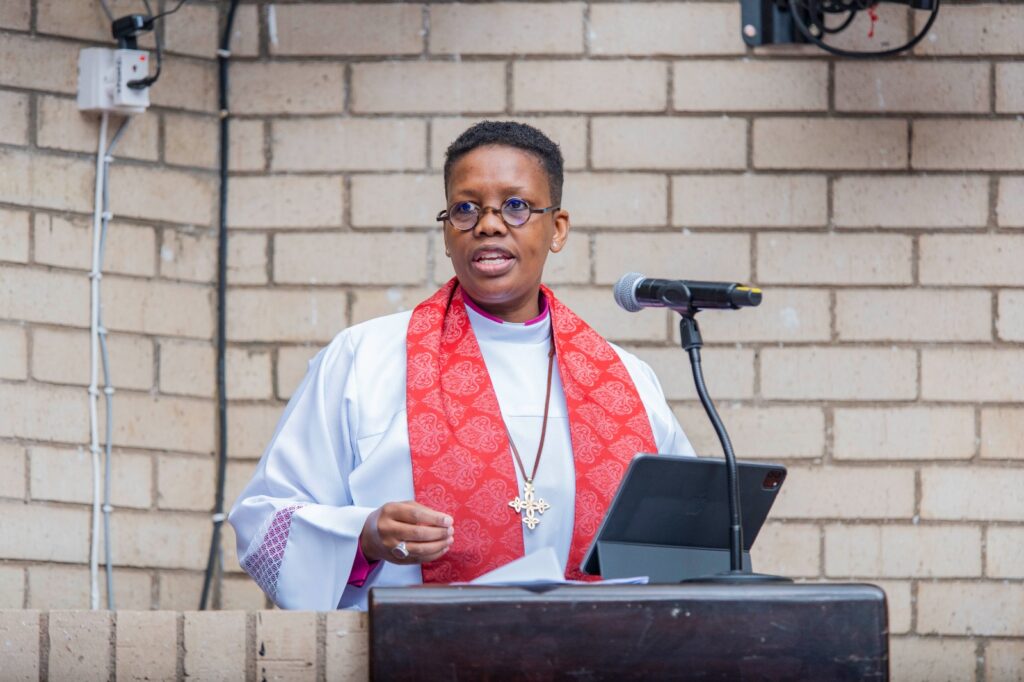
She went on to emphasise the theological responsibility of ministry and the humility it demands:
The people you shall serve are not yours. The church is not ours. The parish is not ours. The ministry is not ours. The people and the church belong first to God.
Among the international guests present was the Most Revd Albert Chama, Archbishop of the Province of Central Africa and Bishop of Zambia. He reflected on the significance of the occasion, remarking:
Today, history has been made. I am happy that I have seen this happen during my time as Archbishop.
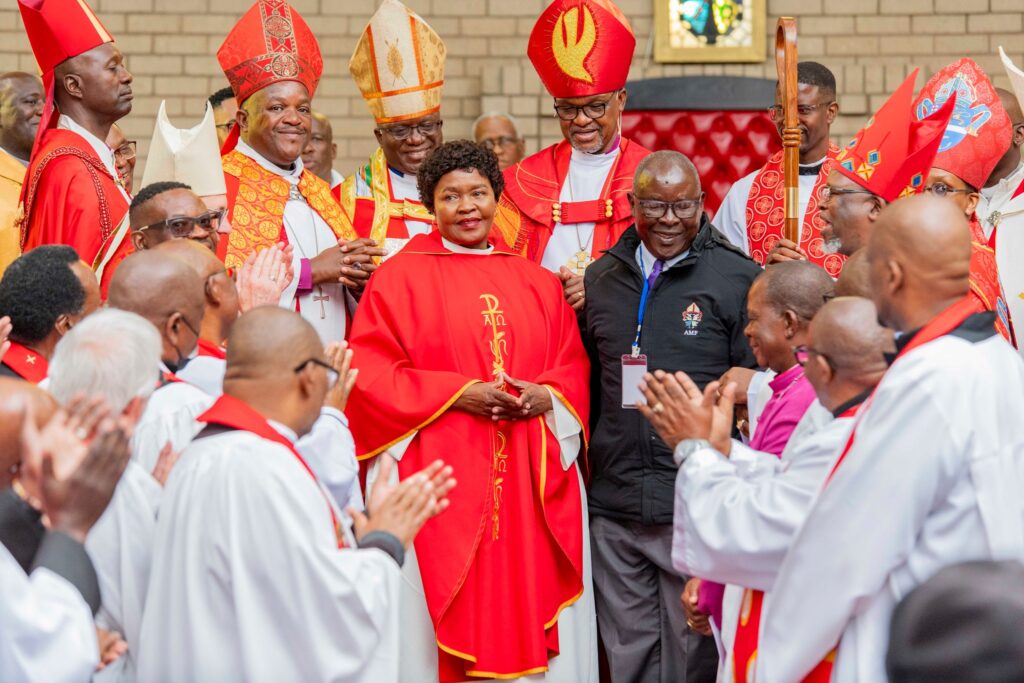
The first female students started training in 2014 at St Augustine Theological School, Gaborone, where they earned a 3-year Diploma in Theology in 2017.
Numerous motions were presented to the Church of the Province of Central Africa Provincial Synods over many years to ordain women to the sacred ministry. In November 2023 in Blantyre, Malawi, the motion submitted by the Diocese of Botswana and seconded by the Diocese of Harare that those dioceses that are ready to ordain women should be allowed to go ahead. It passed by majority.
By that time, Botswana had 14 women who had completed their training and were ready for ordination. They were ordained as deacons on 4th May 2025.
Many of them have been waiting for 10 years to get to this point. And yet,
after many, many years of waiting for God’s will to happen… today it has been fulfilled,
concluded the Most Revd Albert Chama.
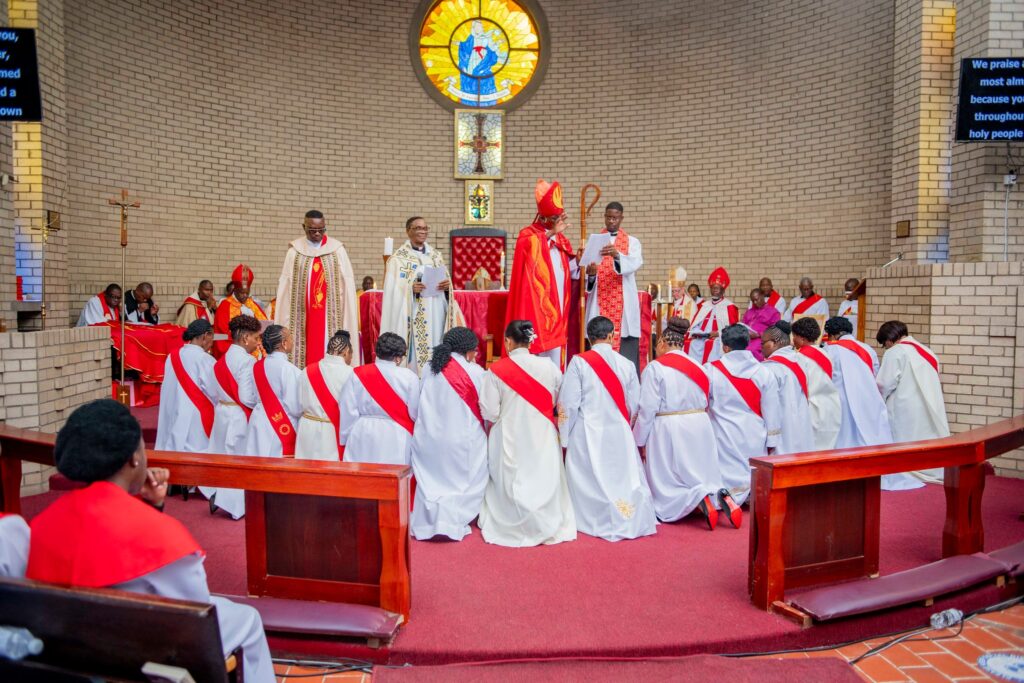
USPG adds its congratulations to the ordinands:
Revd Beauty Autlwetse
Revd Lesedi Bahayesi
Revd Florence Bogopa
Revd Lesego Bosimele
Revd Onicah Lentshikang
Revd Ethel Matlala
Revd Margaret Mere
Revd Mercy Molefe
Revd Precious Tonny Mosarwe
Revd Dr Dijeng Motsepe-Lebatha
Revd Hildah Ncaagae-Tshabadira
Revd Gasetoro Ncube
Revd Bosinki Matlapeng-Ndzinge
Revd Mosetsanagape Sepora
Click here to watch the service in full.
Let us pray:
Loving God, we give thanks for each of your fourteen servants called to the priesthood.
As your Son prayed that his disciples may be one and kept in your truth, so we ask that you keep them rooted in Christ. Clothe them with humility, fill them with your Spirit, and shape their ministry in the likeness of Christ the servant.
May they love your people well, serve with courage and compassion, and bear witness to the Gospel in word and life. And when they are weary, sustain them; when they are strong, and in all things, hold them in your grace for your glory and the Church’s good.
Through Jesus Christ our Lord,
Amen
With thanks to Yolisa Phillips-Lejowa, Diocesan and Office Secretary, Diocese of Botswana.
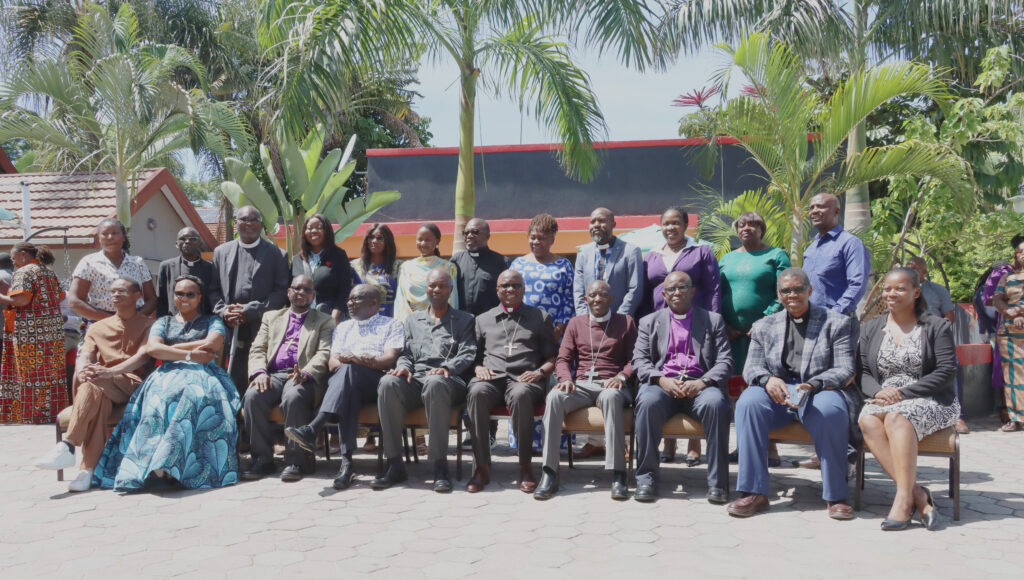
The Zambia Anglican Council (ZAC) convened a national Safe Church Conference in Lusaka from 25-28 January 2026, bringing together church leaders and safeguarding practitioners from across the country to strengthen safeguarding within the Anglican Church.
The gathering responded to growing recognition within the Anglican Communion, both globally and locally, of the need to embed cultures of care, accountability, and responsibility in church life. Within the Anglican tradition, a Safe Church is one that upholds the dignity of every person, particularly children, young people, and vulnerable adults.
Approximately 80 participants from all dioceses attended, including bishops, senior clergy, diocesan secretaries, registrars, and diocesan Safe Church representatives. Sessions were led by Anglican leaders and safeguarding practitioners, including The Most Revd Dr Albert Chama, Archbishop of the Province of Central Africa and Bishop of Lusaka, and The Rt Revd Cleophas Lunga, Bishop of Matabeleland and Safe Church Commissioner.
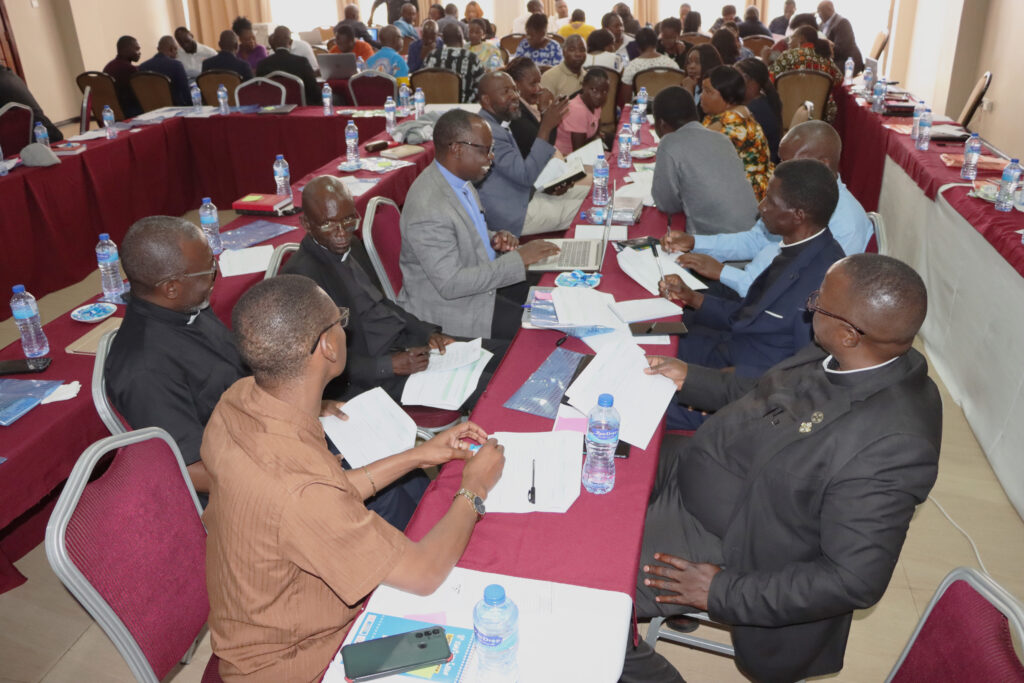
The programme combined theological reflection with practical training on codes of conduct, safer recruitment, reporting and response mechanisms, risk prevention, and survivor-centred pastoral care. Over two days of prayerful reflection, participants identified risks, confronted hard truths, and took concrete steps towards a Safe Church Policy for Zambia.
Safe Church work is broader than safeguarding. It involves treating everyone with dignity and respect,
said Dr K. Mwanza of the Anglican Diocese of Northern Zambia.
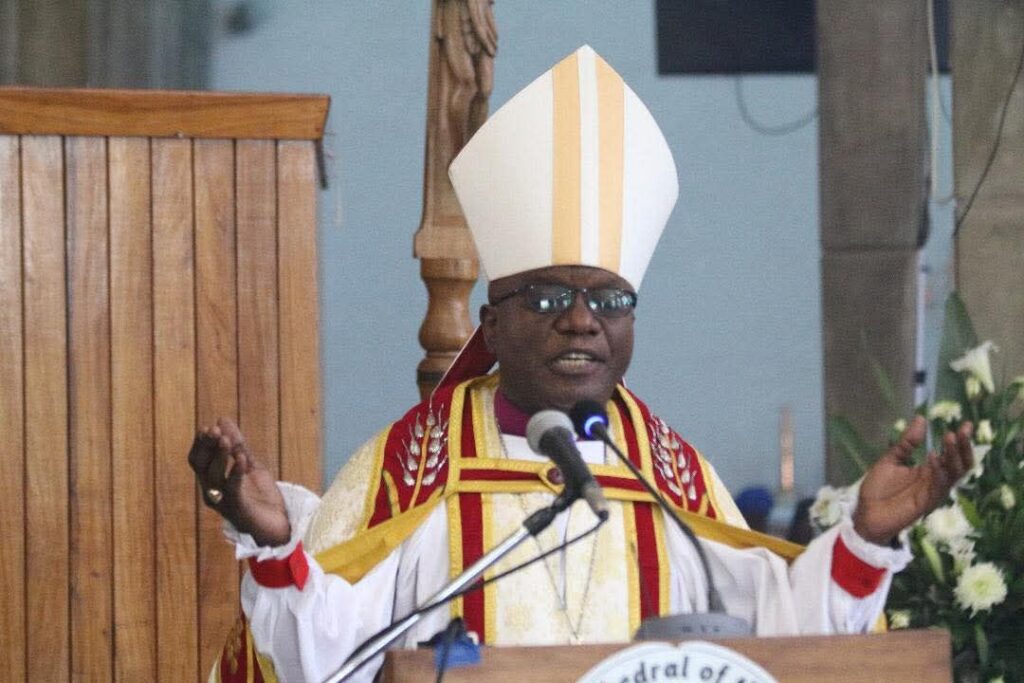
Drawing on Micah 6:8, Archbishop Chama emphasised that a Safe Church does justice by preventing harm, loves kindness by centring on survivors, and walks humbly through accountability.
Documents alone will not keep people safe
Anchored in 1 Corinthians 16:14, he reminded the Church that love requires courage, systems that protect, leaders who act, and communities that refuse to remain silent.
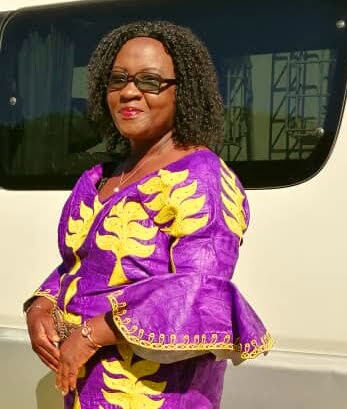
The Safe Church Conference has provided an opportunity to lay a foundation of knowledge that will be passed on to the next generation,
reflected Evangelist Canon Janet Munde of the Anglican Diocese of Central Zambia.
Key milestones included a shared understanding that safeguarding is central to mission, strengthened leadership capacity, a draft policy framework, and a roadmap for diocesan rollout.
Our mindsets and attitudes have been changed, and we have been empowered to go out and contribute to the Church and communities by creating safe spaces for all,
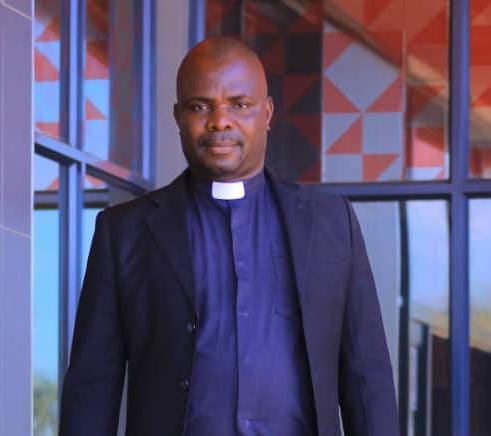
said Very Revd Canon Jacob Manda, Dean of the Cathedral of St Luke’s, Anglican Diocese of Eastern Zambia.
As participants return to their dioceses, the urgent call is to build a Church where all can worship, serve, and belong without fear. The conference was supported by USPG, reflecting a shared commitment to strengthening the Church’s safeguarding practice and public witness.
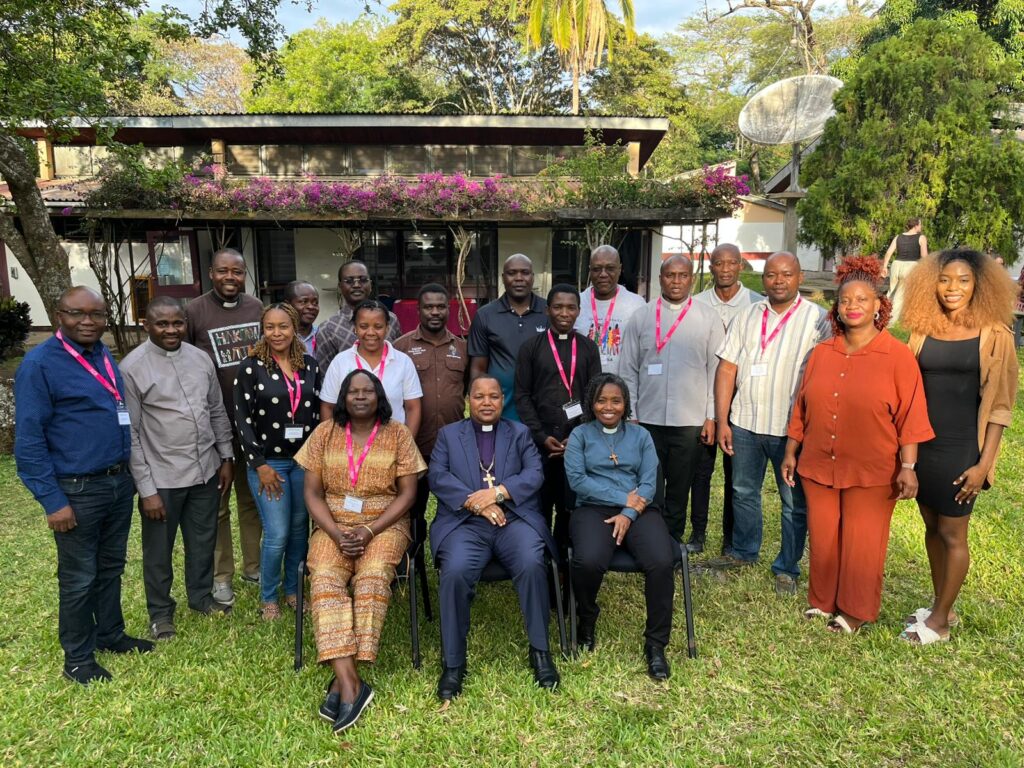 Following the call to biblical partnership: Partners from across Africa with Fran Mate and Venetia Asare-Griffiths (USPG), and The Rt Revd Dr Stanley Elilekia Hotay, Bishop of Kilimanjaro (centre)
Church leaders and partners from across Africa came together in Arusha, Tanzania, from 30 November to 6 December 2025 for the USPG African Partners Training Forum – a week of learning, equipping, and a celebration of the important work happening in Anglican churches across the continent.
Hosted at the MS Training Centre for Development Cooperation (MSTCDC), the Forum welcomed delegates from Tanzania, Guinea, Sierra Leone, Madagascar, Malawi, Zimbabwe, Mozambique, Zambia and Seychelles. Over the week, the workshop gave mission partners space to review their programmes, strengthen skills in resource development, storytelling, and reporting, and collaborate on improving the planning and management of church projects.
The week began with worship and a warm welcome from The Revd Dr Shao and The Revd Lipscombe of Christ Church Anglican Cathedral, Diocese of Kilimanjaro. Anticipating the week ahead, Royter Choongo, a dedicated advocate for gender and environmental justice with the Zambia Anglican Council Outreach Programme, shared her excitement:
We always learn something new whenever we come to this Partners’ Forum, and that’s why I always look forward to it.
Training sessions throughout the week were shaped by USPG’s mission priorities and key areas of focus across Africa which include leadership development and climate resilience. Facilitators from MSTCDC guided participants through the resource mobilisation cycle, helping them build confidence in identifying opportunities and managing diverse funding streams.
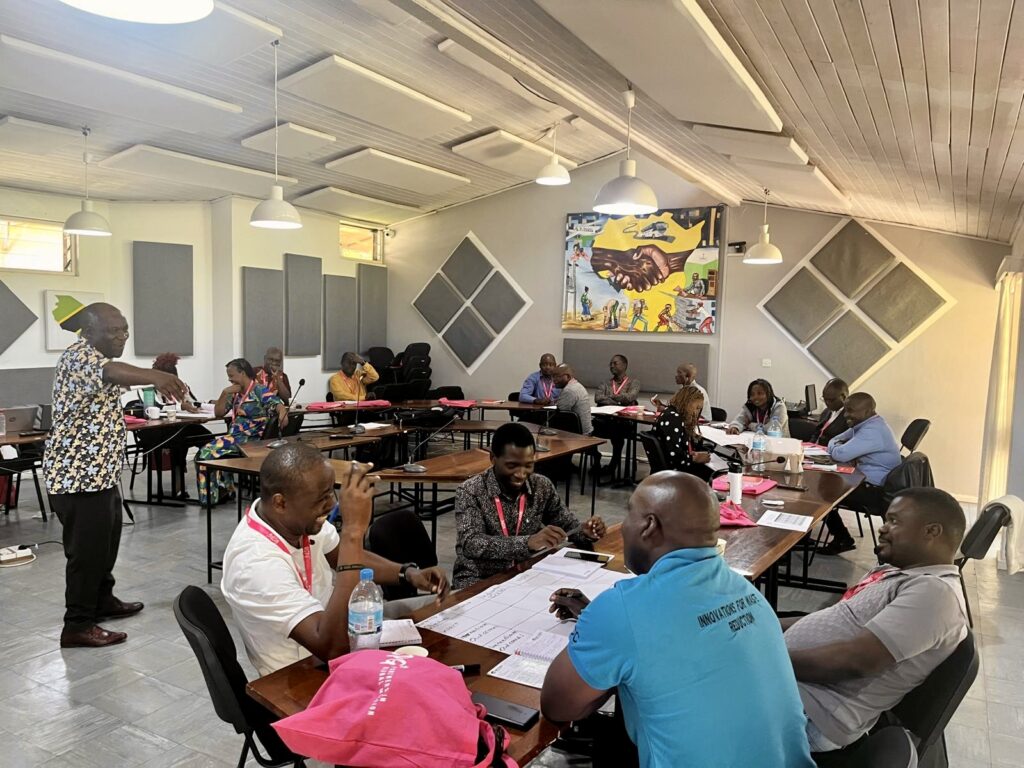
From the Seychelles, The Revd Christine Benoit is a committed advocate for environmental protection. Now better equipped with project development skills, she reflects on her recent experience at the Forum:
I’ve met wonderful new people and reconnected with old friends. It’s been inspiring to think about how we can put what we’ve learned into practice, so that the Church can truly benefit.
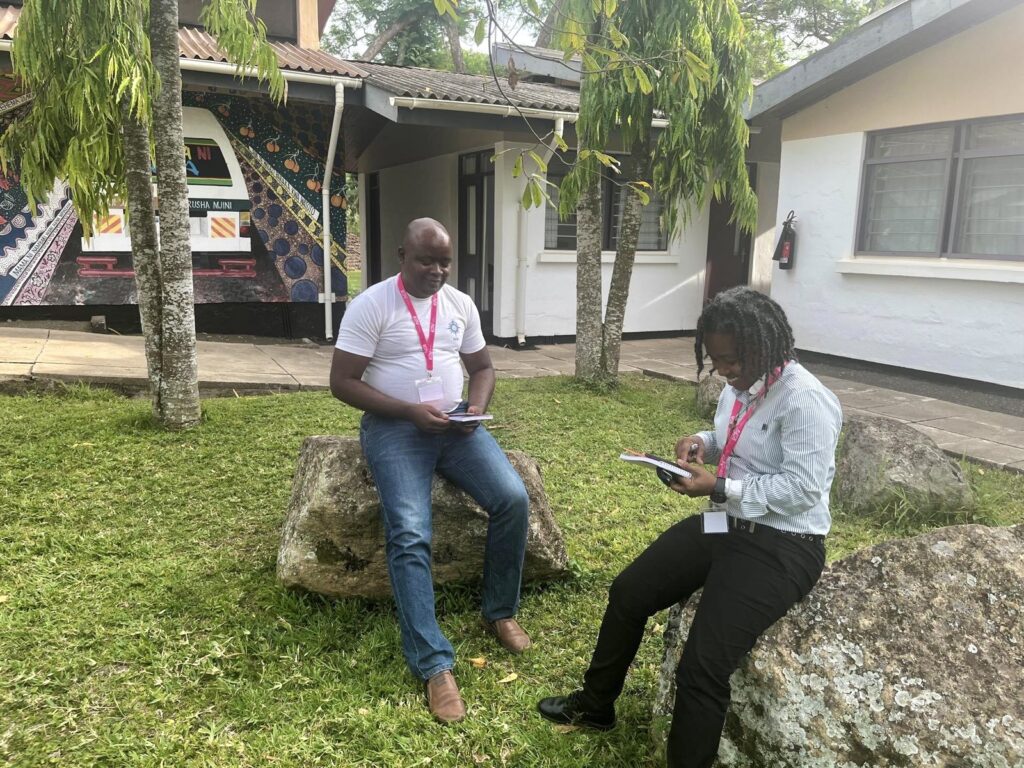
Revd Christine (pictured right) was the first woman in the Seychelles to be ordained as an Anglican priest.
Partners also explored key themes such as storytelling, clear communication, and safeguarding, with safeguarding serving as an important reminder of the need to keep church communities safe and to protect those most at risk, which is central to the Church’s mission.
From the Diocese of Lebombo, The Revd Mauricio Mugunhe is the Executive Director of Acção Social Anglicana, Igreja Anglicana de Moçambique e Angola (IAMA). In his role, he leads initiatives that strengthen the Diocese of Lebombo’s sustainability, including projects that support clergy training, church construction, and financial stability. One example is the “Serving the Lord with Dignity” project, supported by USPG, which trains church members to make liturgical vestments and uniforms. The project provides skills and work opportunities for local people while also generating income to support the Diocese and its ministries.
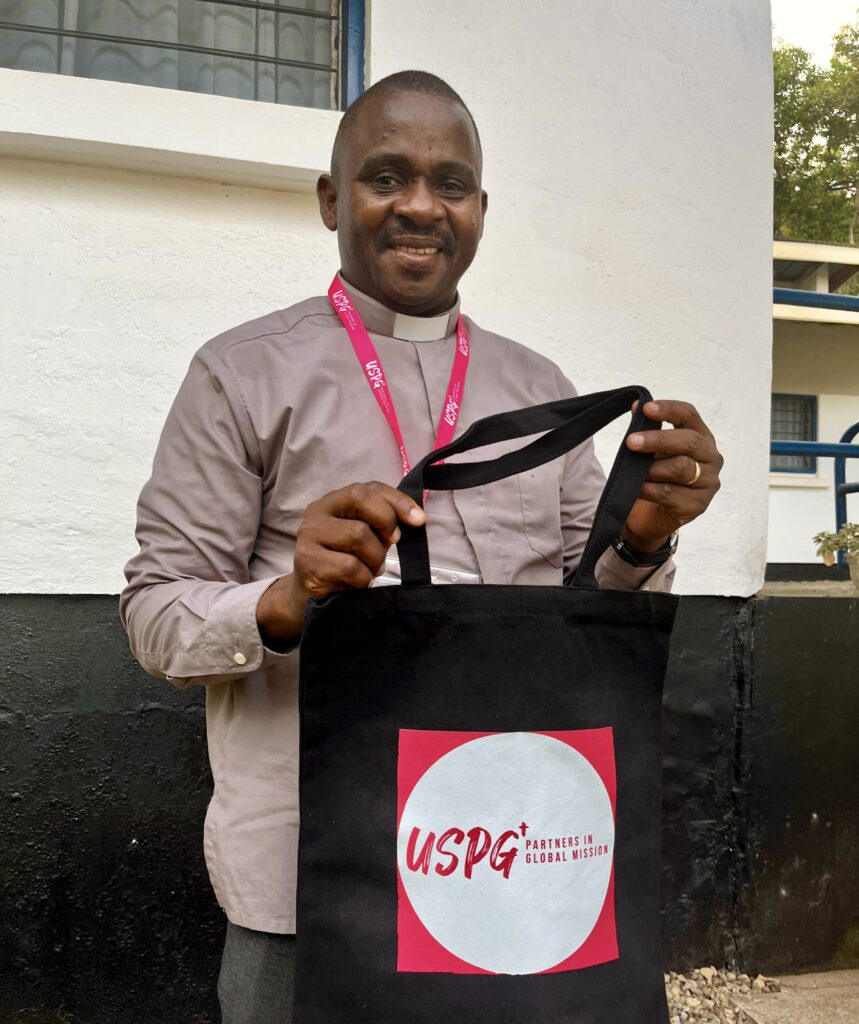
The Revd Mauricio with a handmade bag from the tailoring programme.
Reflecting on his experience at the Forum, The Revd Mauricio Mugunhe shares his highlights:
I’ve learnt a great deal in terms of mobilising resources. First, it’s important to map who our partners are; and [second] identify areas of strengths and improvement within the diocese and across the new province of IAMA. If we join our hands together with new and old partners, we can address most of the challenges we face.
As the Forum drew to a close, The Rt Revd Dr Stanley Elilekia Hotay, Bishop of Kilimanjaro, offered a moving set of closing reflections. He reminded participants of the biblical call to partnership and the recognition that God’s work is always done in community.
USPG remains profoundly grateful for the faithfulness, wisdom, and witness of our partners across Africa and around the world. As we look ahead, we reaffirm our commitment to walking together in hope, solidarity, and partnership, trusting that God will guide and strengthen us in all that lies ahead.
To learn more about our work across Africa, visit: www.uspg.org.uk/africa.
As part of its commitment to gender justice, the Anglican Council in Malawi is championing girls’ education through innovative community-led projects across the dioceses of Lake Malawi and Southern Malawi. With support from USPG, the Gender Justice Through Girls’ Education Advocacy Campaign is tackling longstanding barriers that prevent girls from fully accessing education.
One such barrier is the lack of information and open conversation about sexual health and relationships. The Anglican Council in Malawi recognises that supporting girls to stay in school means addressing the stigma around puberty and key life stages. By providing girls and boys with accurate, age-appropriate information about their bodies and relationships, the project helps keep children in school, reduce early marriages, and foster greater understanding within the community.
At the heart of the campaign are school clubs, which provide quarterly, interactive sessions on menstrual hygiene, life skills, and sexual and reproductive health. These clubs not only reduce stigma around menstruation but also create safe spaces where students, parents, and teachers can learn together, support one another, and build inclusive school environments where girls can thrive.
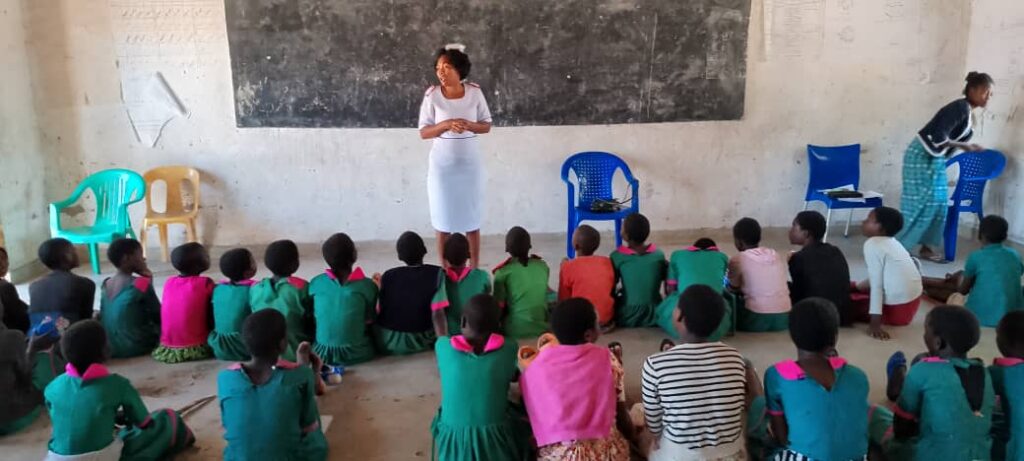
A nurse teaches a sexual health education class to a group of girls at a primary school club in Linjidzi parish.
In Linjidzi Parish, these initiatives are already making a difference. Many adolescent girls now attend school everyday thanks to access to reusable sanitary pads and school uniforms, which remove practical barriers that previously kept them at home. Community leaders are also involved, implementing local rules to encourage school attendance and combining cultural traditions with accountability measures. The campaign has even hit the airwaves, with radio jingles in the local language helping to promote the message.
As a result of these combined efforts, a significant shift is being witnessed, more girls are present in school daily and are participating in lessons.
Hear from the girls themselves about the difference these initiatives are making.
Before, I used to miss school whenever I had my period because I had nothing to use. Now that I have pads and a uniform, I don’t feel ashamed anymore, and I attend classes every day. I want to finish school and become a nurse.
Fourteen-year-old Thokozani
These rules help us a lot because parents make sure we go to school. Even when I feel lazy, I know I must attend. It makes me more serious with my education.
Thirteen-year-old Esnart
Central to the vision of USPG is a strong commitment to Gender Justice – ensuring that women and men, girls and boys, can flourish equally in church and society. Through advocacy, education, and practical support, USPG challenges structures of discrimination and empowers communities to embrace inclusivity as part of living out the Gospel.
The 16 Days of Activism Against Gender-Based Violence, observed from 25 November to 10 December, is an international campaign to raise awareness and take action to end violence against women and girls. Follow @USPGglobal on social media or visit uspg.org.uk to find out how our global Church partners, like the Anglican Council in Malawi, are championing gender justice.
Pray for Malawi:
- Pray for economic stability and the impact on the lives of people and the diocesan work coordinated by ACM.
- Pray for all partners supporting ACM, including the parishes and the communities being served, that their work may bear lasting fruit.
- Pray for diocesan leaders, that they may make wise decisions to grow the church, empower clergy and lay leaders, and promote the well-being of all members.
- Pray for the spiritual growth of parishioners, that they may gain a deep understanding of the teachings of Christ and continue to grow in their love of God.

In a small rural community in Chiwundura, Central Zimbabwe, three young boys are turning waste into hope. Blessed (14), Edgar (11), and Talent (12) have discovered that even the simplest discarded items have huge potential. Inspired by care for God’s creation and action, they have turned used bottle seals into colourful ropes.
Under the “Waste Smart, We Care” campaign, the boys have not only addressed the pressing issue of plastic waste in their community but also demonstrated the power of creativity and teamwork. Blessing explains the process:
“This is how we make our plastic ropes: we use a small wire to loosen the seal from the bottle. We do this carefully so that we do not damage it. My friend softens the seal by bending it sideways to make it softer and more flexible. We then attach the seal together to make a rope of any length.”
These ropes have been of great help at home as we use them for tying up cows and goats when we take them for grazing. The money I got from selling our plastic ropes today, I am going to use to buy myself stationery for school, plus some of the money towards school fees, my lunch and also get a new uniform and school shoes.
By collecting what many consider to be rubbish, Blessed, Edgar, and Talent are brilliantly demonstrating how small actions can lead to significant change. Their innovative approach not only provides practical solutions for everyday challenges but also holds great potential to inspire their peers and the wider community to rethink waste.
To find out more about the Waste Smart, We Care Advocacy Campaign, visit: https://uspg.org.uk/zimbabwe/
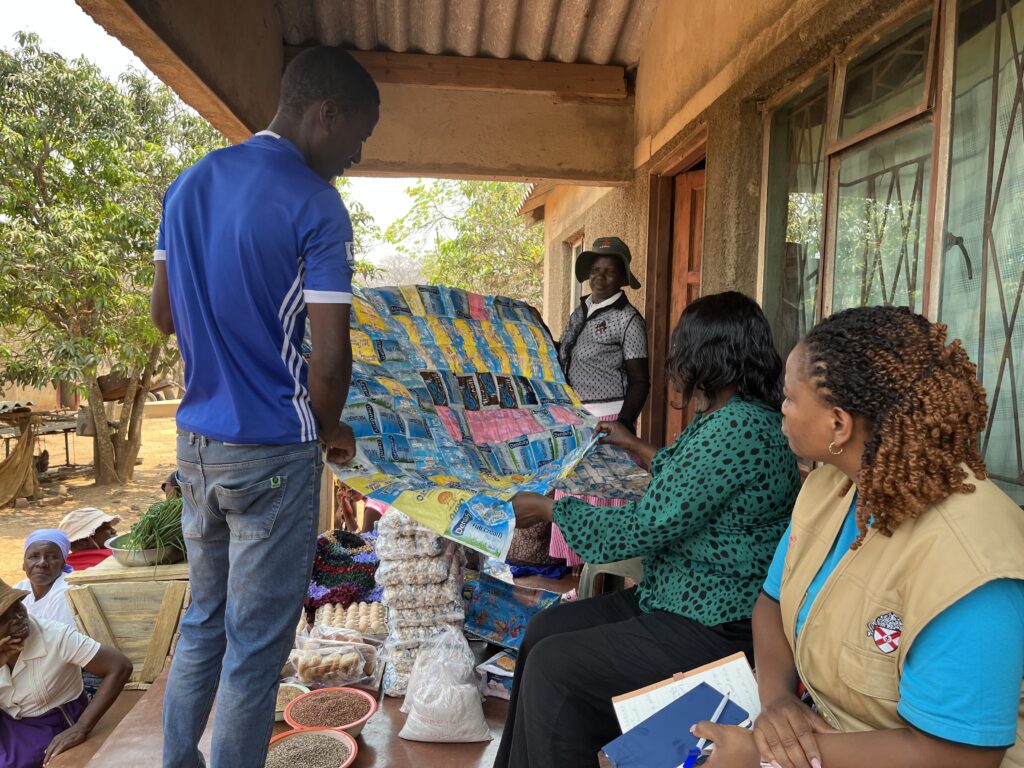
The Diocese of Zululand has long recognised that the church’s mission extends beyond worship into building stronger, more resilient communities. Through its development arm, the Masinakekelane Diocesan Agency – a name meaning “to take care of each other” – the Diocese supports initiatives that address pressing social and economic challenges. Established in the late 1990s, the Agency responds to natural disasters, supports victims of gender-based violence, and partners with local businesses and parishes to provide food, clothing, and other essential resources. One of its flagship programmes is the Food Gardens and Resilience Project.
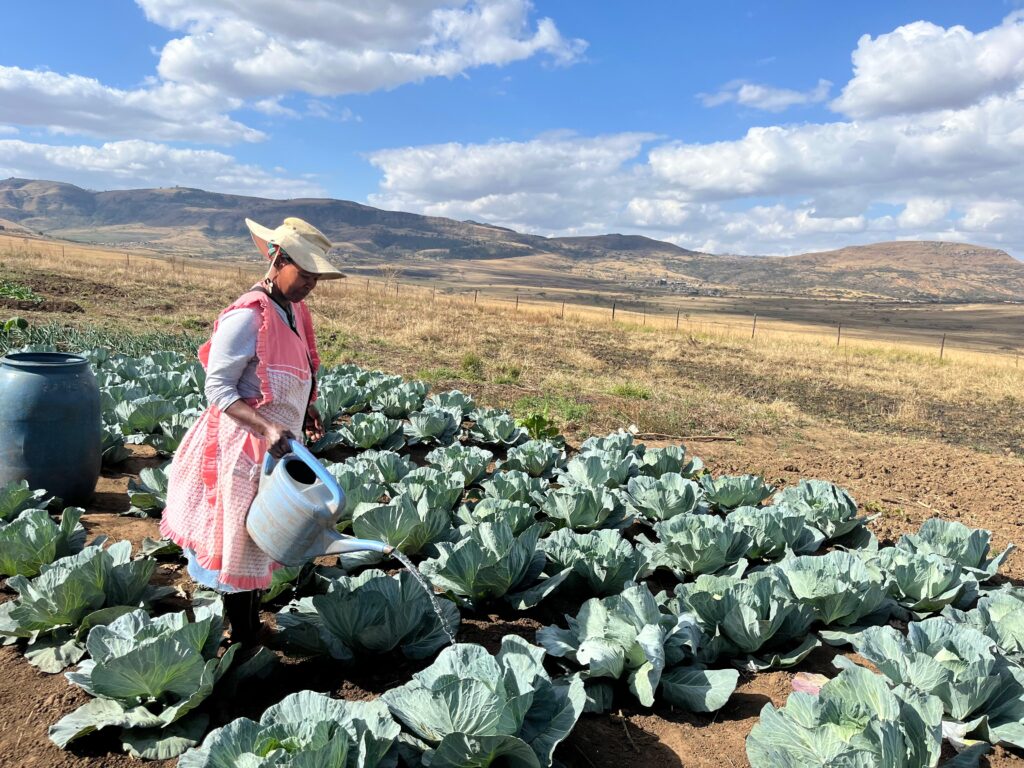 Ntombitheni watering her cabbage plants
Ntombitheni, treasurer of the Ekwandeni Garden Group, has been part of the project since its beginning in 2009. Thanks to support from the Diocese of Zululand, the garden she helps run has transformed her life. It now yields spinach, cabbage, tomatoes, and other vegetables, which feed many families and provide a reliable source of income. In good seasons, Ntombitheni can earn up to R2000 (approx. £80) – enough to cover essentials such as electricity.
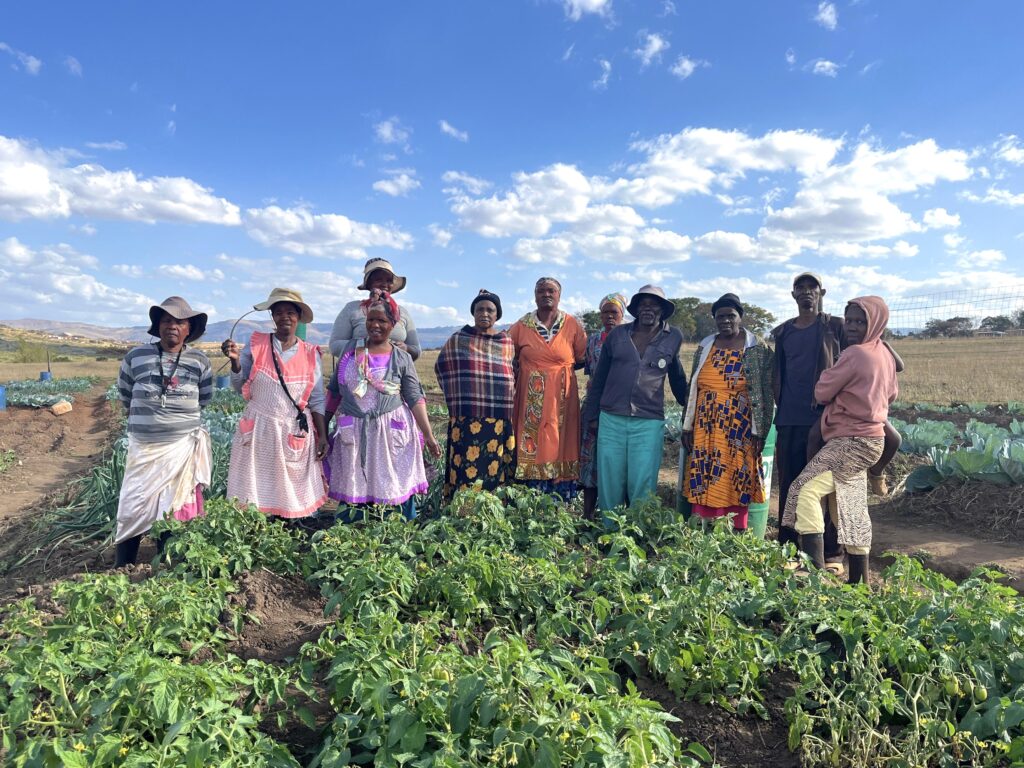
Zodumo, Diocesan Coordinator (on the far left) with the Ekwadeni gardeners
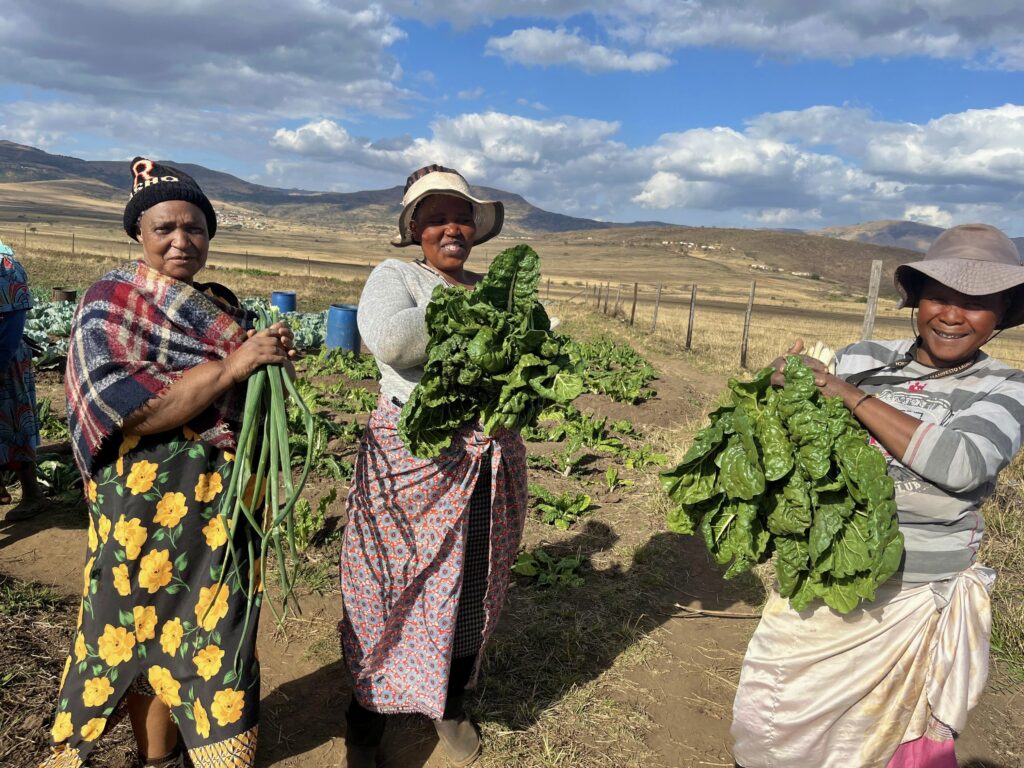
Collecting the harvest
The impact of the garden extends beyond individual households. By working with government service providers, the gardening group now supplies fresh vegetables to local schools, helping children access nutritious meals. St Cyprian’s Church continues to support the group with land, seeds, seedlings, fertiliser, and clothing, enabling this vital work to thrive. Looking to the future, Ntombitheni hopes to expand into poultry farming, building even greater resilience for her family and community.
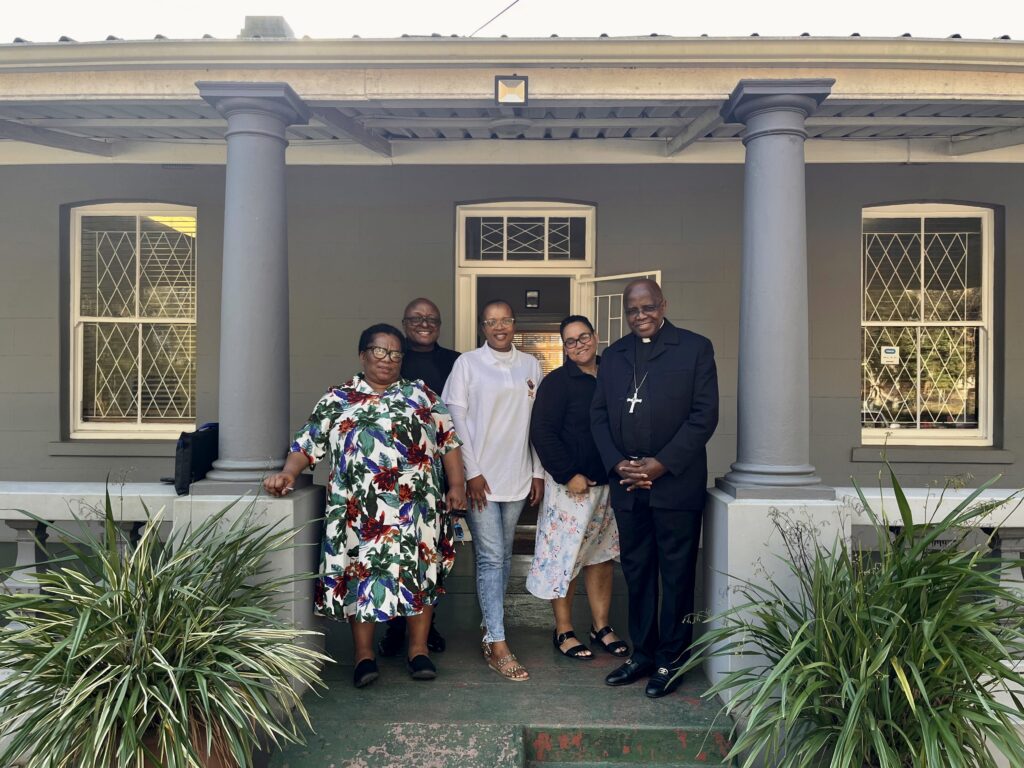
Bishop Vikinduku and the staff at the Diocese of Zululand
USPG staff Fran Mate and Venetia Asare-Griffiths were warmly welcomed by The Right Revd Dr Vikinduku Mnculwane and the diocesan team during a recent visit to the Diocese of Zululand at the Anglican Cathedral of St Michael. Bishop Mnculwane, who serves both as Bishop of Zululand and the USPG liaison Bishop for the Anglican Church of Southern Africa, praised the Ekwandeni Garden initiative and its impact in the local community.
USPG is proud of our partnership with the Diocese of Zululand and the Anglican Church of Southern Africa who continue to invest in essential resources – land, seeds, fertiliser, and clothing – empowering people like Ntombitheni to grow gardens and build resilience. Thank you for partnering with us.
Let us pray:
Gracious God,
We thank you for Ntombitheni, for her dedication, wisdom, and the love she brings to the community. We thank you too for the Anglican Church of Southern Africa, whose guidance and support help this work flourish.
We lift up the Ekwandeni Garden and all who labour to nurture it. Protect the community and grant them strength in the face of challenges.
Grant unity to those involved and bless the expansion of initiatives, including the poultry project, that more families may be fed and schools nourished. May your love, which binds everything together in perfect harmony, guide their efforts and strengthen their bonds (Colossians 3:14).
Amen.
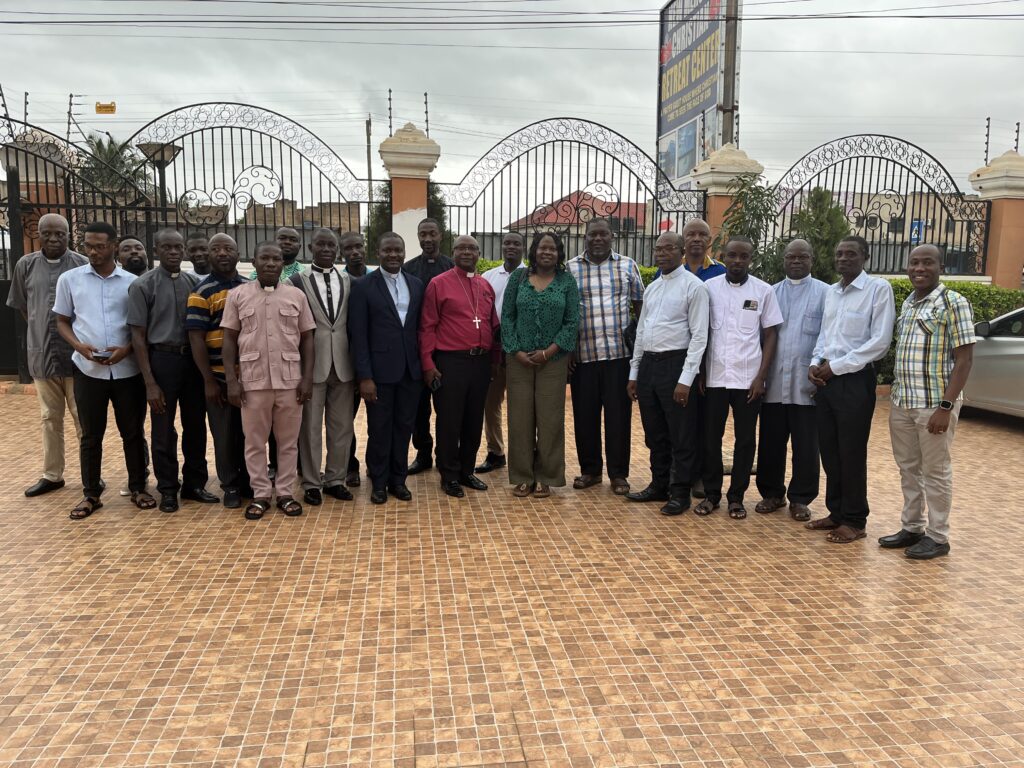
In Ghana’s Internal Province (IpG), mission, evangelism, and leadership are at the core of the Church’s work. Local partners and leaders are actively leading efforts to strengthen the Church’s presence and impact.
In March 2024, the IpG developed a five-year strategic plan through a four-day workshop with key Church leaders. This plan focuses on ten pillars, including mission and evangelism, youth development, leadership formation, transparency, resource mobilisation, and strengthening Anglican health and education units. The plan was approved by the House of Bishops to guide the Church’s future.
Spread the word
Fran Mate, Senior Regional Manager for Africa USPG, recently visited to review progress and meet the people delivering the strategy. The Mission and Evangelism team believe that the Gospel is news worth sharing. This is why the team are actively working to plant 500 new Anglican churches and reach 500,000 people within five years. A huge goal! Evangelism coordinators in each diocese are forming local church teams, supported by monthly online training and prayer.
A National Coordinator for Mission and Evangelism has been appointed, with a Project Officer soon to join, to oversee strategy implementation across all 13 dioceses.
Youth Leadership
The visit also included a meeting with national youth leaders from the Anglican Young People’s Association, National Anglican Children’s Ministry, and others, along with Archbishop Cyril. The group discussed improving youth leadership structures and coordination. The youth committee is now working to develop a clear provincial framework to ensure effective collaboration and support.
Supporting Economic Growth
The ODA Shops Project, supported by USPG, renovates shops to generate income for the province and provide business opportunities for young people. This initiative supports sustainable development and youth entrepreneurship within the Church community.
The Strategic Plan Committee continues to oversee progress, addressing challenges and preparing for the creation of two new provinces within the Church of the Province of West Africa by 2027. Exciting new chapters ahead.
The visit ended with a Sunday service at St. Michael’s Cathedral, Kumasi.
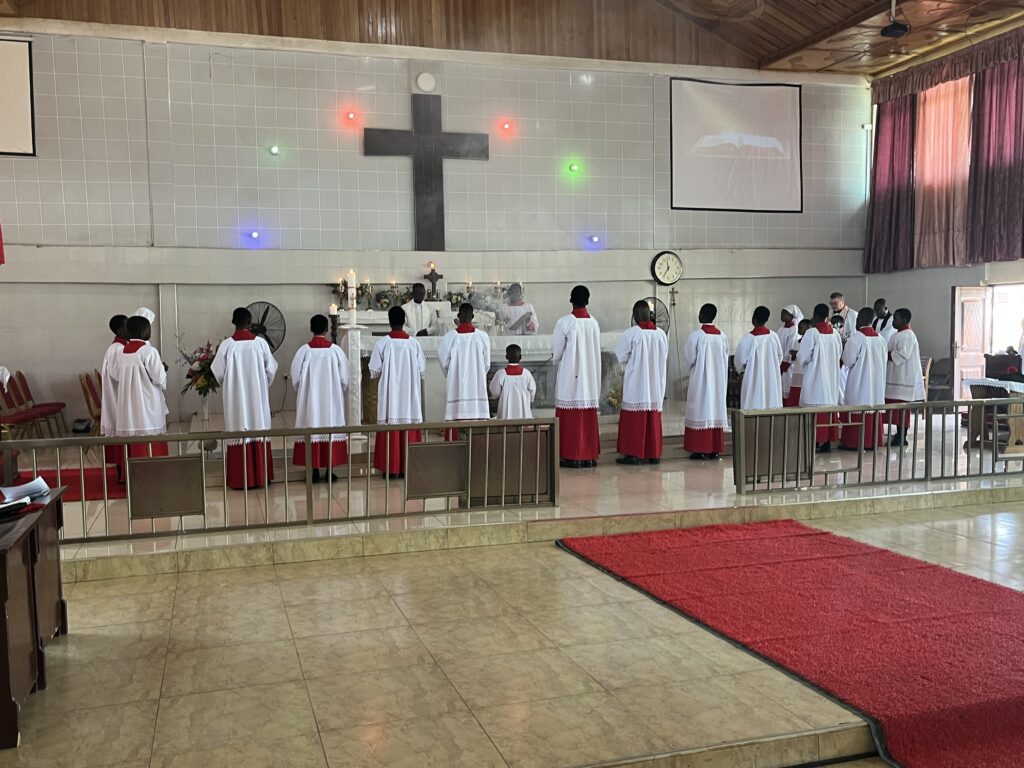
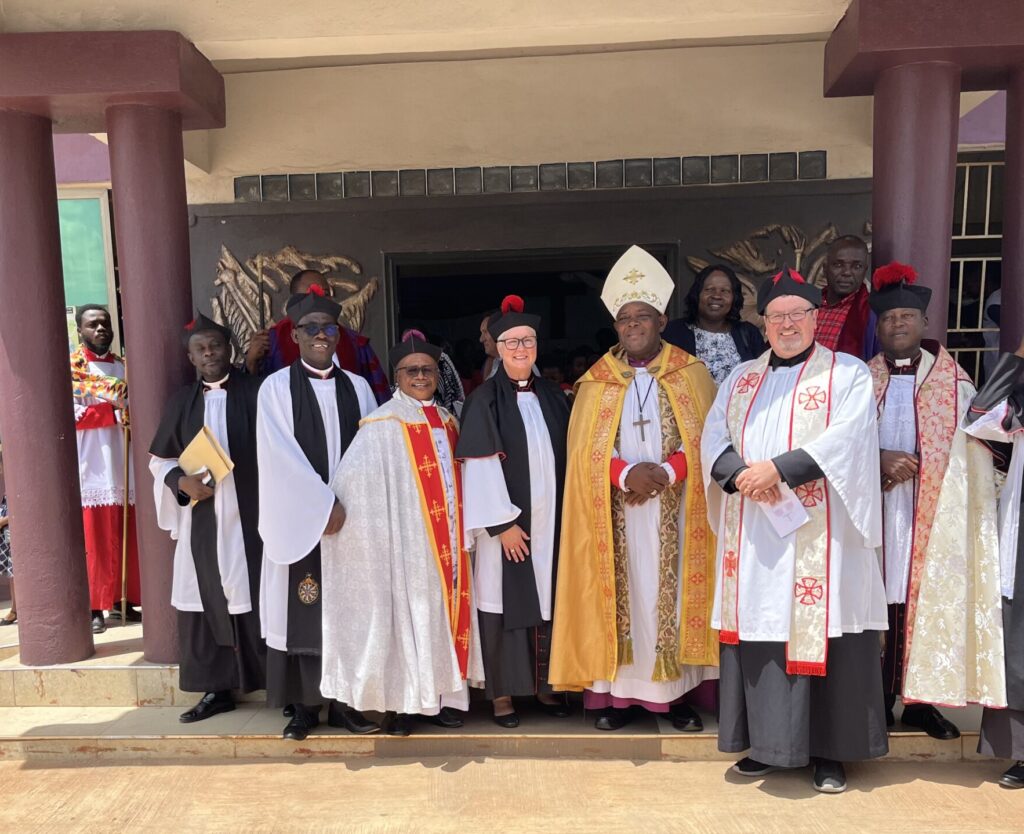
From 28 May to 2 June 2025, celebrations were held in The Gambia to mark 90 years of the Anglican Church in the country, with key leaders gathering for fellowship and reflection. Fran Mate, Senior Regional Manager for Africa, shared in fellowship with the House of Bishops of the Internal Province of West Africa (IpWA) including His Grace Boston Jacque and Bishops Kojo Baiden (The Gambia), James (Liberia), Dibo (Cameroon), Thomas (Sierra Leone), His Grace Boston (Guinea), and Solomon (Boo).
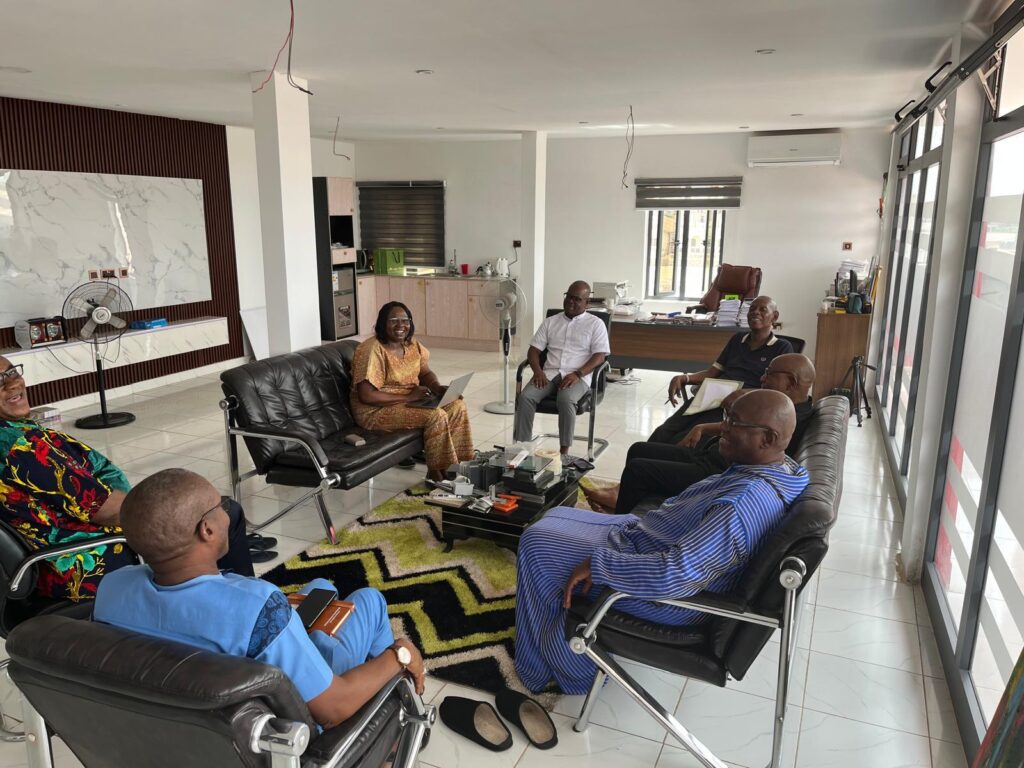
Alongside the celebrations, the bishops met to reflect on shared priorities such as self-sustainability, youth leadership, and preparations for IpWA’s transition to a full province in 2027 – deepening their partnership with USPG and renewing a collective vision for mission across West Africa.
To mark the 90th anniversary, His Grace, Archbishop Jacque Boston and all the bishops of the Internal Province of West Africa joined the consecration and dedication of a new church: St. Andrew’s church in the Diocese of Banjulinding, built and furnished by the parishioners. The occasion was a joyful celebration of what the Lord has done, with events including a diocesan choir music festival at Christ Church and a sponsored ‘walk for health’.
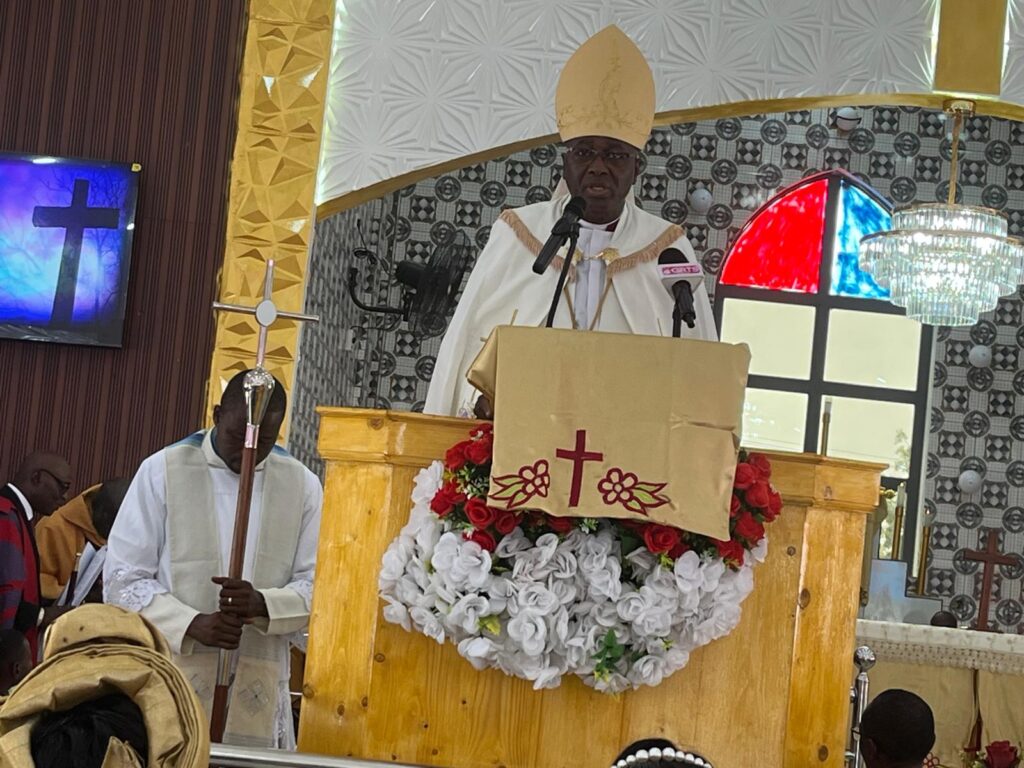
His Grace Jacque Boston – Archbishop of the Internal Province of West Africa delivering a homily at the Dedication and Consecration of the newly built St. Andrew’s Parish Church in Banjulinding.
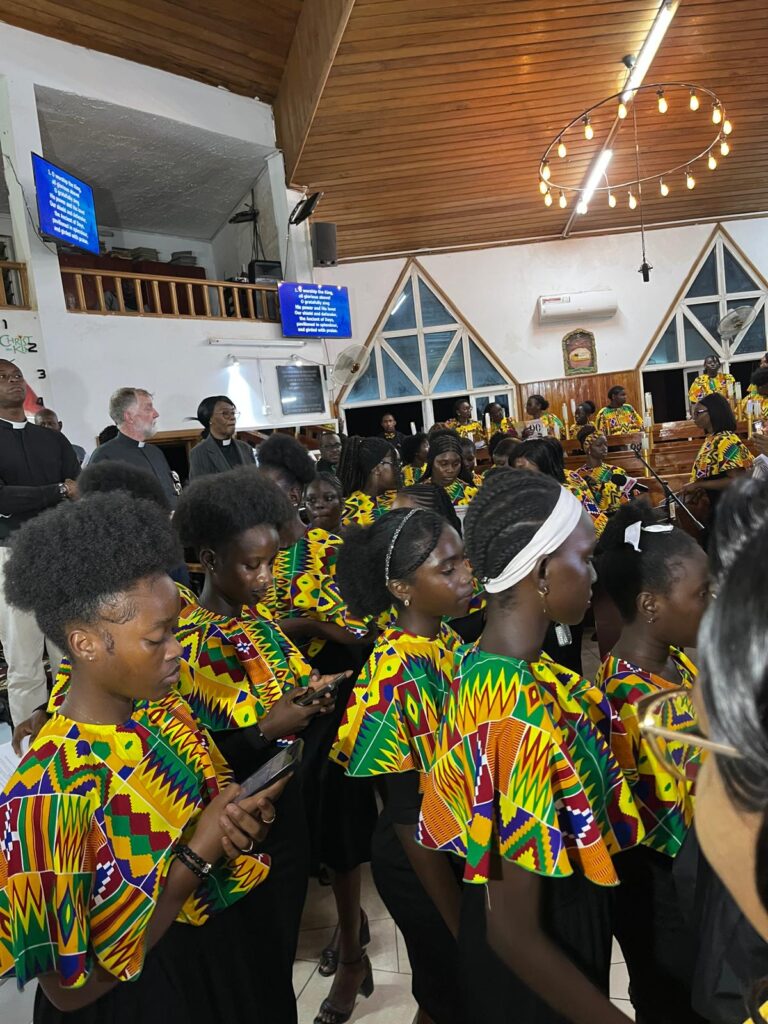
The choir in action
Reflecting on the 90 years of Anglican presence in The Gambia, The Rt Revd St Obed Arist Kojo Baiden, Bishop of The Gambia, spoke humbly:
Through it all, the Spirit has moved in mysterious ways. We have walked in time, but we have listened to the Divine Order.
Bishop Obed continued: “as we mark 90 years of witness and worship, let us look forward in faith. The next chapter of our Diocese is not to be written in fear or fatigue, but in boldness and renewal.
We must rise again to the calling of Ascension Day – to lift our eyes to heaven and let the power of the risen Christ guide every step as we evangelise and work to expand the Kingdom of God.
Bishop Kojo Obed, originally from Ghana, is a beneficiary of USPG’s Exchanging Places programme, which allows partner churches to share expertise, experience, and resources by sending and receiving mission personnel.
History: USPG & The Gambia
The Anglican Diocese of Gambia is part of the wider Church of the Province of West Africa as well as the internal province of West Africa which comprises of five dioceses (Gambia, Cameroon, Sierra Leone, Liberia, Guinea). USPG has walked with this province since its establishment by helping to strengthen its mission through setting up a coordinating office, developing strategies, fostering youth leadership, promoting economic independence, and enhancing governance.
St. Mary’s Church, the oldest Anglican church in The Gambia, was founded in 1900. It wasn’t until 1935, that the Diocese of Gambia and Guinea (as it was known at the time) was established. Remarkably, the Anglican diocese of Gambia was formed on Ascension Day in response to the call of the ascended Christ:
You shall be my witnesses in Jerusalem, Judea, Samaria, and to the ends of the earth. Acts 1:8
That witness has been faithfully borne across 90 years in this Cathedral Church of St Mary and other Parishes, in mission schools and clinics, in the provinces and urban centres, and across riverbanks and bustling markets. The Church in The Gambia also remains committed to social justice, interfaith harmony, and community development. In a nation proud of its religious tolerance, the Anglican Diocese has served as a bridge-builder – partnering with Muslim brothers and sisters in peace initiatives and walking alongside fellow Christians in ecumenical unity through the Gambia Christian Council.

On 4 May, the Diocese of Botswana made history as it ordained the first cohort of women to the transitional diaconate. Fourteen women were ordained in a joyful, spirit-filled service that marks a significant step towards gender equality in the Church. The service at the Cathedral of the Holy Cross, Gaborone, led by The Rt Revd Metlha Beleme, Bishop of Botswana, was attended by over 1000 worshippers as well as thousands more online.
This is a celebration for the whole [Anglican] Communion,
said The Rt Revd Vicentia Kgabe, Bishop of Lesotho. With 23 years of ordained ministry, Bishop Vicentia stands as an inspiring example of the impact of women’s leadership in the Church. Her presence served as a reminder of the path already forged by women across the Communion—and of the journey still to come.
The Right Revd Dr Helen-Ann Hartley, Bishop of Newcastle, also brought greetings and encouragement from the Church of England.
We have been praying for you and now rejoice with you,
Bishop Helen-Ann said in her sermon, offering words of affirmation to the new deacons and to the diocese as a whole.
Essie Pato, Chair of USPG’s Communion-Wide Advisory Group, was present and described the service as “vibrant, uplifting and spirit-filled in every way.” She reflected, “Witnessing women being ordained into leadership roles in the Church was a powerful reminder of the importance of the need to acknowledge equality and need for more inclusivity in our faith community.”
All those ordained entered the transitional diaconate – a step towards priestly ministry following further discernment and training. USPG gives thanks for all fourteen faithful women, and we pray that their ministries may flourish, bringing wisdom, compassion and renewal to the Church and beyond.
Join us in prayer:
Heavenly Father,
We give you thanks for calling the fourteen new deacons in your name and entrusting them to your Church. Send down your Holy Spirit upon each of them. Grant grace and strength to fulfil the ministry entrusted. Make them faithful to serve, ready to teach, constant in advancing your gospel and rooted and grounded in love, standing firm and steadfast in your Son, Jesus Christ our Lord.
Amen.
In late April, female bishops from across Africa gathered in Nairobi for a morning of prayer and reflection. Known as the “Africa Six,” the bishops from Lesotho, Eswatini, South Sudan, Angola, and Kenya are part of a growing movement for greater inclusion of women in church leadership.

From left to right: The Rt Revd Filomena Tete Estevão, Bishop of Bom Pasteur (Angola); The Rt Revd Dr Emily Onyango, Bishop of Bondo (Kenya); The Rt Revd Dr Vicentia Kgabe, Bishop of Lesotho; The Rt Revd Rose Okeno, Bishop of Butere (Kenya); The Rt Revd Dr Dalcy Badeli Dlamini, Bishop of Eswatini; The Rt Revd Elizabeth Awut Ngor, Bishop of South Sudan; Fran Mate, Senior Regional Manager for Africa USPG.
Hosted at All Saints’ Cathedral, Nairobi, by the Centre for Anglican Women’s Leadership and Research in Africa (CAWLRA), the event fostered honest dialogue, strengthened partnerships, and renewed commitment to collaborative ministry. This gathering marks another important step in USPG’s ongoing support for theological leadership in Africa and the advancement of gender justice across the Anglican Communion.
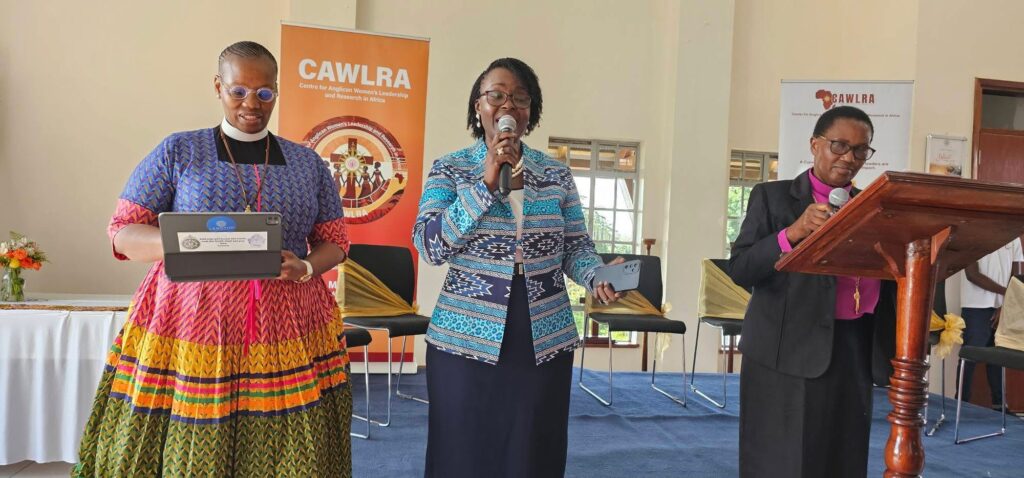
Speaking at the gathering, The Rt Revd Dr Vicentia Kgabe, Bishop of Lesotho and Chair of CAWLRA, emphasised that:
We know and see that there is a growing number of young women who seek to enter the spaces of leadership. [And so] we should not be gatekeepers. We should open the doors, mentor, inspire and encourage. CAWLRA seeks to create a legacy that will empower both lay and ordained leaders for generations to come.
Senior Regional Manager for Africa, Fran Mate, was privileged to represent USPG, deepening our partnership with CAWLRA and reaffirming our shared vision of inclusive leadership in the Church. CAWLRA, hosted at St Paul’s University in Limuru, Kenya, has a vital role in equipping women for ministry through bespoke training, mentoring and leadership development.
Looking ahead, USPG is delighted to be welcoming Bishop Vicentia Kgabe as a keynote speaker at our 2025 conference this summer. Her voice and vision will bring valuable insights as we explore the theme ‘We Believe, We Belong?’.
