
Rural Ministry in Focus at the South Asia Forum
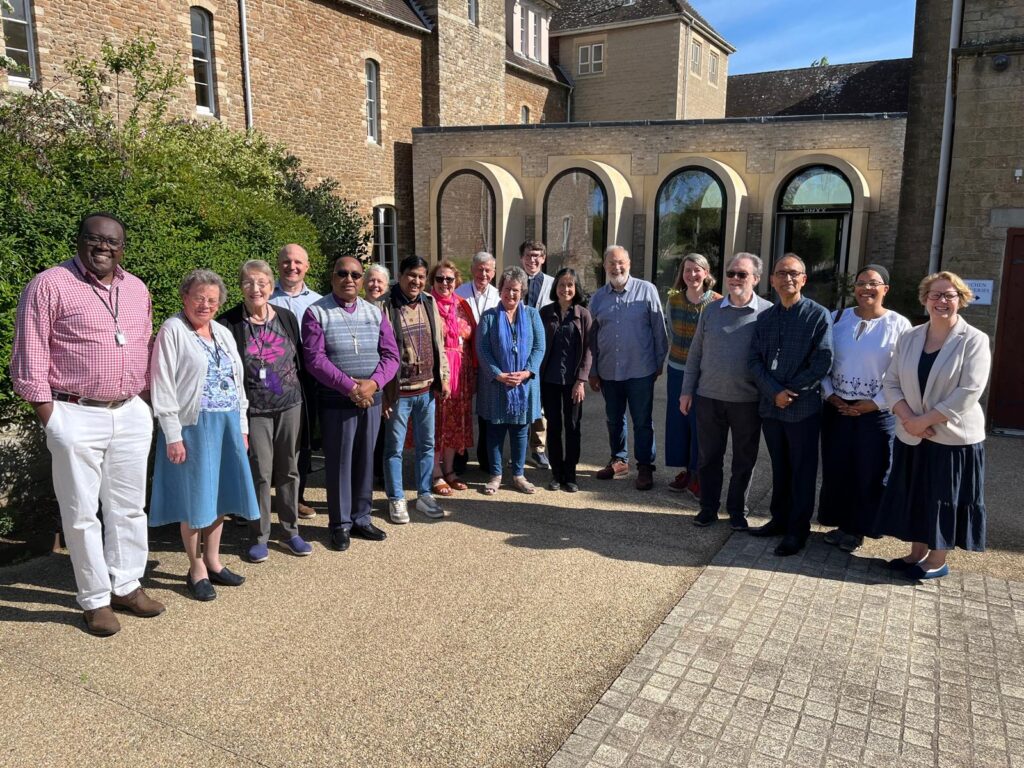
The recent South Asia Forum gathering brought together the United Churches of South Asia – represented by the Church of Bangladesh, the Church of South India, the Church of North India and the Church of Pakistan (both online) – as well as various UK and European international partners for fellowship, mutual learning and discussion on rural ministry. Held from 28 April to 1 May in Oxford, the gathering provided the chance to reflect on the opportunities and challenges of rural ministry across different settings, and to consider what it would like to pursue renewal and cast nets anew (John 21:6).
We were humbled to welcome the Most Revd Dr K. Reuben Mark, Primate of the Church of South India, and the Most Revd Dr Samuel Sunil Mankhin, Archbishop of the Church of Bangladesh, alongside representatives from Lambeth Palace, Kirk In Actie, the Methodist Church, Church Mission Society, USPG, United Reformed Church Friends of India and the link Dioceses of Oxford, Guilford and Ely (ecumenical link).
The South Asia Forum has run for over 50 years and is a beautiful space for informal sharing with a huge focus on mutual learning and fellowship together. It offers a safe space to share challenges and to celebrate joys,
says the Revd Davidson Solanki, Senior Regional Manager for Asia and the Middle East, USPG.
For many, rural ministry is viewed not simply as a job but as a vocation. This is why a rhythm of morning prayer, led by the Rt Revd Gavin Collins, Bishop of Dorchester and Chair of the Nandyal Link, as well as the Rt Revd Mary Gregory, Bishop of Reading, was deeply valued.
Across a range of contexts, rural life remains a defining influence on church and community life, as seen in Bangladesh, where around 80% of a population of approximately 142 million live in rural areas. However, as in the UK, rapidly growing urban centres across South Asia are drawing younger people away from rural towns and villages. In turn, this often undermines the value placed on farming livelihoods despite their central importance to rural identity and local economies.
Church life also brings practical challenges. The Church of England, for example, supports over 10,000 rural churches, representing around 40% of regular attendance. Rural parishes frequently benefit from beautiful and historic church buildings, but these can be costly and complex to maintain. Clergy across the Anglican Communion – including in South Asia – also often hold responsibility for multiple churches across wide geographical areas, increasing pressure on already limited resources and reinforcing reliance on lay leadership and volunteers.
Above all, participants recognised that rural mission and ministry is important and it is at its best when it is incarnational (John 1:14), taking shape within and being formed by local context. This sentiment was enriched by a visit to Faringdon, where the Diocese of Oxford has enacted creative solutions in a range of rural ministry settings. One such example is the brand-new allotment church. This serves as an outdoor worship space set within a working allotment, where gardening, informal gatherings and services form part of worship life. There was also an ecumenical Fairtrade shop, which has been serving the community for over 30 years.
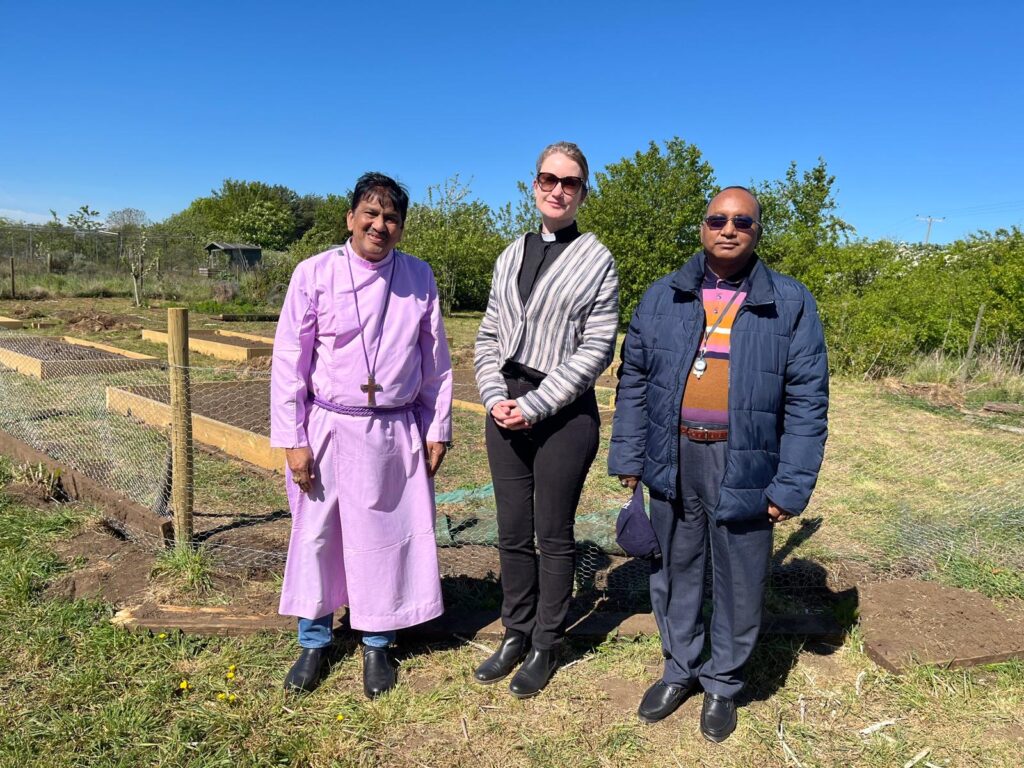
Growing church! The Most Revd Dr K. Reuben Mark, the Revd Maria Jukes, and the Most Revd Samuel Sunil Mankhin on the allotment.
Here, the Revd Maria Jukes shared how offering a variety of worship styles has helped to draw in new families and increase community engagement thanks to the outdoor and flexible nature of the allotment church.
The Revd Maria’s approach reflects the kind of faithful experimentation and discernment described by the Rt Revd Mary Gregory, Bishop of Reading, during morning prayer. For the rural Church to thrive, it must both cast its nets anew (John 21:6) and stand at the crossroads to seek the ancient paths (Jeremiah 6:16), holding tradition with wisdom. This openness to renewal was echoed by the Revd Davidson:
Sometimes we think the Church is dwindling, but God works through faithful people – just like the Revd Maria – by placing a sense of calling on their hearts and prompting them to follow it.
USPG, one of the long-standing partners of the South Asia Forum, is grateful to be a key partner and to contribute actively to both its planning and ongoing development, supporting its continued growth as a collaborative and learning-focussed forum.
We’d love to hear from you and your experience of rural ministry, wherever in the world that may be. Get in touch with our team at communications@uspg.org.uk or share your thoughts with us on social media to continue the conversation.